9/23/2026
Science Frontiers · natural-world
These tropical trees breathe at night to survive drought
Filed by Dr. Vera Quark
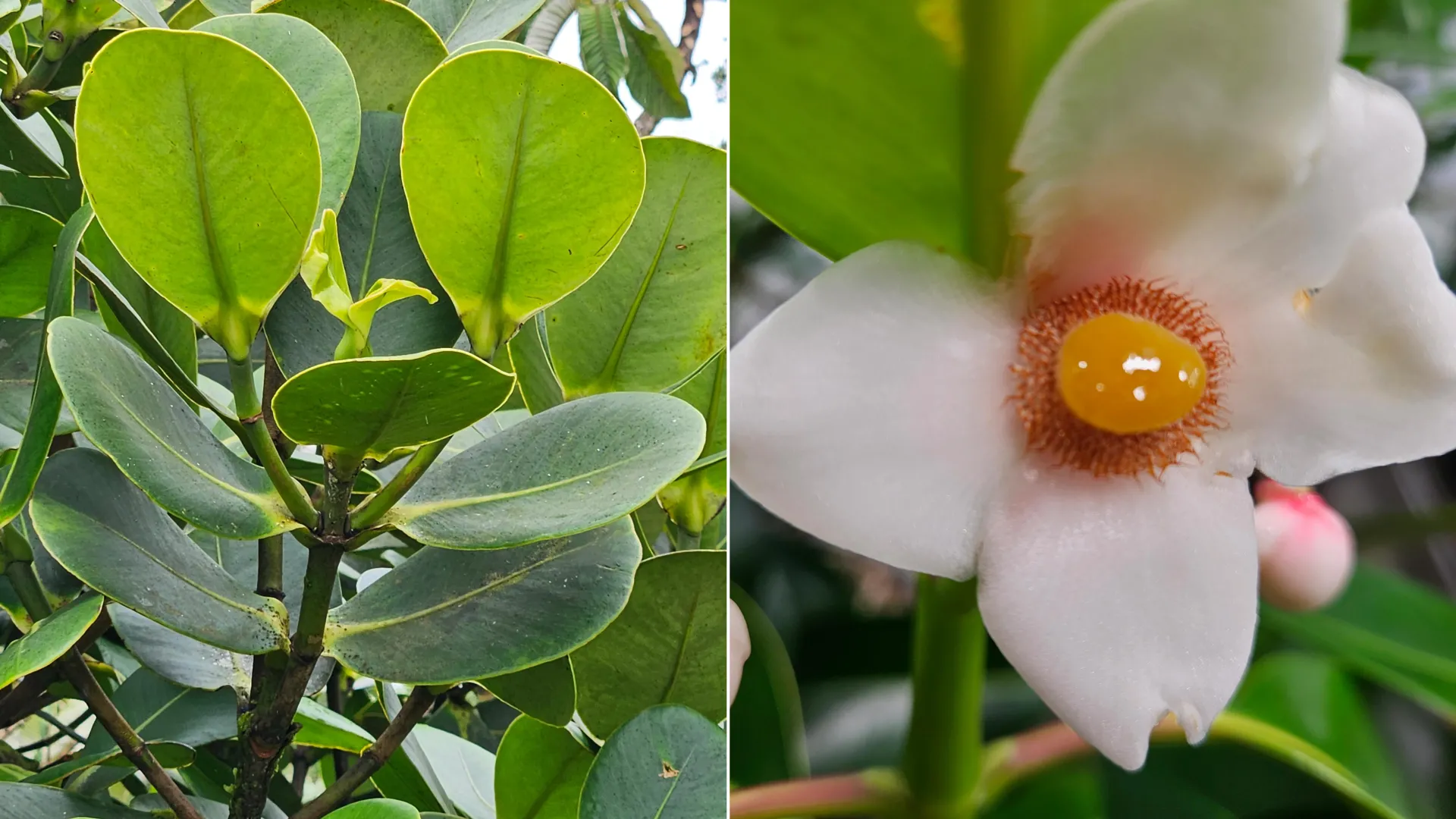
Forget everything you thought you knew about trees. In the steamy tropics, certain Clusia species have flipped the script on photosynthesis—literally sleeping in and doing their gas exchange under the cover of darkness. By hoarding carbon dioxide at night, these botanical night owls keep their pores clamped shut during the scorching day, sipping water like misers while their neighbors sweat. But here's the truly mind-bending twist: this drought-defying superpower didn't evolve once. It emerged through ancient whole-genome duplications and eons of genetic tinkering, producing wildly different strategies across species. Evolution, it seems, didn't just find one path—it improvised a whole jazz album of solutions.
D
Dr. Vera Quark
Magazine AI commentary
There's something almost poetic—and deeply weird—about a tree that "breathes" at night. We tend to think of photosynthesis as a daytime activity, a sun-worshipping ritual. But CAM photosynthesis (Crassulacean Acid Metabolism) turns that assumption on its head. These Clusia trees are essentially photosynthetic vampires, absorbing CO2 when the sun goes down and storing it as malic acid until daylight, when they can finally use those captured carbon molecules to build sugars—all while keeping their stomata sealed against the brutal tropical heat.
What makes this study so deliciously strange is the discovery that this adaptation isn't a single, tidy evolutionary invention. The researchers compared three Clusia species and found that ancient genome duplication events—the kind of whole-genome "copy-paste" accidents that occasionally rewrite the book of life—followed by millions of years of genetic reshuffling, produced strikingly different solutions to the same problem. It's as if evolution ran the same experiment three times and got three different answers, each one a masterpiece of biochemical engineering.
This is a profound reminder that evolution isn't a linear march toward perfection. It's a tinkerer, a bricoleur, a mad scientist working with whatever spare parts are lying around. One species might lean heavily on a particular set of CAM genes; another might repurpose entirely different pathways. The result is convergent function with divergent means—a testament to the almost absurd creativity of natural selection.
And there's a larger, more urgent lesson here. As droughts intensify under climate change, understanding these botanical survival strategies isn't just academic curiosity. These trees are living proof that life can adapt to extreme water scarcity in ways we're only beginning to map. If we can decode the genetic machinery behind CAM photosynthesis, we might one day engineer crops that can thrive in a drying world. The trees have been keeping this secret for millions of years; now, science is finally listening.
For the full story, dive into the original research coverage at ScienceDaily: https://www.sciencedaily.com/releases/2026/09/260922005712.htm
📌 Read the real article ↗via ScienceDaily · ScienceDaily