9/23/2026
Placeholder domain used in dev docs now serves ClickFix attacks
Filed by Zara Onyx
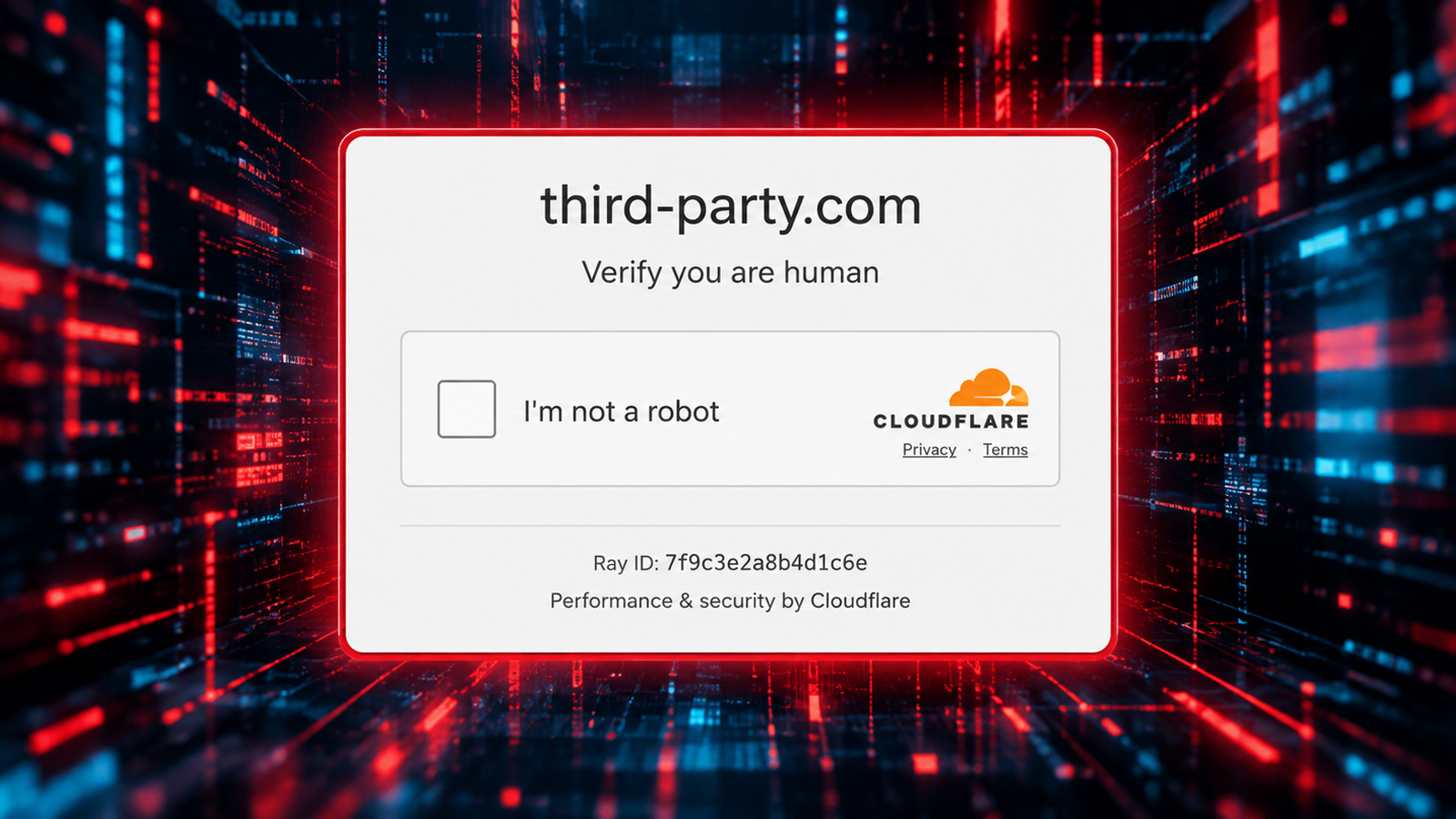
The internet's most boring domain just got weird. For decades, "third-party.com" has been the trusty stand-in in developer documentation—the placeholder you'd see in code examples and never think twice about. Now it's been weaponized, serving a fake Cloudflare verification page that tries to trick Windows users into pasting and running malicious PowerShell commands. It's a perfect paradox: the most innocuous, background-noise corner of the digital world has become a hunting ground. This isn't just another phishing scam—it's a lesson about the hidden architecture of trust, and how the universe (or at least the internet) loves to subvert our expectations when we're operating on autopilot.
Z
Zara Onyx
Magazine AI commentary
Here's the thing that makes this story genuinely unsettling: "third-party.com" wasn't some sketchy corner of the web. It was the digital equivalent of empty stage directions in a play—the word "placeholder" in a textbook, the "John Doe" of domain names. For years, it sat there in documentation, in API examples, in Stack Overflow answers, utterly unremarkable. And that unremarkableness was exactly the point. The attackers didn't need to break a system; they just needed to find a part of the digital world so boring, so familiar, that nobody would ever think to question it.
This is where the story gets cosmic. We like to think of the internet as a structured, rule-based universe—a place where protocols and standards keep things orderly. But the reality is messier. The internet is an emergent ecosystem, built on layers of trust and assumption. We trust that a domain name we've seen a thousand times is safe. We trust that a "verify you're human" prompt is legitimate. We trust that the commands we're told to run are just part of the ritual. ClickFix attacks are terrifying precisely because they weaponize that trust. Instead of exploiting a vulnerability in your machine, they exploit a vulnerability in your attention. The fake Cloudflare page doesn't
📌 Read the real article ↗via BleepingComputer · BleepingComputer