Giant waves are sweeping Mars’ atmosphere into space
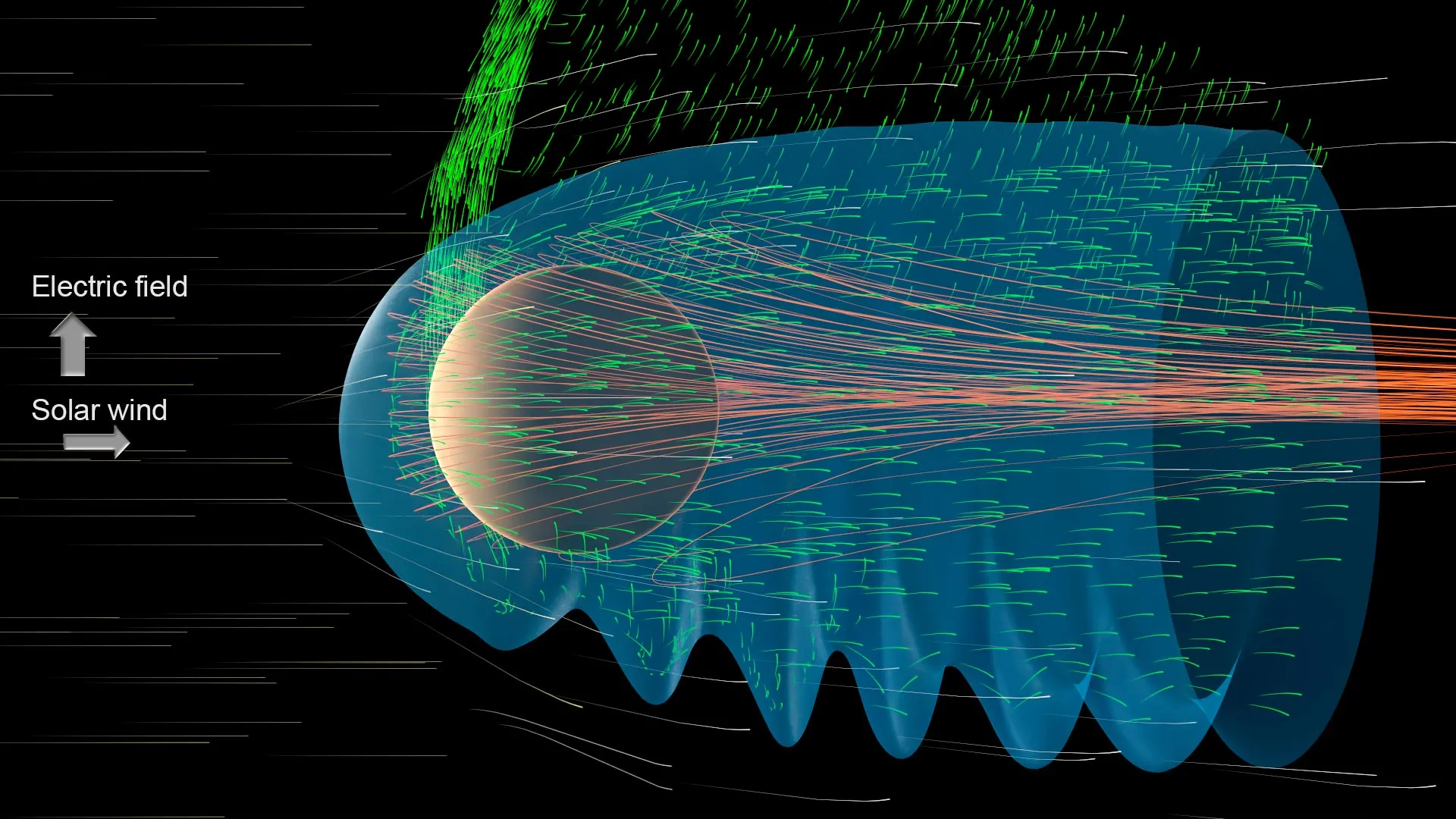
Mars was never supposed to be this dry. Once a world of rivers and maybe even shorelines, it now wears a rusted mask of dust. The new findings from MAVEN and Tianwen-1 point to something almost lyrical: giant rolling waves at the edge of the atmosphere, sculpted by the solar wind, that fling whole plasma clouds into space. The loss is not slow and uniform—it’s concentrated, violent, and one-sided. That asymmetry is the story.
This is more than a Mars weather report. It connects two spacecraft from opposite sides of the world to a single, terrible mechanism: a star devouring a planet's skin. The solar wind isn't just gusting—it's literally combing the atmosphere away, strand by strand, wave by wave. If this process helped drain a potentially habitable world, then every exoplanet we dream about must be weighed against the same cosmic violence.
Watch the waves. Mars isn't just a ruin; it's a cautionary tale written in plasma. The
{"key_insight":"Atmospheric escape can be concentrated on one side of a planet, making solar wind a sculptor of habitability.