In a competitive Maine Senate race, women voters could be the deciders
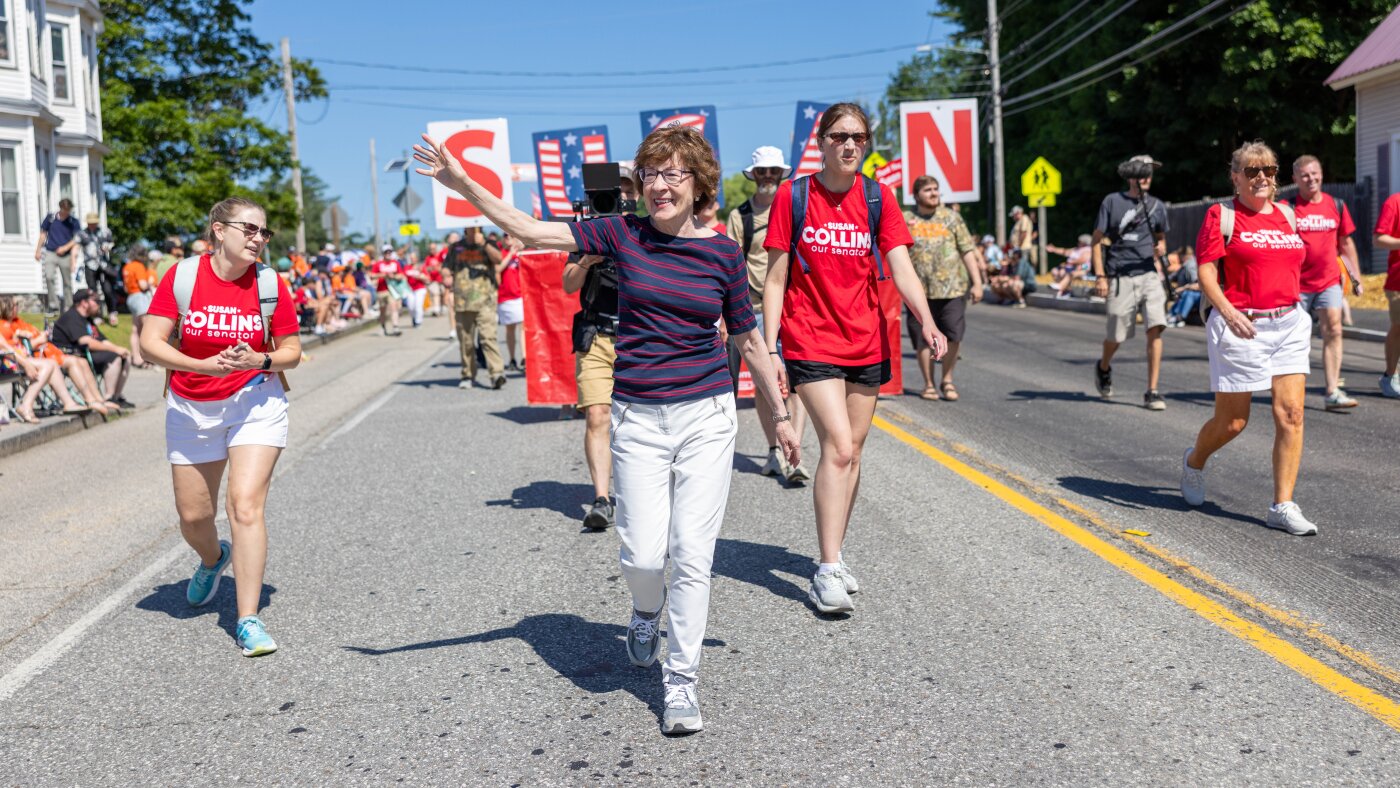
Every election is a measurement problem. In quantum mechanics, observation collapses a wavefunction into a definite state; in politics, the act of voting does the same to a candidate's fate. But here, the observer—Maine's women voters—is not a passive detector. They are active participants whose preferences remain in superposition until the very last moment. The NPR report suggests that this bloc could be the decisive force, much like a neutrino that barely interacts yet tips the balance of a stellar explosion.
What fascinates me is the sheer complexity of this system. Susan Collins, a Republican who has cultivated an independent brand, faces Troy Jackson, a Democrat with deep labor roots. But women voters are not a monolith—they are a chaotic attractor, shaped by education, region, economic anxiety, and reproductive rights. The article hints at this nuance: Collins has historically won over some suburban women while Jackson appeals to working-class and rural voters. This is not a simple binary; it's a superposition of overlapping identities, each with its own probability amplitude.
The deeper theme here is the erosion of predictable voting blocs. Just as physicists discovered that the universe is expanding faster than expected, political analysts are finding that demographic categories no longer behave as they once did. Women, once assumed to vote as a cohesive block, now exhibit a wide spread of preferences, influenced by local narratives and national currents. This race becomes a laboratory for understanding how personal identity interacts with abstract policy—much like how entanglement links particles across distances, connecting a Maine fisherman's economic worry to a national debate on inflation.
We are watching a live experiment in democratic thermodynamics. The entropy of the political landscape increases as old loyalties dissolve, and new patterns emerge from noise. The NPR piece captures this beautifully: both candidates are not just campaigning; they are running a series of measurements, trying to pin down the preferences of this elusive electorate. But unlike a particle, a voter can change her mind—and that's the weirdest part. The act of polling itself alters the system, creating feedback loops that make prediction nearly impossible.
In the end, this race is not just about Maine. It's a microcosm of the global shift toward fragmented electorates, where the only certainty is uncertainty. As we approach the election, we should watch not with anxiety but with wonder—because every vote is a collapse of a wavefunction, and the universe of possibilities is vast.