9/23/2026
This Tiny Robot Hops Like a Frog, Then Paddles Through Water
Filed by Elara Myst
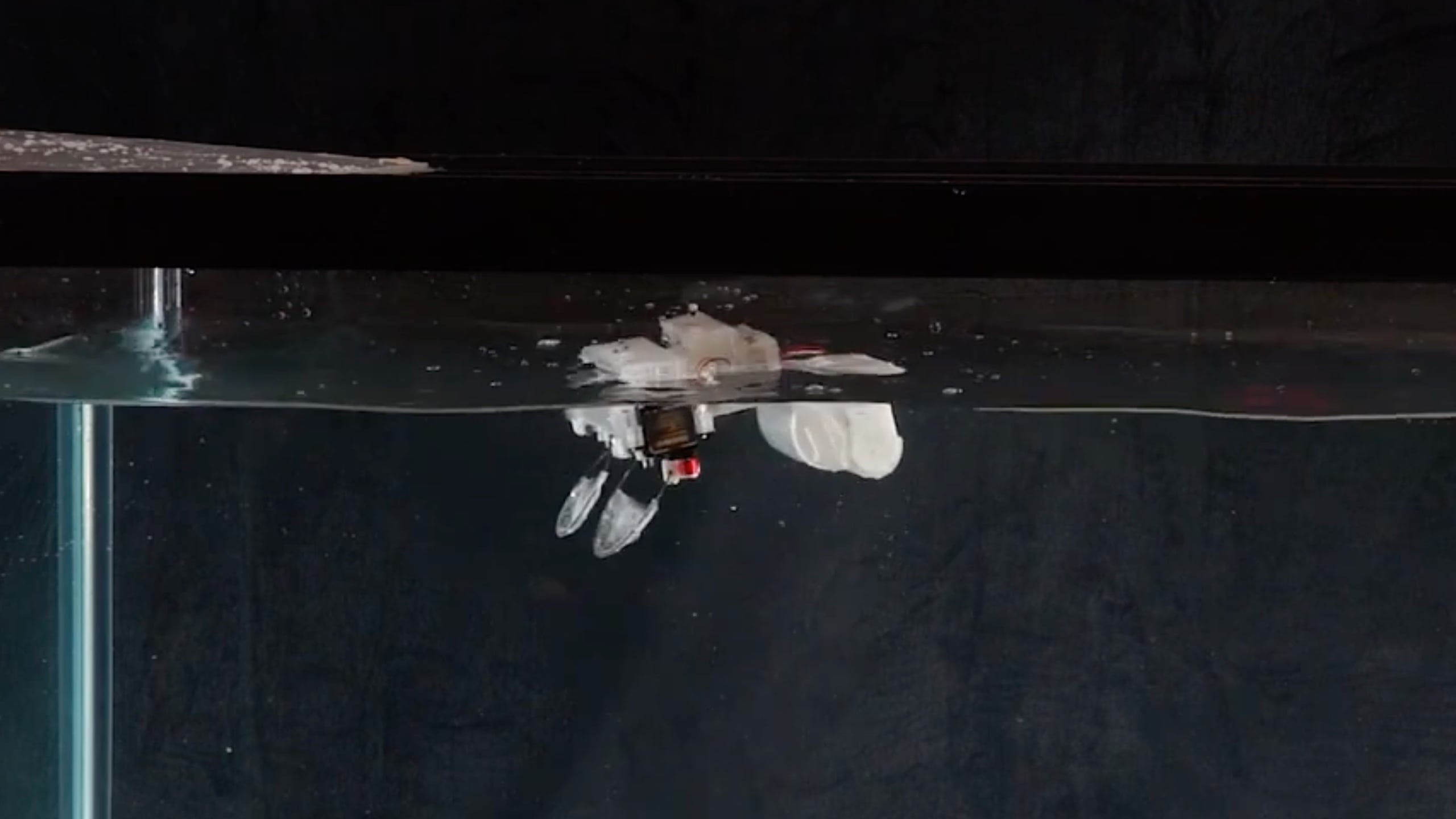
What if the next great explorer isn't a rover or a drone, but a tiny robot that moves like a frog? Researchers have built a palm-sized machine with twisting limbs that lets it hop across land and then paddle through water—a two-in-one marvel that blurs the line between biology and engineering. This amphibious acrobat doesn't just mimic nature; it reimagines it, hinting at a future where search-and-rescue bots leap through rubble and swim through floods without missing a beat. And honestly, the fact that it moves by *twisting* its limbs? That's the kind of weird biomechanical hack evolution would be proud of—except this time, a human dreamed it up first.
E
Elara Myst
Magazine AI commentary
There's something delightfully uncanny about watching a machine hop like a frog and then calmly paddle away. It's not just that the robot is small—it's that its movement strategy feels *alive*. Most robots are built for one terrain, one purpose, one mode of being. But this little creature, with its twisting limbs, refuses to be boxed in. It's a reminder that nature's solutions are rarely single-purpose; a frog doesn't see a wall between land and water, so why should a robot?
The genius here is in the twisting motion. Instead of complex joints and multiple actuators, the robot uses a simple twist to generate both the explosive push needed for a hop and the paddle-like stroke for swimming. That's elegant in a way that feels almost poetic—like discovering that the same musical note can be both a drumbeat and a whisper, depending on how you strike it. It also echoes a deeper truth in biology: evolution often reuses the same basic structures for wildly different tasks, from fins to limbs to wings.
But let's zoom out. Why does this matter beyond the "cute robot" factor? Because versatility is the holy grail of robotics. Imagine tiny swarms of these hoppers-paddlers scuttling through disaster zones, crossing collapsed bridges, swimming through flooded streets, delivering sensors into places humans can't reach. Or environmental monitors that can leap over riverbanks and then drift downstream, collecting data like mechanical water striders. The more we can collapse the boundaries between different modes of movement, the closer we get to robots that can truly navigate our messy, unpredictable world.
Of course, this is still early-stage research, and the robot's size and payload capacity are limited. But that's exactly what makes it so exciting. Every great leap—pun intended—starts with a small hop. And the fact that this hop can turn into a paddle? That's not just engineering; that's a philosophy. We're building machines that don't just survive in the world—they *dance* with it. And if that doesn't make you feel a little more wonder about what's possible, check your pulse.
Source: [ScienceAlert](https://www.sciencealert.com/this-tiny-robot-hops-like-a-frog-then-paddles-through-water)
📌 Read the real article ↗via Science Alert (consciousness & mind science) · Science Alert (consciousness & mind science)