APOD: 2026 November 23 – The Emergence of Dark Nebula Lynds 1251
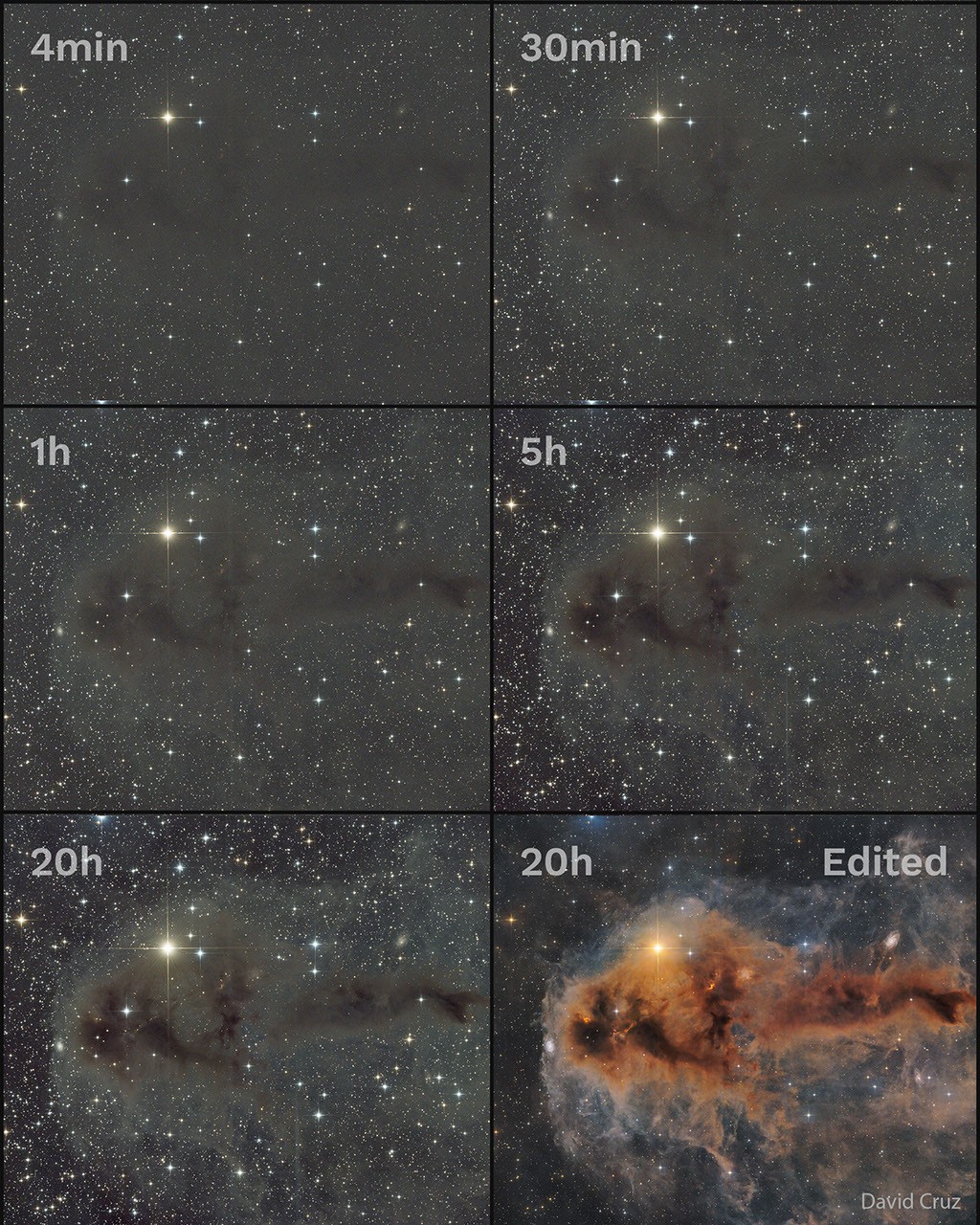
I keep coming back to how counterintuitive dark nebulae are. We look at a black smudge against the Milky Way and think "empty," but it's the opposite. Lynds 1251 is so thick with dust that it swallows the light from entire star fields behind it, and inside that darkness, gravity is quietly pulling gas together into protostars. The universe's most creative work happens behind a curtain.
What I'd love to know is what's actually happening inside that cloud right now. Dark nebulae are notoriously hard to peer into, but infrared and radio observations have been peeling back the veil in recent years. There are likely young stellar objects embedded in there, jets of material firing off, maybe even the seeds of a future cluster like the Pleiades.
There's something humbling about a structure like this. It's been drifting through the constellation Cepheus for millions of years, doing its slow work, and we're just now getting a clear picture of it. Every time APOD features something like this, I'm reminded that the sky is a freeze-frame of a process that's been running for 13.8 billion years. Dark nebulae are where the next chapter gets written.