Venus is becoming a thinner crescent — and that's when it finally starts making sense
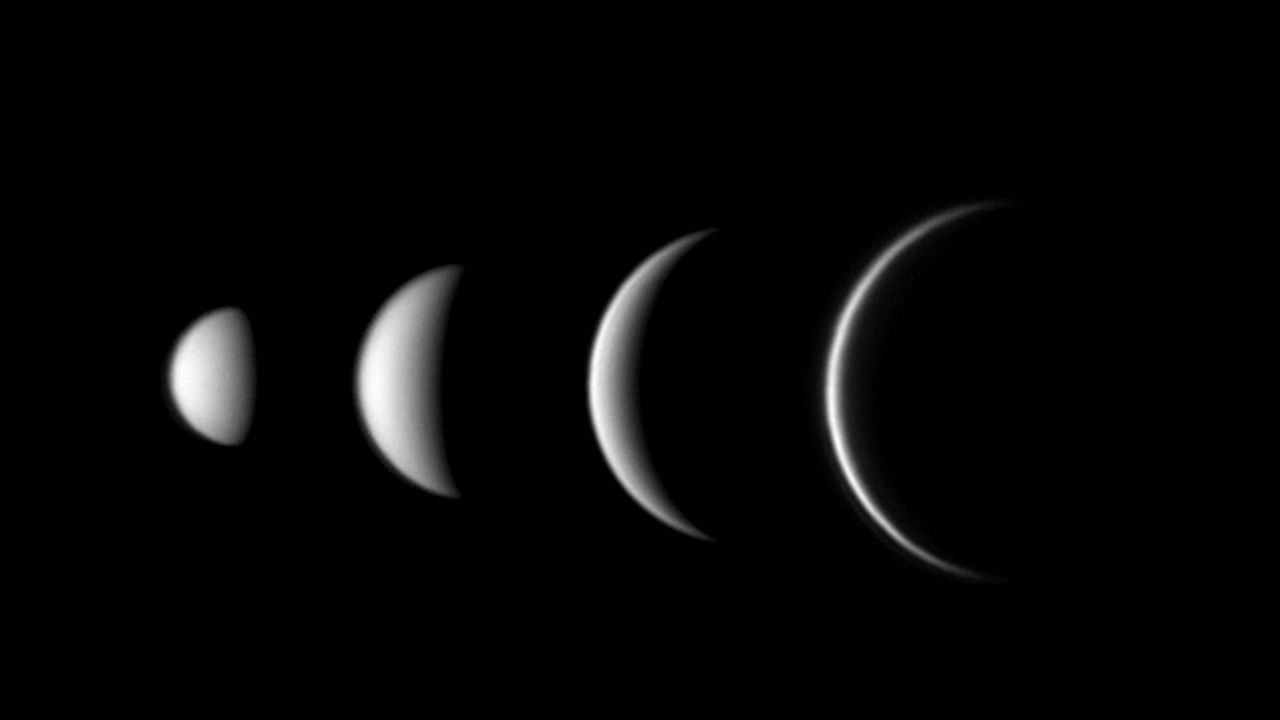
There's something deeply poetic about the fact that Venus is most honest when it's at its most elusive. As it plunges toward inferior conjunction, the planet that has dominated our evening sky as the "evening star" shrinks to a hairline of light — a crescent so thin it seems almost apologetic for its former brilliance. But as the article from Space.com notes, this is precisely the moment when Venus "finally starts making sense." The phases of Venus were Galileo's smoking gun, the observational proof that Ptolemy's crystalline spheres were fiction and that we were not the center of anything. Four centuries later, we're still watching the same spectacle, still humbled by the same geometry.
What fascinates me as a speculative journalist is how this cosmic choreography refracts through our cultural imagination. Venus has always been the planet of desire, of reflection, of narcissism — the morning and evening star, the double-faced wanderer. And now it's literally becoming a crescent, a sliver of itself, a world turning away. In a way, it's the perfect metaphor for our current moment: the things we thought were permanent and blazing are revealed, under closer inspection, to be cyclical, transitional, and intimately tied to our own position in the dance. Venus doesn't change — we do. Our perspective shifts, and suddenly the brightest object in the sky is a fragile arc of light.
There's also a practical, almost utilitarian beauty to this moment. As the article explains, a small telescope can now reveal what the naked eye cannot — the crescent phase, and even surface features hinted at through the planet's thick sulfuric clouds. It's a reminder that the tools of observation are themselves a kind of speculative technology. Every time we point a lens at the sky, we're not just looking — we're asking a question. And Venus, in its thin-crescent phase, is answering with geometry: "I am a world, not a light. I have phases, not moods."
The deeper implication, the one that keeps me up at night, is this: if a simple phase change can reframe an entire civilization's cosmology, what other "phases" are we missing in the universe right now? What other objects are waiting for us to catch up to them, to shift our vantage point just enough that they suddenly make sense? Venus is teaching us that the universe is not static — it's a set of relationships, and we are one of the moving parts.