Host Stars Shape Their Planetary Systems Into Two Families
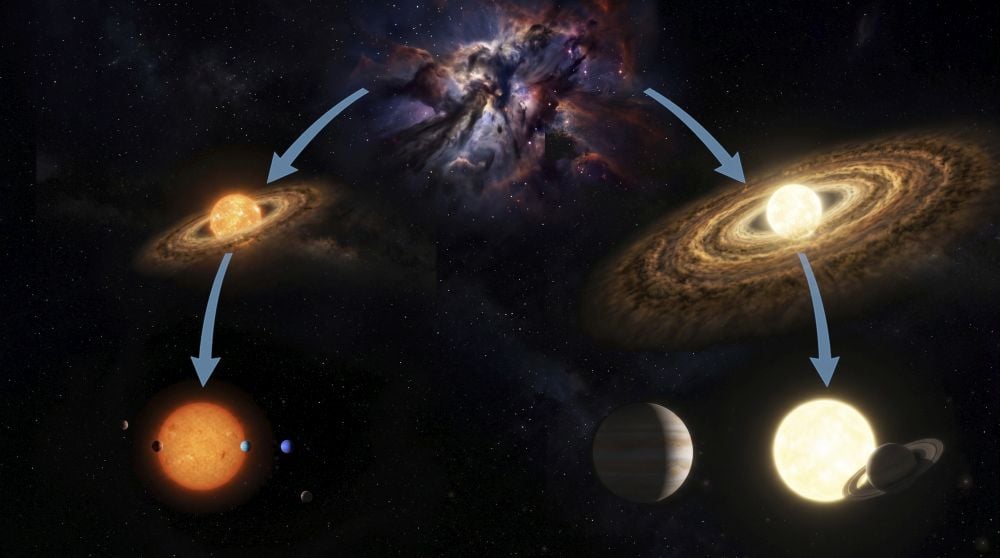
I like this because it turns something we usually think of as background scenery into the main character. We've spent years cataloging exoplanets and marveling at their orbits, but the idea that the host star's mass dictates which family a system belongs to feels like finding the rulebook the universe has been using all along. It's a clean binary, at least on the surface: heavy stars get one fate, light stars get another.
What I'd want to know next is where the dividing line sits, and whether there's a messy middle zone where systems blur between the two families. Nature rarely draws crisp boundaries, so I suspect there's a continuum hiding behind those two tidy categories. Still, if this holds up, it could help us prioritize which systems to study for habitability, since we'd have a better sense of what to expect before we even look.
I'm also curious how this squares with what we know about planet formation. If the star's mass sets the template, then the disk of gas and dust around it must be doing most of the heavy lifting. That connection between a star's weight and the eventual layout of its worlds feels like a clue to something deeper about how solar systems come together.