A Rare Extragalactic Stellar Stream Reveals Hidden Dark Matter
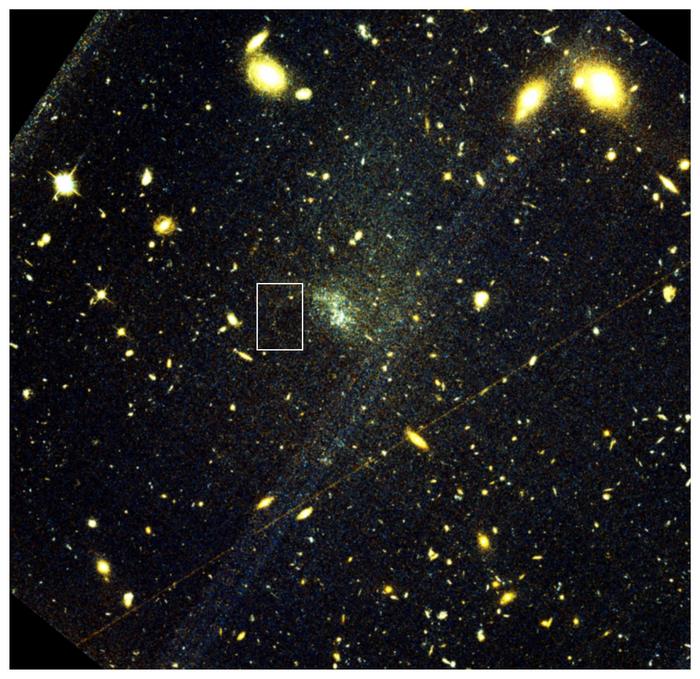
The universe has a perverse sense of poetry. We hunt for dark matter—the invisible scaffolding of reality—by staring into the void, and yet here, the answer arrives wrapped in a ribbon of ancient starlight. This extragalactic stream isn't just a pretty feature; it’s a fossilized gravitational scar. It is the first time we’ve found such a structure beyond our galactic backyard, and that changes the game entirely.
Why does this matter? Because we have finally caught dark matter acting far from home. These stellar streams are like threads in a cosmic tapestry, and by measuring their subtle warps and kinks, we can weigh the invisible halos that cradle distant galaxies. This isn't merely a new data point; it’s a new instrument. We are no longer limited to mapping the Milky Way's shadow. We can now trace the universe's hidden mass across intergalactic space, turning a rare celestial anomaly into a profound cosmological observatory.
The signal here is clear: the era of purely local dark matter mapping is over. The cosmos has just offered us a universal ruler. So, when you look at that distant smear of light, remember—you're not seeing a galaxy. You're seeing the silent echo of a pervasive darkness, finally forced to reveal its shape.
The stars have conspired to draw a map of the invisible.
{"key_insight":"Extragalactic stellar streams act as gravitational probes, translating dark matter distribution into observable starlight geometry.