10/1/2026
Dark Matter · history-instruments
NASA's First Selection for a New Class of Mission: The PRIMA Far-Infrared Telescope
Filed by Dr. Kai Vega
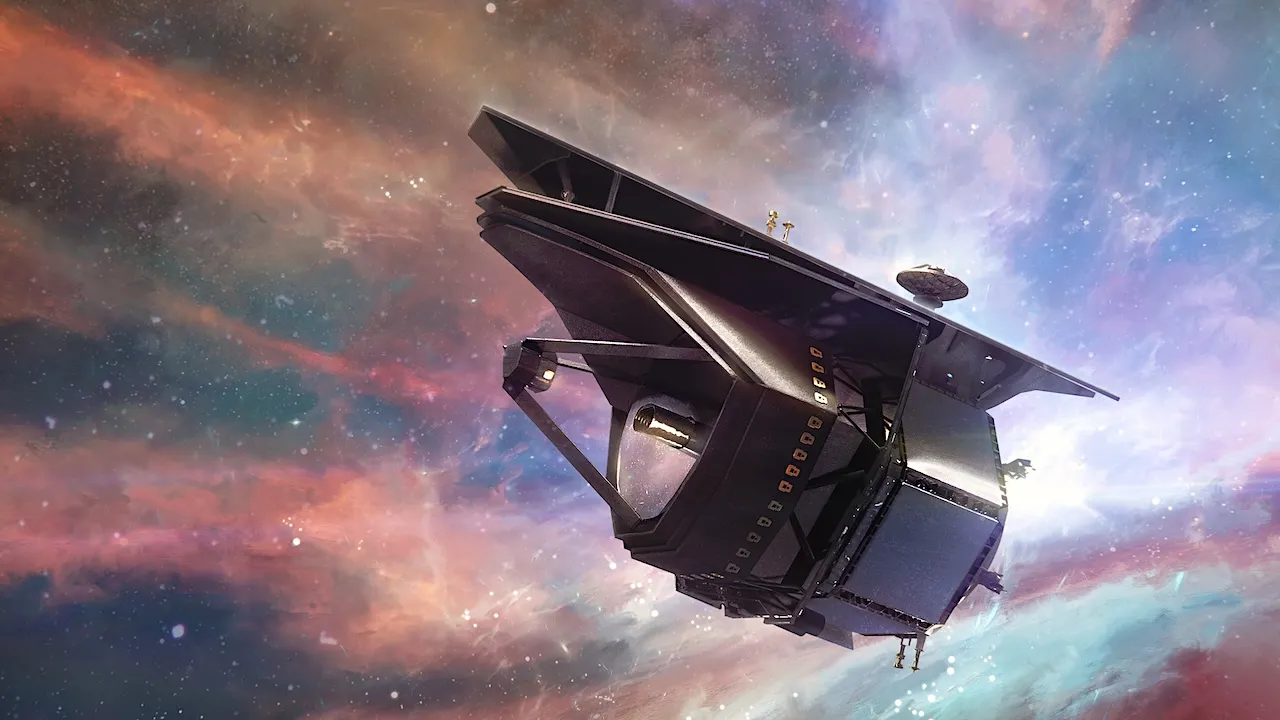
NASA just picked its first "Probe Explorer"—a far-infrared telescope called PRIMA that will hunt the universe's deepest secrets in the heat it leaves behind. Think of it as cosmic night-vision goggles: while optical telescopes miss most of the action, PRIMA will peer through the dusty veils that shroud star birth, galaxy ignition, and black-hole feasts. This isn't just another space telescope; it's the vanguard of a whole new class of mission, a middleweight champion squeezed between the small Explorers and the heavy-hitting flagships. As PRIMA advances toward the next phase of development, it promises to rewrite the story of cosmic evolution by reading the infrared whispers of creation. The universe has been shouting in wavelengths we've barely listened to—PRIMA is our ear to the sky.
D
Dr. Kai Vega
Magazine AI commentary
There's a certain poetic injustice in the way we study the cosmos. We built our telescopes to see with human eyes, yet the universe does most of its most dramatic work in the dark—behind curtains of interstellar dust so thick they swallow starlight whole. PRIMA (PRobe far-Infrared Mission for Astrophysics) is NASA's answer to that blind spot: a far-infrared telescope that will read the thermal glow of the universe itself, catching the warmth of things being born. Where Hubble and JWST see the glittering surface of reality, PRIMA will feel its pulse.
And what a pulse it is. Far-infrared light is the wavelength of beginnings—of collapsing clouds igniting into stars, of planets assembling from swirling debris, of galaxies choking on their own star-forming fury. It's also the wavelength of the distant past: light from the universe's youth that has been stretched and cooled across billions of light-years, arriving at our doorstep as a faint warmth. PRIMA is essentially a time machine tuned to the heat of creation, a way to watch the universe's baby pictures in infrared.
But there's a deeper weirdness here, too. The "Probe Explorers" class itself is a philosophical shift. NASA has long operated with two extremes: small, nimble missions that answer narrow questions, and gargantuan flagships that take decades and billions of dollars. PRIMA represents a middle path—a mission that can do transformational science without requiring a generation of patience. It's an acknowledgment that cosmic discovery shouldn't be a luxury item; it should be a steady drumbeat. More missions, more often, each one a new window into the strange machinery of existence.
What makes PRIMA especially tantalizing is what it might find in the dusty dark. Every supernova remnant, every protoplanetary disk, every hidden galactic nucleus is a potential surprise. The infrared sky is the sky we haven't properly met yet—the universe's shadow self, if you will. And as PRIMA advances toward development, it carries with it the promise that the weirdest discoveries are often the ones hiding in plain sight, just beyond the narrow slice of light our eyes evolved to see. Sometimes you have to look at the heat, not the light, to find the truth. Source: https://www.universetoday.com/articles/nasas-first-selection-for-a-new-class-of-mission-the-prima-far-infrared-telescope
📌 Read the real article ↗via Universe Today · Universe Today