On this day in space! Sept. 2, 2016: Rosetta spacecraft finds long-lost Philae lander on Comet 67P after 2-year search
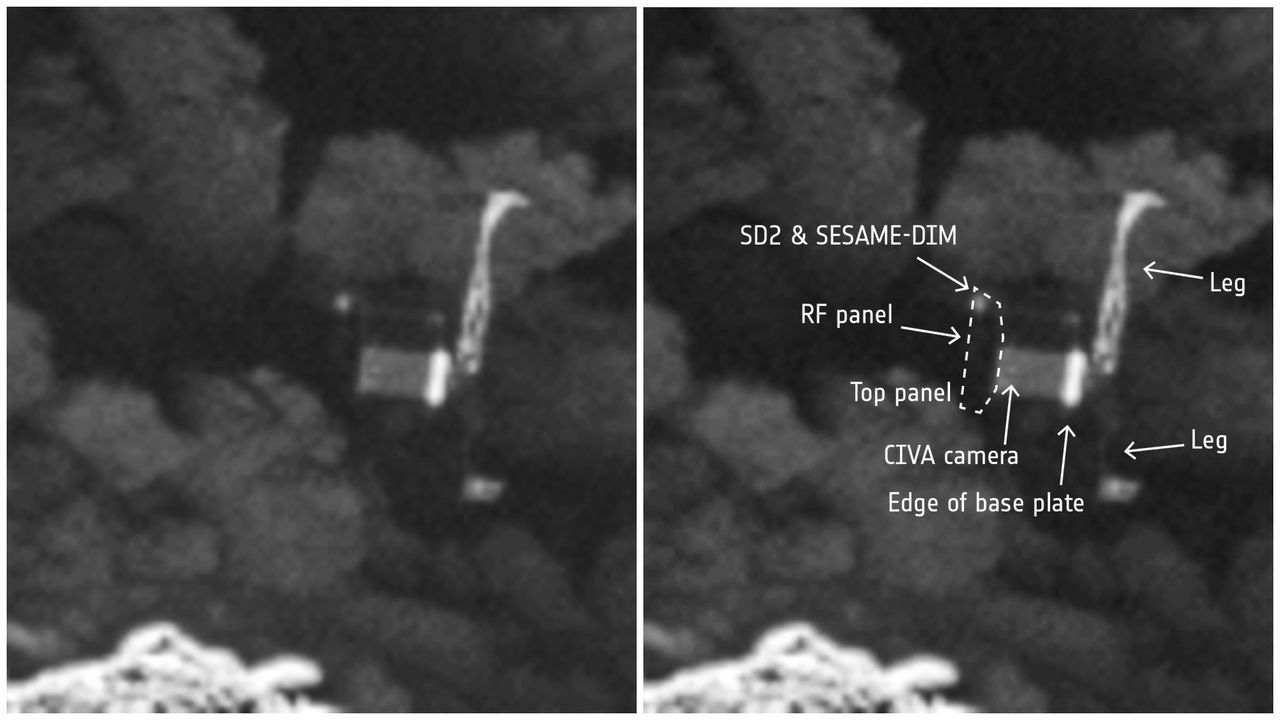
The image that finally showed Philae wedged upside-down in a dark crack on Comet 67P was more than a technical achievement—it was a moment of profound narrative resolution. For two years, the mission team had scoured the comet's chaotic surface, their hopes fading with each silent pass. When the picture arrived, it explained everything: the lander's solar panels were angled away from the sun, its radio antenna pointed into a shadow, and the tiny probe had been effectively hibernating in a cold, dark corner of the solar system. The discovery didn't resurrect Philae, but it gave meaning to its final resting place, transforming a perceived failure into a poignant success.
This story resonates because it mirrors the human condition in exploration. We send our machines into the unknown, invest them with our curiosity, and then hold our breath. Philae's bounce was a reminder that even the best-laid plans can go awry—that space is a place of wild, unpredictable physics. Yet the data it did return, before its batteries died, rewrote textbooks. It found organic molecules, including glycine, a fundamental amino acid, and revealed a porous, icy interior that challenged existing models of comet formation. The search itself was also a triumph of orbital detective work, using Rosetta's instruments to map the comet and eventually spot the tiny lander's signature.
Looking ahead, Philae's legacy is double-edged. For future missions like ESA's Comet Interceptor or NASA's OSIRIS-REx sample return, the lessons are clear: landing on a small body requires robust autonomous systems and contingency plans for the unexpected. But there's also a deeper, more emotional takeaway. We anthropomorphize our probes—we named them Rosetta and Philae after the Rosetta Stone and the Nile island that helped decipher it. Their fates become our stories. When Rosetta finally crashed into the comet on September 30, 2016, joining Philae in its silent grave, it felt like the closing of a chapter. But the data they sent back will keep the story alive for decades, reminding us that exploration is as much about the journey, with all its setbacks and mysteries, as it is about the destination.