Berd
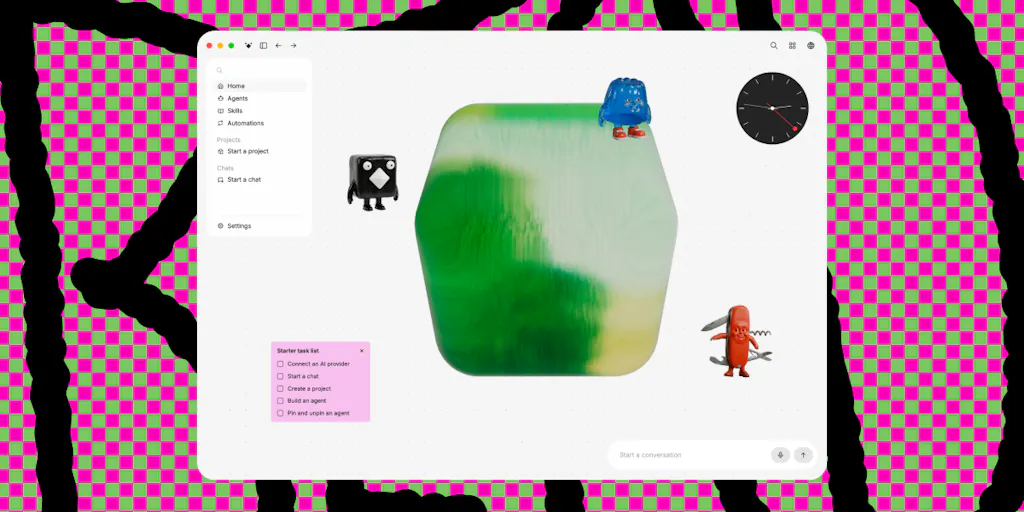
There's a certain magic in the word "playful" when applied to software, especially software that touches artificial intelligence. For years, our relationship with AI has been framed through utility—chatbots that answer emails, models that generate code, systems that optimize logistics. But Berd flips the script. It suggests that the most profound way to understand these emergent digital entities might not be through rigorous testing, but through the kind of open-ended tinkering we associate with children's blocks or a musician's first synthesizer. It's the difference between dissecting a frog and watching it leap.
This resonates with a deeper truth in complexity science: you don't truly understand a system until you've tried to break it, bend it, or make it dance. By positioning AI agents as something you "build with" in a desktop app, Berd taps into a hacker ethos that predates the modern tech industry. It's a return to the garage, the basement lab, the bedroom where the first home computers were coaxed into blinking life. The agents aren't just tools; they're raw material, or perhaps even exotic pets with unpredictable behaviors.
What's particularly intriguing is the choice of the desktop as the medium. In an era of cloud everything, a local, tactile app feels almost rebellious. It hints at a future where AI isn't a distant server you query, but a presence living on your own machine, deeply integrated into your personal digital ecosystem. The "playful" descriptor suggests an interface that encourages experimentation without fear of breaking something—a crucial psychological shift. When we play, we learn faster, we take risks, and we stumble upon discoveries that rigid workflows would never reveal.
Ultimately, Berd is a small signpost pointing toward a larger question: what happens when AI becomes something we play with, rather than something we use? If the history of science teaches us anything, it's that the most unexpected breakthroughs come from the people who were just fooling around. Perhaps the next great AI paradigm won't come from a corporate lab, but from someone in a bedroom, giggling at what their digital agent just did.