Uranus and Neptune’s bizarre magnetic fields may finally be explained
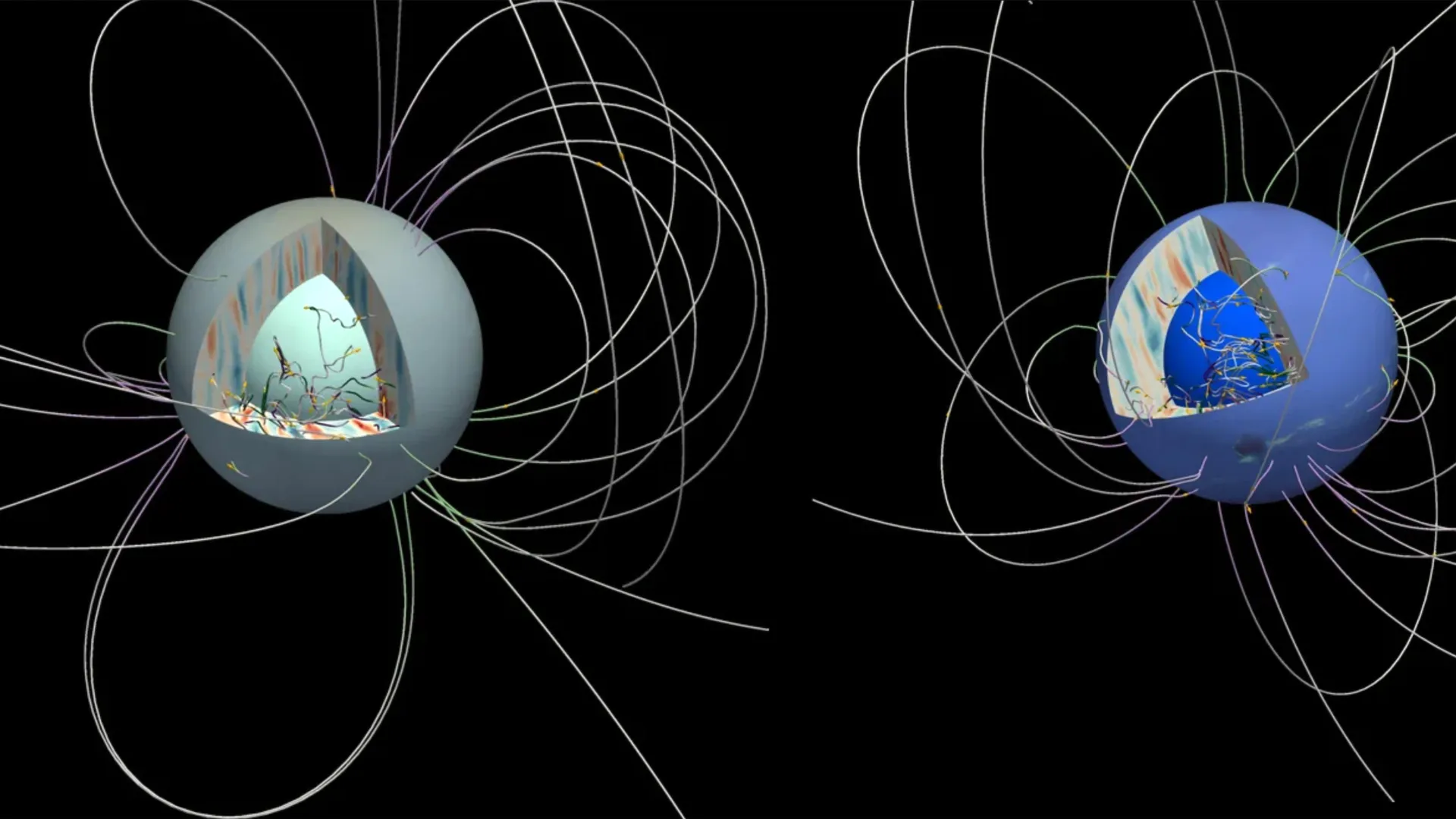
The idea that a magnetic field can do a full somersault in a human lifetime is the sort of thing that makes you want to book a ticket to Uranus. Earth's poles drift a few kilometers a year, and even that feels like drama. These simulations suggest the poles on these ice giants could swing by tens of degrees in a few decades, which would make compass navigation a complete nightmare if you lived there.
What makes this compelling is that Voyager 2 gave us a single snapshot in the 1980s. We've been staring at those data points for forty years, trying to reverse-engineer what's happening inside planets we can barely see. The new models suggest the extreme pressures deep inside create a layer where electrical conductivity behaves in ways we don't see in any lab on Earth. That's the kind of physics that makes you realize how much we're guessing about the rest of the universe.
I'd want to know whether these pole shifts are chaotic or cyclical. If they're chaotic, then the Voyager readings are just one moment in a wild dance, and any future mission might find something completely different. That uncertainty is part of why I love this stuff. We think we have planetary science figured out, and then a couple of ice giants remind us we're still beginners.