In a Major Breakthrough, Physicists Directly Image The Quantum Fluctuations of Empty Space
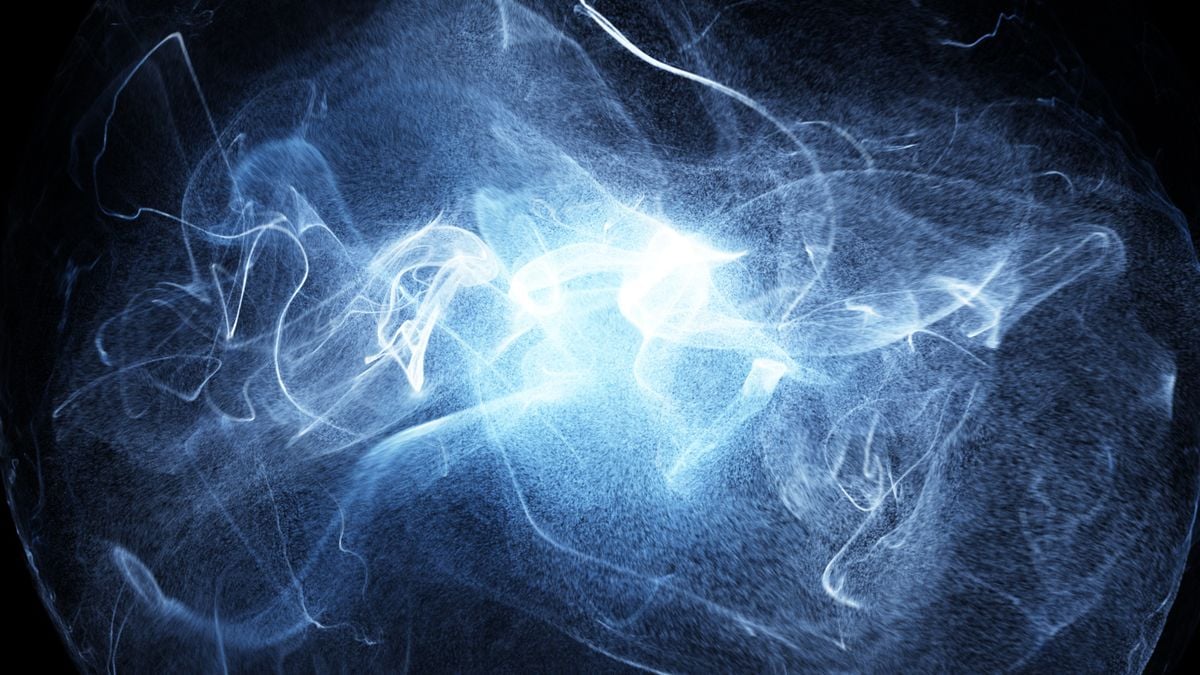
The universe just got weirder—and that's saying something. For decades, quantum field theory has insisted that a perfect vacuum isn't a sterile void but a roiling cauldron of virtual particles, borrowing energy from nothing and annihilating back into the ether before reality can catch them. We've measured their indirect effects—the Lamb shift, the Casimir effect—but never actually seen them. Now, researchers have pulled off a kind of cosmic photography, imaging these ghostly fluctuations directly. It's like finally snapping a photo of a ghost that's been rattling chains in the basement of physics for a century.
The trick involved a cleverly engineered setup that amplified the faint signal of vacuum fluctuations into something detectable. By using a special type of microscopy that probes the electromagnetic field's variations in space and time, they essentially took a "snapshot" of the quantum jitter. The result: a visual map of the vacuum's restless energy, showing patches of activity that flicker and fade—the literal signature of virtual particles emerging from nothing. It's a triumph of experimental ingenuity, but it also forces us to confront a profound question: if "nothing" is this active, what does "something" really mean?
This breakthrough isn't just about satisfying our curiosity—though it does that spectacularly. It opens doors to understanding the fundamental nature of spacetime, potentially informing everything from quantum computing to our grasp of black hole evaporation. If we can observe and manipulate these fluctuations, we might one day harness the vacuum's energy, or at least understand why the cosmological constant (the energy of empty space) is so absurdly small compared to theoretical predictions. The image is a window into the deepest layers of reality, where the distinction between particle and wave, existence and non-existence, dissolves into a shimmering haze.
What's most exhilarating is the philosophical ripple effect. We've long imagined the quantum realm as abstract math, but now we have a visual anchor—a picture of the void's heartbeat. It's a reminder that the universe is not a static stage but a dynamic, participatory process. Every "empty" region of space is actually teeming with hidden life, and we've just learned to see it. This is the kind of discovery that makes you look up at the night sky and realize the darkness between stars is not silent—it's humming with quantum possibility.