Astronomers Spotted a 'Bear' on Mars
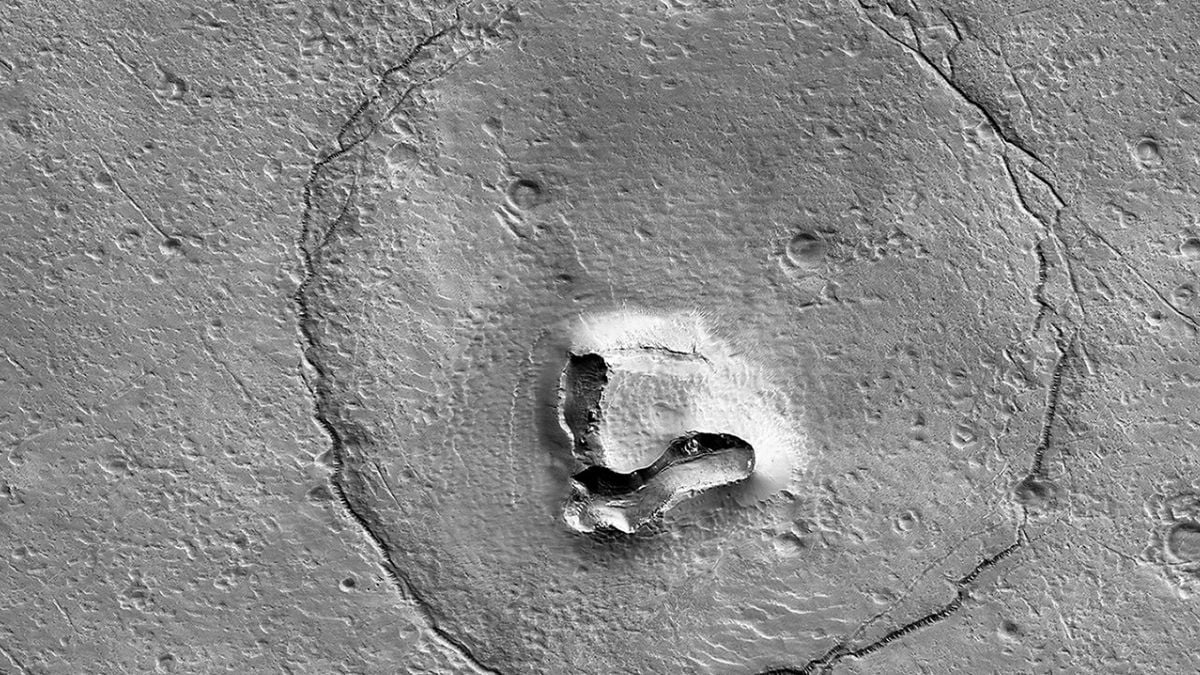
There’s something profoundly human about looking at a lifeless, dusty world and seeing a bear. The image, captured by the HiRISE camera aboard the Mars Reconnaissance Orbiter and highlighted by the University of Arizona, is a stunning example of pareidolia—the psychological phenomenon where we perceive familiar shapes in random patterns. On Mars, pareidolia is practically a hobby: we’ve seen faces, pyramids, spoons, and even a petrified rat. But the bear might be the best yet because it feels so accidental, so almost intentional, like a cosmic prank.
The "bear" itself is a geological Rorschach test: a circular fracture forms the head, two craters become the eyes, and a V-shaped collapse structure creates the snout. Scientists at the University of Arizona joked that there are a few ways to interpret it—perhaps it's a hill, perhaps a maar, or perhaps just a bear-shaped hole in the ground. What makes it so enchanting is not that it's a mystery, but that it's a reminder of how our brains refuse to accept randomness. We are pattern-finding machines, and Mars is the perfect canvas for our projections.
This also speaks to the deeper wonder of planetary exploration. We send robotic emissaries to alien worlds, and they send back images that challenge our sense of scale and familiarity. The bear is not real, but the geological processes that formed it are—volcanic collapses, impact craters, and erosion sculpting a landscape over billions of years. It's a beautiful intersection of imagination and science: the same brain that sees a bear is the brain that can decode the forces that made it.
As with all pareidolia, the bear is a mirror. It shows us less about Mars and more about ourselves—our need for wonder, our craving for connection, and our inability to stop seeing ourselves in the cosmos.