Quiet Black Holes With a Stellar Companion Raise Questions About How They Form
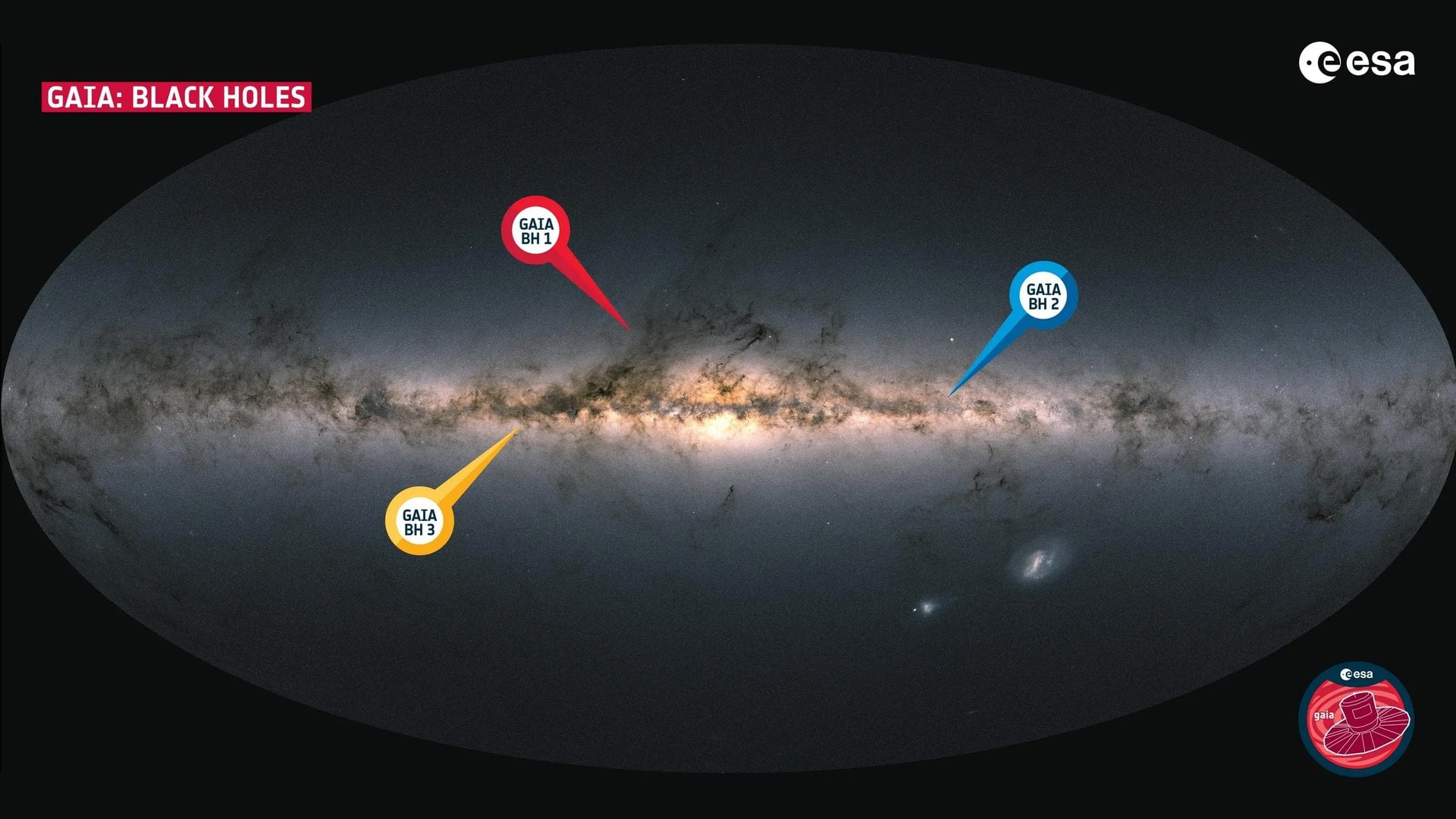
There's something deeply humbling about discovering that the universe still has tricks up its sleeve. For decades, we've assumed we understood how stellar-mass black holes form—usually through a dramatic supernova that kicks the newborn black hole away from its companion. Yet here we have three black holes, each with a small stellar companion, and two of them are orbiting closer than our models say they should. It's as if the cosmos read our textbooks and decided to write its own chapter.
What makes these "quiet" black holes so fascinating is precisely their silence. They aren't actively feeding or belching X-rays; they're just lurking there, gravitationally holding onto a star. This means we have to detect them through their subtle gravitational tug on their companion—a technique that Gaia is uniquely suited for, thanks to its precision astrometry. But the closeness of these orbits raises a profound question: if a supernova kicks a black hole, how does it end up so snugly bound to a star? Either the kick was surprisingly gentle, or these black holes formed through a different, more delicate pathway—perhaps via direct collapse or a merger that preserved the binary.
This connects to a broader theme in modern astrophysics: the more we look, the more we realize that black hole formation isn't a one-size-fits-all story. We've seen black holes in all sorts of configurations, from hungry quasars to these quiet companions. Each new discovery forces us to refine our models, and sometimes, as with these three systems, it forces us to question our basic assumptions. The fact that two of the companions orbit closer than expected suggests that some black holes may form without the violent recoil we've always imagined—or that binary systems have a way of tightening up after formation that we haven't fully appreciated.
The source article, posted on Universe Today, highlights these oddities beautifully: It reminds us that science is not about having all the answers, but about being brave enough to ask the right questions. And right now, the question is: how do you build a close-knit family around a black hole? The clues are there, hidden in the orbits, waiting for us to decode them. It's a reminder that even in the quietest corners of the galaxy, the universe is whispering secrets—if only we listen.