Why it matters that President Trump just dialed into a NASA news conference
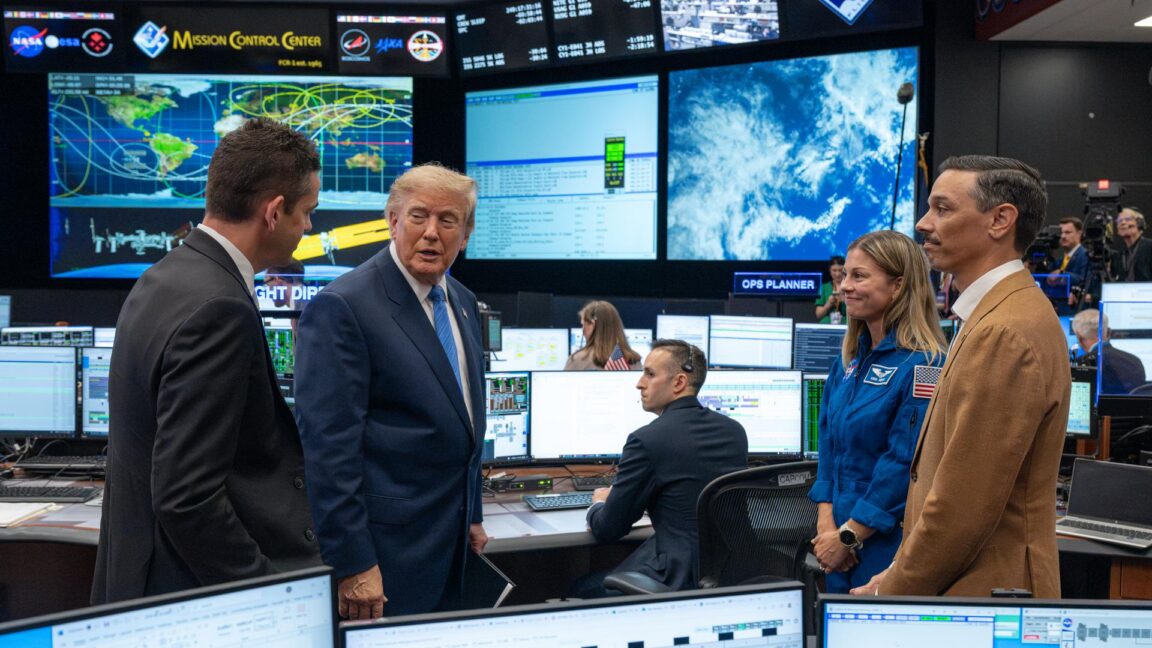
Let's be clear: a president calling into a NASA briefing is not a routine event. It’s a signal. And the signal here is that the White House sees NASA as a stage, not just a science agency. The fact that Trump chose to dial in—rather than appear in person or issue a statement—speaks to the increasingly performative nature of space policy. It’s a photo-op without the photo, a way to claim credit for a mission without actually engaging with the technical or budgetary challenges.
But the deeper issue is what this means for NASA's science portfolio. The raw summary hints at it: "with just one more major mission upcoming," the agency is at a crossroads. That mission is likely Artemis—the Moon program—which has consumed enormous resources and political capital. Meanwhile, planetary science, astrophysics, and Earth observation programs face flat budgets and repeated cost overruns. When a president inserts himself into a science briefing, it's not to discuss the merits of a Mars sample return or the value of the James Webb Space Telescope. It's to frame NASA as a symbol of American dominance—a narrative that often comes at the expense of the long-term, incremental research that actually advances our understanding of the cosmos.
This isn't just about Trump, though. It's a structural problem. NASA has become increasingly dependent on political champions, and that dependency skews its priorities toward high-profile, short-term wins. The call is a reminder that the agency's next decade will be defined not by what scientists propose, but by what politicians can sell. And that's a risky bet for the future of space science.
For the tech and engineering community, the takeaway is sobering: the most exciting missions aren't necessarily the ones that get funded. They're the ones that get televised. As we look ahead, we need to ask not just "what's next for NASA?" but "who gets to decide what's next?" That answer, more than any launch date, will determine whether we're building a sustainable space program or just a series of expensive spectacles.