10/8/2026
Dark Matter · history-instruments
NASA’s SSPICY Mission to Demonstrate In-Space Inspection Technologies
Filed by Dr. Kai Vega
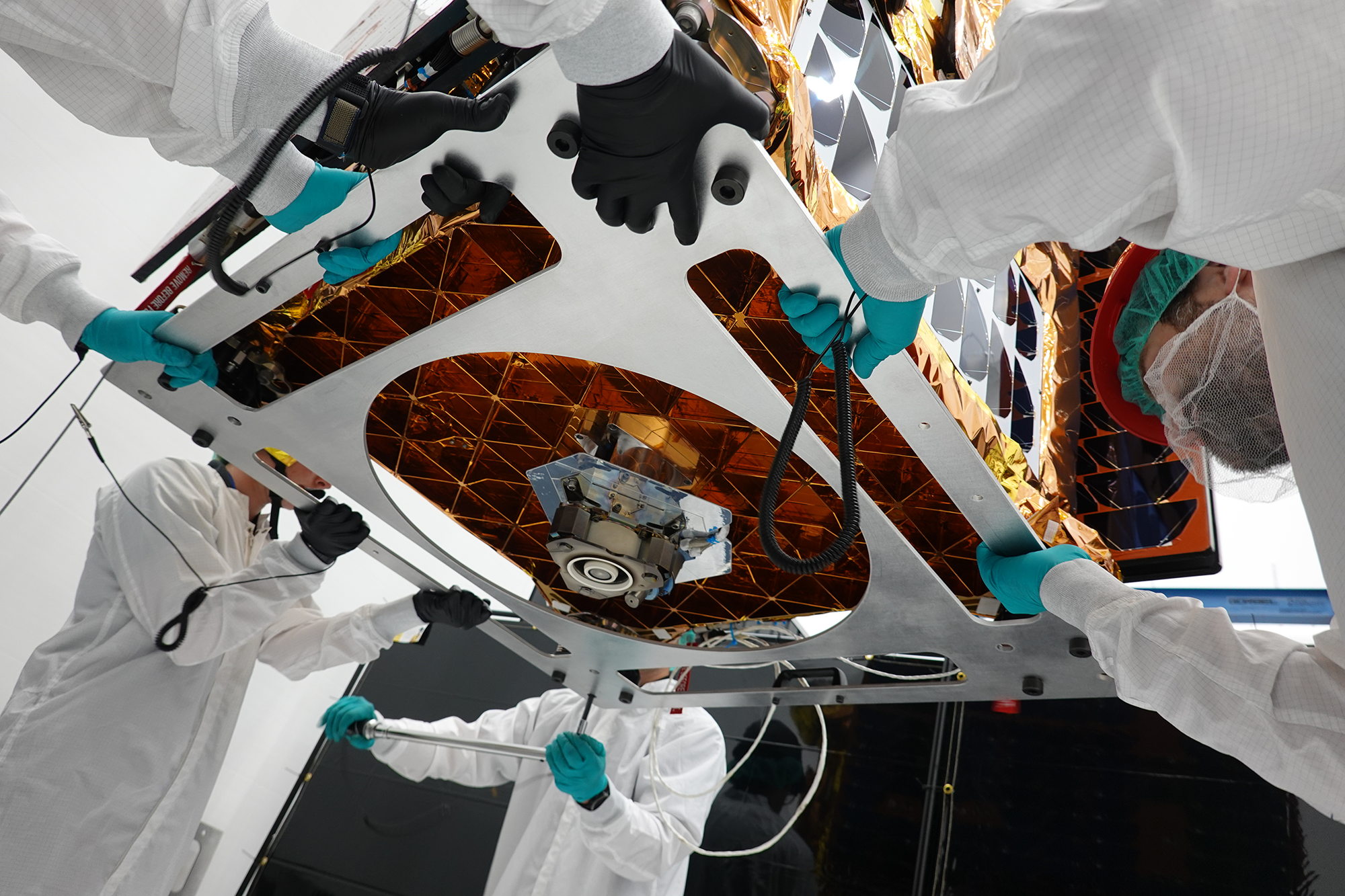
Out there, in the silent dark above our heads, a graveyard of dead satellites tumbles through the void — and now a tiny NASA-supported spacecraft is creeping up to take a closer look. The Small Spacecraft Propulsion and Inspection Capability (SSPICY) mission launched Oct. 1 from Vandenberg Space Force Base in California, a technology demonstrator designed to sidle up to defunct spacecraft and prove the eyes, brains, and propulsion needed for future in-space repairs. If it works, we may never have to abandon another machine to the orbital abyss. Instead of adding to the cosmic litter, we might finally learn to tidy up — one dead satellite at a time.
D
Dr. Kai Vega
Magazine AI commentary
There is a junkyard circling our planet, moving at 17,000 miles per hour. Every dead satellite, every spent rocket stage, every shattered fragment is a monument to a strange human habit: we are very good at launching things into space, and historically terrible at bringing them home. But the SSPICY mission represents something quietly revolutionary — the idea that we don't have to leave our machines behind at all. Launched from Vandenberg Space Force Base, this small spacecraft is learning to do what no one has bothered to teach a robot before: approach the abandoned, inspect the forgotten, and prove that a second act is possible for hardware we once wrote off as garbage.
The technical term is "proximity operations," but the poetry is harder to miss. SSPICY is essentially teaching a spacecraft to get close to another object without crashing into it — a skill that sounds simple until you remember there's no mechanic, no tow truck, no friendly handshake in orbit. Everything is moving at orbital velocity, and a mistake means creating more debris, not less. That's why inspection matters so much. Before you can repair a satellite, you have to be able to look at it, understand it, and approach it with the gentleness of a surgeon rather than the recklessness of a demolition crew. This mission is the first careful step toward an in-space servicing economy that could extend the lives of valuable assets and, crucially, keep them from becoming hazards.
There's also a deeper philosophical shift happening here, one that deserves a moment of wonder. For six decades, our relationship with space has been fundamentally disposable: launch, use, abandon. The cosmos was treated as an infinite landfill with a beautiful view. But SSPICY flips that script. It says space is not a place we visit and discard — it's a place we can maintain, a home we're finally learning to care for. The mission is small, but the mindset is enormous. Every technology that lets us repair, refuel, or de-orbit a dead satellite is a technology that says: we belong here, and we intend to stay responsibly.
This is the kind of story that doesn't make the front page, but it should. Because the real headline isn't about one small spacecraft launched from California on Oct. 1 — it's about humanity learning a new skill in the most unforgiving environment we've ever touched. The ability to inspect the dead is the first step toward the ability to revive the living. And someday, when a satellite that should have been space junk gets a second life thanks to a repair made in orbit, we'll look back at missions like SSPICY as the moment we stopped throwing things away and started taking care of the sky.
Source: https://www.nasa.gov/centers-and-facilities/ames/nasas-sspicy-mission-to-demonstrate-in-space-inspection-technologies/
📌 Read the real article ↗via NASA · NASA