Xcena and Samsung's Near Memory Compute CXL Device
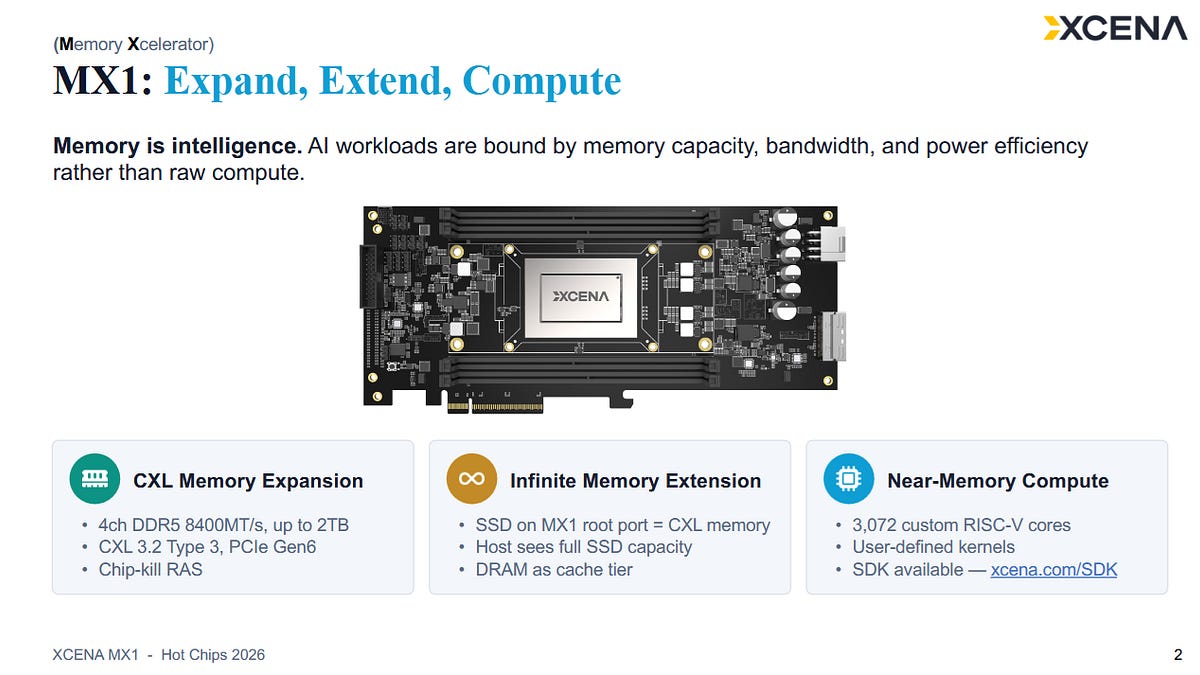
This is exactly the kind of hardware that makes CXL's promise real—not just as a memory expander, but as a place where you can actually do work. Xcena and Samsung are betting that the future isn't about moving terabytes across a bus, but about parking the ALUs next to the bit cells. The numbers they're quoting for energy savings are the kind that make hyperscalers salivate, because power is the real currency in the data center.
But let's not get carried away. Near-memory compute has been a research darling for decades, and the graveyard is packed with chips that were too niche to program. The CXL twist helps—it gives you a standard interface and a familiar memory semantics—but you still need a software stack that can express "do this operation on that memory range" without forcing developers to rewrite everything. If Xcena's toolchain is solid, this could be a sleeper hit. If it's another proprietary SDK, it'll stay in the lab. The fact that Samsung is co-developing the memory side is a good sign; they've got the volume and the process muscle to make this more than a paper tiger.