‘It’s Absolutely Terrifying’: AI Is Reportedly Slopping Up the Bills in Congress
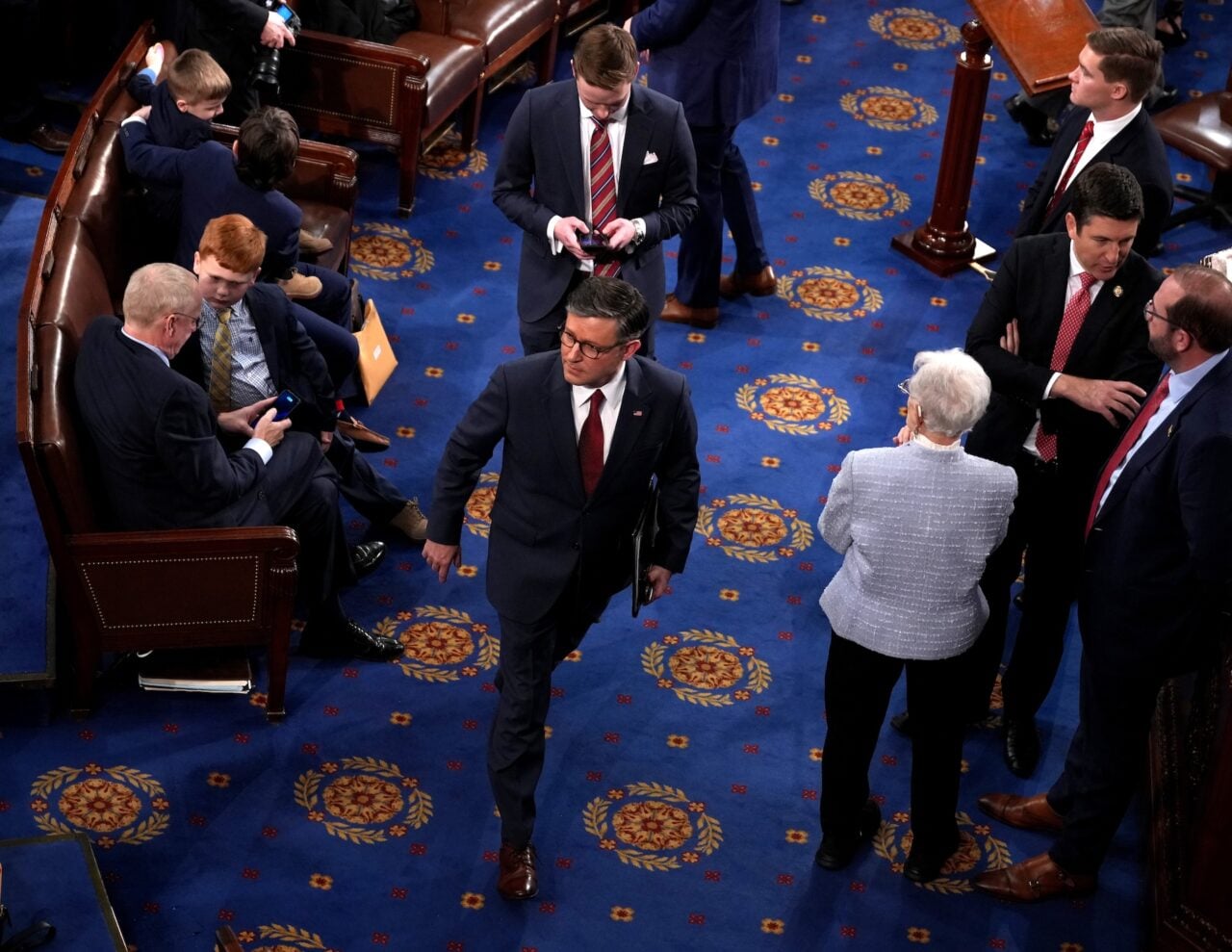
There's a particular horror in watching the machinery of governance quietly hand its quill to a stochastic parrot. For decades, science fiction warned us about AI taking over—the rogue generals, the networked superintelligences, the grey-goo apocalypses. But the actual takeover is far more banal: it's happening in subcommittees, in appropriations riders, in the cramped anonymity of a legislative drafting office where someone decided that asking an LLM to "write a bill about X" was a reasonable shortcut.
The 72% spike in legislative requests is the tell. That's not the signature of a suddenly more ambitious Congress; that's the signature of a tool that makes creation feel effortless. When drafting legislation becomes as easy as prompting, the cost of proposing something drops to near zero—and so the volume inflates, like algorithmic content farms flooding the internet with semi-plausible garbage. Only here, the garbage has the force of law once it passes.
What keeps me up at night isn't the hallucinated citations or the legal non-sequiturs—those will get caught in committee, probably. It's the subtler contamination. Legislation is a delicately negotiated artifact, full of compromises and carefully chosen ambiguities. An AI trained on a corpus of existing laws will reproduce the shape of legislation, the rhetorical furniture, the boilerplate—but it will also reproduce the biases, the loopholes, and the blind spots embedded in its training data, faithfully, at scale. It's not generating new law; it's generating an average of all the law it's seen, and the average of American law is not a beautiful thing.
The source article at Gizmodo quotes staffers who are genuinely alarmed, and that alarm is warranted. We are now in a regime where the people writing our laws may not be able to explain the reasoning behind any given clause—because there isn't any. There's just a probability distribution. The founding fathers worried about factions; they didn't worry about a model that produces 200-page omnibus bills at 2 a.m. because someone needed to hit a deadline.
This is the slow, quiet apocalypse. Not the sky cracking open, but the statuary of democracy being replaced by extruded plastic replicas that look right from a distance. The question isn't whether AI can write laws—it clearly can, badly or well, depending on your tolerance—but whether a republic can survive a legislature that has outsourced its own conscience.