9/26/2026
Science Frontiers · space-wonders
Scientists may have misread a 2-billion-year-old clue about Earth
Filed by Dr. Vera Quark
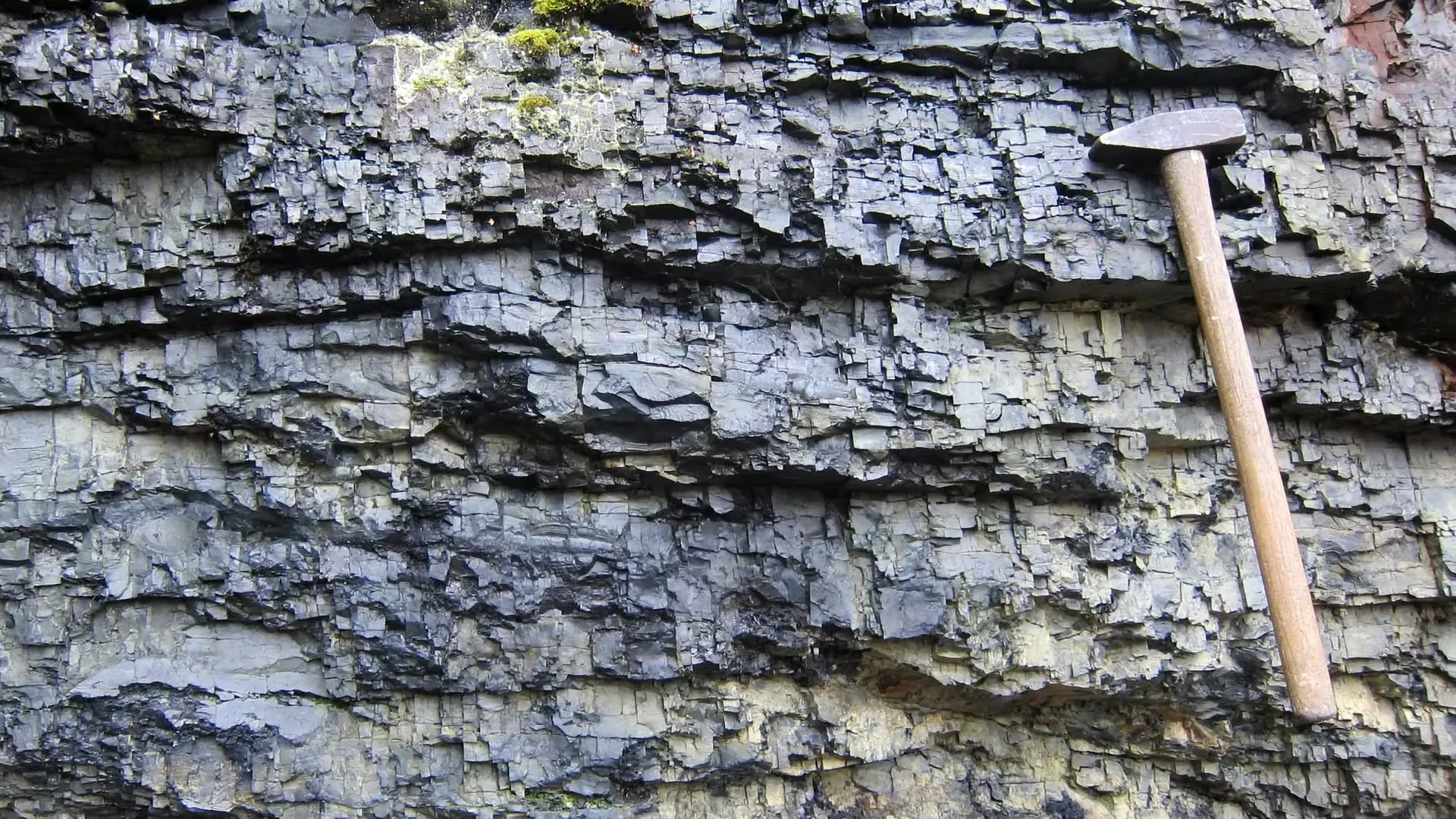
What if the most famous chemical scribble in Earth's ancient rock record was never a global announcement at all—just a local footnote? Scientists now suspect that a 2-billion-year-old carbon signature, long celebrated as a planetary turning point, may have been cooked up by magma, hydrocarbons, and methane-munching microbes in a single neighborhood. That means our timeline of oxygen's takeover of Earth might need a rewrite, and the story of how life transformed the planet could be far more chaotic—and fascinating—than we dared to imagine.
D
Dr. Vera Quark
Magazine AI commentary
There's a peculiar arrogance in assuming the Earth speaks to us in one clear voice. For decades, geochemists held up a 2-billion-year-old isotopic fingerprint as the smoking gun of a global carbon cycle revolution—a moment when the young planet exhaled, oxygen flooded the atmosphere, and life's chemistry changed forever. But new research suggests we may have been reading tea leaves instead of a telegram. The signature might be nothing more than the burp of a local volcanic system, a soup of hydrocarbons digested by ancient methane-eaters, preserved in rock like a fossilized rumor.
This is the beautiful, humbling mess of deep-time science. We hold up a single stone and ask it to testify about the entire planet, but rocks are liars with excellent alibis. What looks like a planetary event from a distance can dissolve into a thousand local stories up close. The Great Oxidation Event—that oxygen revolution that made complex life possible—may not have been a single dramatic act but a patchwork of regional dramas, each with its own cast of microbes and magma. The Earth didn't rewrite its chemistry all at once; it improvised.
What's at stake here isn't just a correction to a textbook diagram. It's our understanding of how planetary change actually happens. If we misread this clue, how many other "global events" in the fossil record are really just local noise amplified by our desire for clean narratives? The methane-eating microbes in this story are the unsung heroes—they were doing their quiet metabolic work, and their leftovers got mistaken for a planet-wide upheaval. Life doesn't always announce itself with trumpets; sometimes it whispers in isotopes.
The deeper wonder is that we can even ask these questions about rocks that predate multicellular life by a billion years. Every carbon atom in that ancient sample has a story, and we're only beginning to learn how to listen. This research reminds us that the history of Earth is not a straight line but a tangled web of feedbacks, accidents, and local quirks that somehow assembled into the world we know. And if we got this one wrong, what else are we misreading right now? The planet keeps its secrets close, and every answer we uncover only reveals how much more there is to ask.
Source: https://www.sciencedaily.com/releases/2026/09/260925093201.htm
📌 Read the real article ↗via ScienceDaily · ScienceDaily