Segway’s Newest Navimow Robomower Has an Edge-Trimming Trapdoor
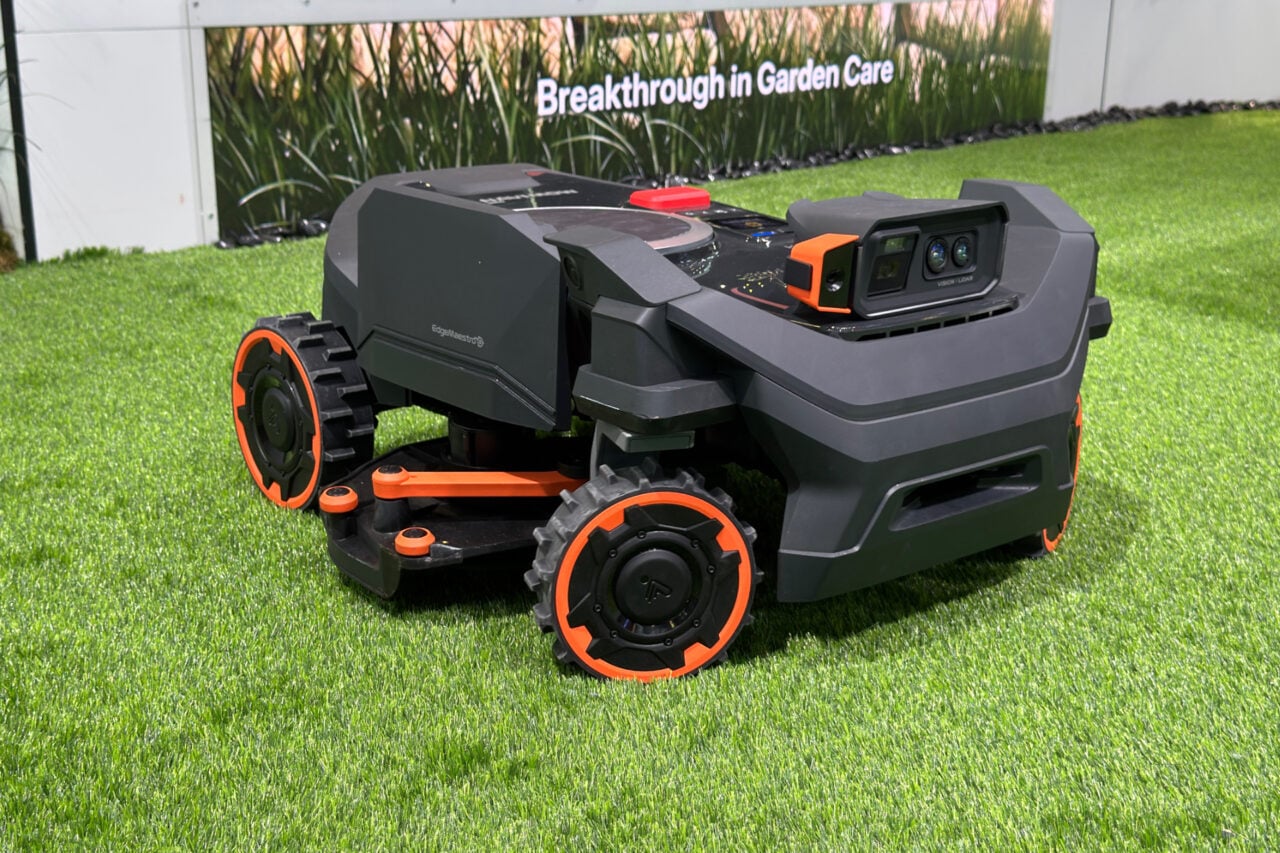
The Navimow H5 Pro is a gentle piece of engineering heresy dressed up as a lawn mower. Instead of a hulking chassis that approaches the edge of the grass and resigns itself to a ragged margin, Segway has cut a discrete trapdoor into the unit's flank; when the mower reaches the border between clipped turf and fence line, the hatch opens and a secondary trimmer extends, finishing the cut directly on the boundary. On the surface, it's a fix for the tiny tufts that embarrass suburban Sundays. But looked at from an altitude available in Starfall Weekly, it's a fascinating biological moment in the history of robots: the part that previously yielded to a human is now a mechanical hinge.
Every system that claims autonomy eventually collides with what the software engineers call an "edge case"—a condition that is absent from the initial plan, where the laziest bits of reality poke through. Self-driving cars plant themselves five feet from the curb; delivery drones drop your package at the gate; cleaning bots. The Navimow's trapdoor is that edge case made literal: instead of backening, the mower's hull folds open to send its blade to the exceptions. It is a door that extends the true part of your will beyond the floor of the robotic body. That's plotting.
This shift toward "boundary-proper architecture" is also a statement on how our future domestic robots will be constructed. They won't be massive, optimized shapes that invade; they'll be compact, secret-carrying shells that push out a probe, a trimmer, or a sensor only on the final needed. The home is becoming a choreography of little doors and portholes. A lawn that no longer requires a crooked-from-the-groundnester's labor stops being an object of humble piece and starts being an artifact of machine.
And if we read the precedent in this mower seriously, the takeaway is achingly optimistic, as the world we'd like to automate isn't the pure open one-dimensional plain—the actual hardest territory is the seam where one thing ends and another begins. Segovia's trapdoor is a promissary move: our real edge cases won't be solved by larger algorithm or stronger motors, but by a willingness to open a small door to whatever lay beyond. As Gizmodo reports, the grass's final frontier has just gotten a hatch. The future of automation is quietly carving a second door.