Lifelong
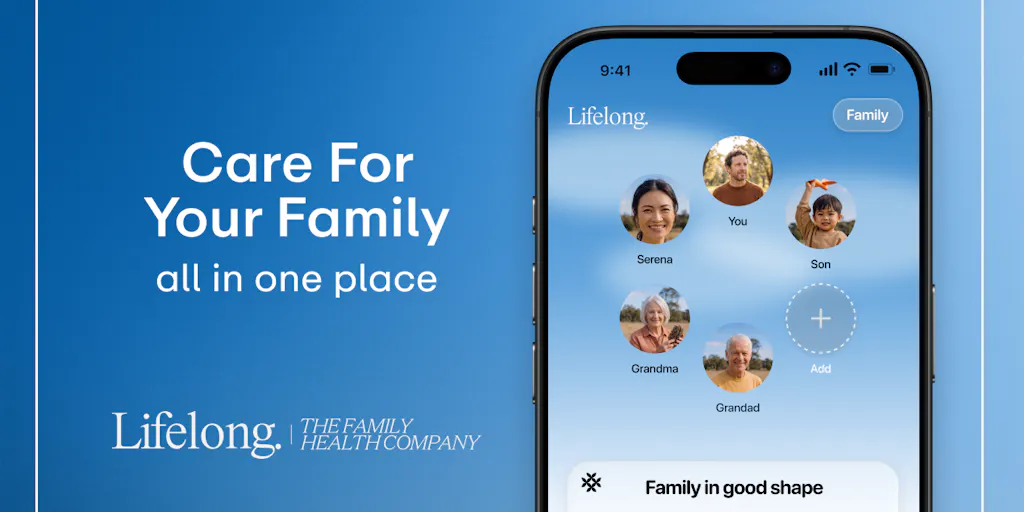
There's a profound weirdness to how we currently manage health information. We trust our bodies to doctors who write notes in digital silos, each one a separate universe with its own login and its own definition of "normal." Lifelong enters this fragmented cosmos like a gravitational lens, bending all those scattered light rays into a single, focused image of a family's well-being. The promise of "your whole family’s health in one place" sounds mundane until you realize how radical it is—we've been content with disjointed data points, but this suggests a holistic narrative where a child's asthma flare-up on Tuesday might be correlated with the air quality index recorded by a wearable on Monday.
The deeper implication here is about agency. When health data is fragmented, we become passive passengers in our own medical journeys. But when it's consolidated, we become the cartographers of our own biological landscapes. Imagine noticing that your partner's migraines spike every time your son has a sleep regression—that's the kind of pattern recognition that only emerges when the whole picture is visible. This isn't just convenience; it's a form of emergent intelligence that arises from synthesis. The weird part? We're only beginning to understand what patterns might emerge when we finally have all the pieces on the same table.
Of course, there's a shadow side to this unification. Centralizing sensitive health data creates a honeypot for hackers, and the ethical implications of an algorithm potentially predicting a family's future illnesses are staggering. But that's the beautiful tension of our age: every tool that empowers us also challenges us to grow our definition of privacy and trust. Lifelong isn't just a product; it's a mirror reflecting our desire for coherence in a messy, beautiful, biological existence.
The source page is sparse—just a tagline and a discussion link—but that's fitting. Like a quantum state, the full potential of this idea collapses into reality only when we engage with it. We're invited to imagine, to ask questions, to wonder: What would it mean to truly know your family's health as a single, breathing story? That's the kind of question that makes the universe feel both smaller and infinitely more connected.