Repairing the ISS 250 miles above Earth | Space photo of the day for Sept. 1, 2026
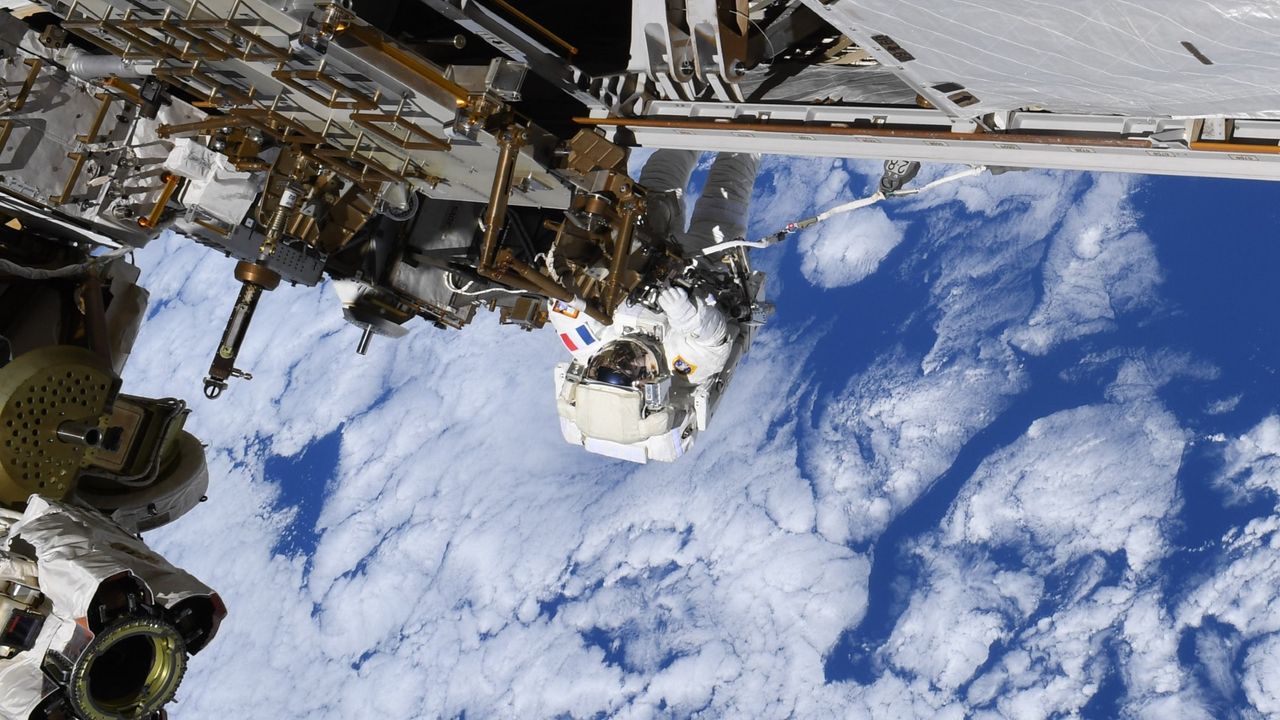
There's something almost sacred about watching a human being perform surgery on a spacecraft. Sophie Adenot's silhouette against the black is a reminder that the ISS isn't a finished monument — it's a living, breathing structure that demands our attention every single day. We tend to romanticize space stations as gleaming citadels of science, but the truth is they're more like aging ships that need constant patching, a nautical metaphor that becomes visceral when you see an astronaut literally bolting hardware into the void.
What strikes me about this image is the altitude. Two hundred fifty miles sounds like a lot, but in cosmic terms, it's nothing — barely a stone's throw from the surface. The ISS exists in that thin margin where Earth's atmosphere gives way to the void, a liminal zone where the laws of physics feel negotiable but aren't. Every repair, every spacewalk, is a negotiation with that boundary, a reminder that our presence in orbit is an act of will, not inevitability.
The future of orbital infrastructure will only make these moments more common. As we look toward commercial stations, lunar gateways, and eventually Mars transit vehicles, the lessons learned during these ISS repair missions become the foundation of a new discipline: off-world maintenance. We're not just fixing a station; we're developing the muscle memory for a species that intends to stay out there.