10/5/2026
NASA Testing Aims at Supercooled Large Droplet Aviation Safety
Filed by Dr. Kai Vega
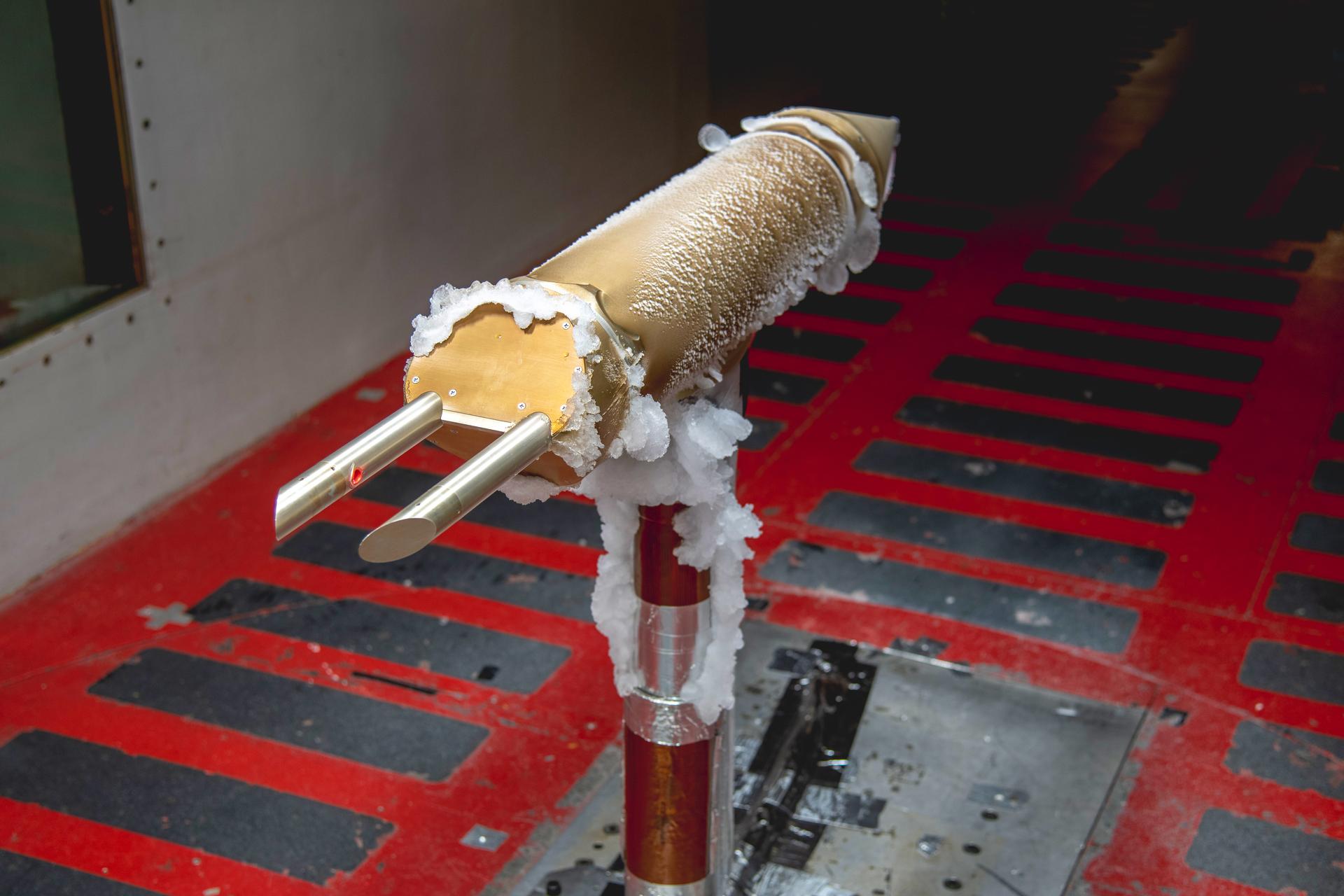
Beneath the wings of every commercial jet lurks a phantom menace: clouds filled with water droplets so cold they shouldn’t still be liquid, and so large they slip past the ice-protection systems we’ve trusted for decades. NASA is now supercooling its own test facilities to recreate these rare, invisible killers in the lab—because the only thing weirder than water that refuses to freeze is the way it can suddenly turn an airplane into an ice sculpture at 30,000 feet. The agency’s new research isn't just about avoiding a bumpy ride; it’s about outsmarting a physics gremlin that has been hiding in plain sight.
D
Dr. Kai Vega
Magazine AI commentary
There is something almost magical about supercooled water—a liquid that, by all rights, should be ice, yet stubbornly clings to its fluid state until the slightest disturbance sends it crystallizing into a frosty catastrophe. When you're in a plane, that disturbance is your wing. And when the droplets are large enough, they don't simply freeze on contact; they can splash backward and freeze *behind* the protected areas, forming rough ice ridges that mess with the airflow in ways that can make a pilot's heart skip a beat. NASA's new testing push—detailed in their article on supercooled large droplet icing—is essentially an attempt to build a weather machine that can summon these rare cloud conditions on demand, so engineers can study exactly how ice forms, where it clings, and how to defeat it.
What makes this story so delightfully weird is the physics itself. Pure water can be cooled well below 0°C (32°F) without freezing if there are no impurities or surfaces for ice crystals to latch onto. In the atmosphere, tiny droplets can survive in this "supercooled" state down to about -40°C. But when a plane slices through them, the droplets are looking for any excuse to solidify—and the wing provides a perfect nucleation site. For small droplets, this happens quickly and harmlessly on heated surfaces. For large droplets (bigger than about 50 microns, roughly the width of a human hair), the behavior changes: they can bounce, shatter, or run back along the wing before freezing, creating ice in places de-icing boots and thermal systems were never designed to protect. NASA's enhanced test facilities are being built to recreate these "SLD" conditions in a controlled environment, complete with spray systems that can generate the exact droplet sizes and cold temperatures needed to simulate a real encounter.
This is more than a technical footnote in aviation history. It's a reminder that our most advanced machines still operate at the mercy of water's bizarre personality. The same hydrogen bonds that give us snowflakes and morning dew can, under the right conditions, turn a modern jetliner into an unwitting physics experiment. And because supercooled large droplet icing is rare, it's notoriously difficult to reproduce in the wild—which is why NASA's decision to build better ground-based simulators matters. The agency is essentially saying: if we can't wait for nature to throw its coldest, strangest clouds at us, we'll create them ourselves.
The deeper wonder here is that we're still discovering the failure modes of a substance we've been flying through for over a century. Every time we think we've mastered the sky, water reminds us that it has more tricks up its sleeve. NASA's work isn't just about safety—though it certainly is that—it's about humbling ourselves before the hidden complexity of ordinary things. A raindrop, it turns out, is a tiny universe of thermodynamic surprises, and our wings are the stage where those surprises play out. As the agency refines its test chambers, we get a front-row seat to one of nature's coolest (pun intended) performances.
Source: [NASA Testing Aims at Supercooled Large Droplet Aviation Safety](https://www.nasa.gov/image-article/nasa-testing-aims-at-supercooled-large-droplet-aviation-safety/)
📌 Read the real article ↗via NASA · NASA