A Meditation to Help Build Your Capacity to Navigate Difficulty
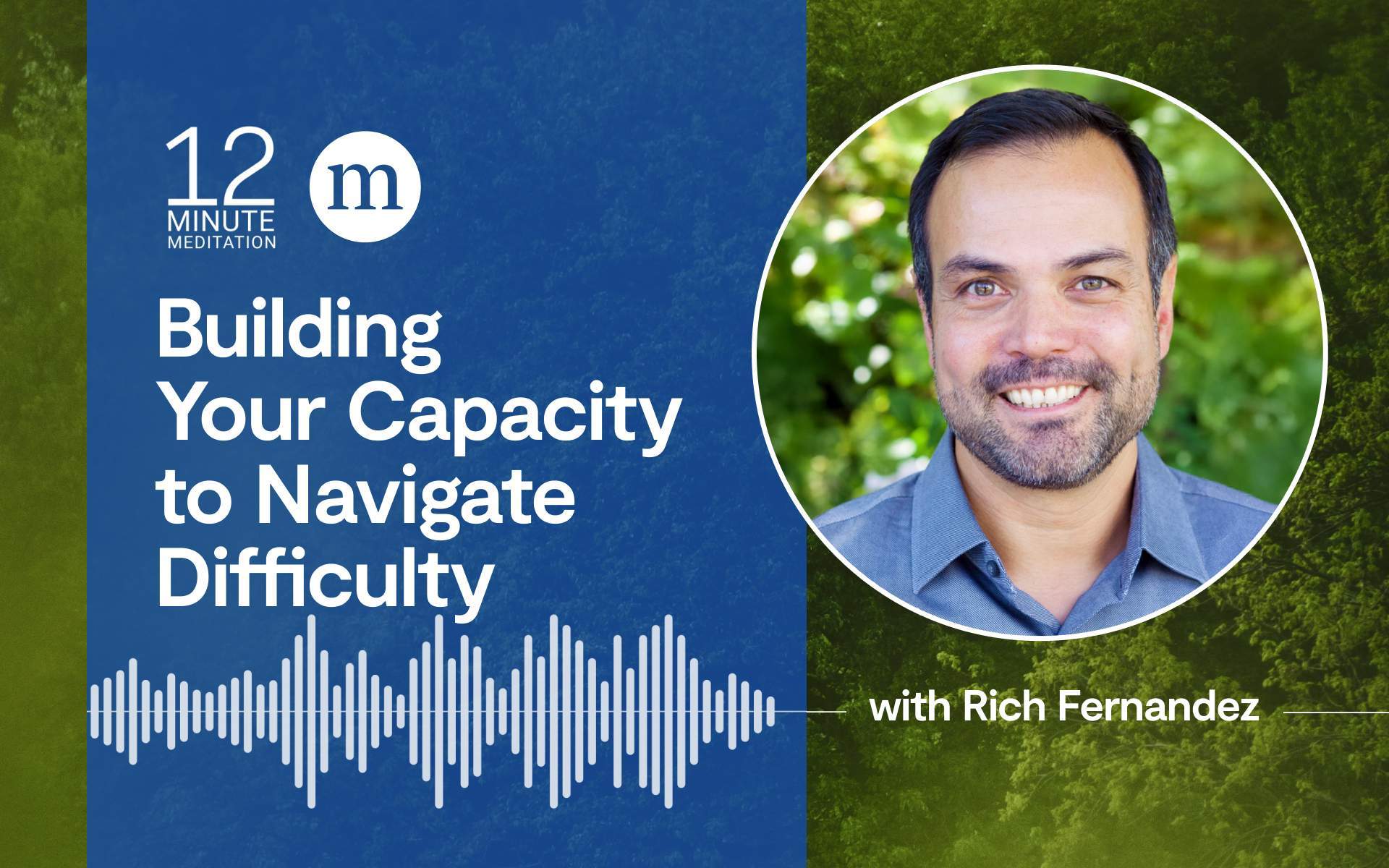
There's a delicious irony in the fact that our most advanced tool for navigating an unpredictable cosmos is an ancient practice of doing nothing at all. Rich Fernandez's meditation, outlined in this Mindful piece, invites us to "subtract ourselves" from experience—a phrase that sounds almost like a glitch in the simulation. In an era where we're told to optimize, gamify, and hack every waking moment, the suggestion that we can build resilience by reducing our grip on the self feels wonderfully counterintuitive. It's as if the universe's deepest code is best accessed by letting go of the controller.
From a cognitive science perspective, this isn't mere mysticism. The practice of perspective-shifting and decentering has been shown to engage the default mode network—that restless, self-referential chatterbox in the brain—and quiet it down. When we observe our thoughts without clinging to them, we're essentially training our prefrontal cortex to regulate the amygdala's alarm bells. That's not magic; that's neuroplasticity in action. But the weird part is that this "subtraction" doesn't leave us hollow. Instead, it creates a spaciousness where wiser responses can emerge, almost like a quantum superposition of possibilities collapsing into the right action.
What Fernandez is really offering is a kind of psychological entropy reduction. In a universe that trends toward disorder, our minds often amplify chaos by over-identifying with every passing storm. By stepping back, we become the calm eye rather than the swirling winds. This is particularly resonant in our current moment of overlapping crises—climate, AI, geopolitical upheaval—where our instinctive fight-or-flight responses are woefully outdated. The meditation suggests that our capacity to navigate difficulty isn't about strength or speed, but about the strange art of becoming less, so that we can be more.
Of course, this isn't a panacea, and it's worth noting that meditation isn't about bypassing pain or toxic positivity. It's about building a container for difficulty. The source article (mindful.org) frames it as "wise relationship" with challenge—a subtle but crucial shift. We're not trying to make the mountain disappear; we're learning to walk it with a different gait. And in that sense, the practice is deeply scientific: it's an experiment in testing the limits of our own adaptability. The results, as any seasoned meditator will tell you, are often stranger and more profound than we expect.
So perhaps the next time you're facing an overwhelming deadline, a difficult conversation, or just the existential weight of being alive in a vast, indifferent cosmos, consider this: the most powerful move might be to step back, breathe, and become a little less. That's not retreat—it's the ultimate upgrade.