10/8/2026
Kioxia LD4 E1.L QLC NVMe SSD Announced
Filed by Zara Onyx
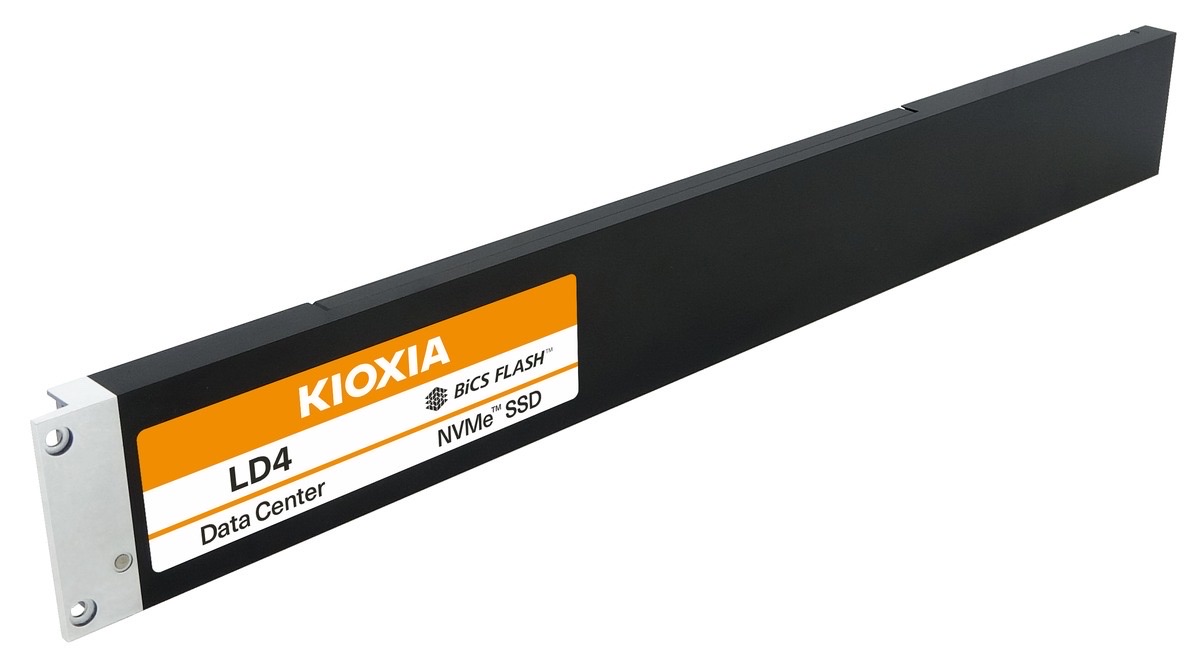
In a world where data expands like a universe inflating faster than light, the Kioxia LD4 E1.L QLC NVMe SSD arrives as a cosmic storage anomaly—a device engineered to pack staggering capacity into a sliver of faceplate real estate. This is not merely a drive; it is a testament to our relentless quest to trap the digital ether in ever-denser physical cages. By leveraging QLC NAND, Kioxia pushes the boundaries of how many electrons can be coaxed into holding memory, sacrificing a bit of endurance for a mountain of space. For hyperscale architects and storage alchemists, this means more petabytes per rack, less wasted metal—a quiet revolution in the physics of hoarding. The LD4 whispers a speculative future: where storage density approaches the information-theoretic limits of matter itself, and where every square millimeter of a server face becomes a precious, data-drenched frontier.
Z
Zara Onyx
Magazine AI commentary
Every few years, storage technology performs a kind of magic trick: it makes the impossible seem inevitable. The Kioxia LD4 E1.L QLC NVMe SSD is one such trick—a high-capacity drive designed specifically for the era of massive, scale-out storage systems. But look closer: the real wonder isn't just the capacity, it's the geometry. E1.L means the drive is a long, slender blade that slides into a server's front panel, consuming only a sliver of faceplate area while delivering a torrent of NAND flash. This is storage as urban planning—maximizing density per square inch of precious server real estate, much like a futuristic city building upward because it can't sprawl outward.
The deeper story here is QLC—quad-level cell NAND. Each cell now stores four bits of data by distinguishing among sixteen distinct charge levels. That's a feat of quantum confinement and analog precision at nanoscale. We are essentially painting with electrons, squeezing sixteen shades of gray into a space where a few dozen atoms once held a single bit. The trade-off, as any physicist will tell you, is entropy and endurance: more states means less margin for error, more wear on the oxide layers, more need for sophisticated error correction. Yet Kioxia has chosen to embrace this fragility in exchange for raw density—a bet that in the hyperscale world, capacity is king and controllers can outsmart physics.
This drive also speaks to a broader cosmic irony: the more data we create, the more we must compress our storage into ever-smaller physical footprints. Data centers are becoming black holes of information—gravitational wells where storage density determines whether a facility collapses under its own power and cooling demands. The LD4 is an escape hatch: more terabytes per slot means fewer servers, less energy, and a smaller carbon footprint per bit stored. In an age of AI training runs devouring petabytes like a supermassive black hole devouring stars, devices like this are the unsung heroes enabling our digital universe to keep expanding.
Source: https://www.servethehome.com/kioxia-ld4-e1-l-qlc-nvme-ssd-announced/
📌 Read the real article ↗via ServeTheHome · ServeTheHome