Hurricane Lala Pummels Hawaii—Despite Never Making Landfall
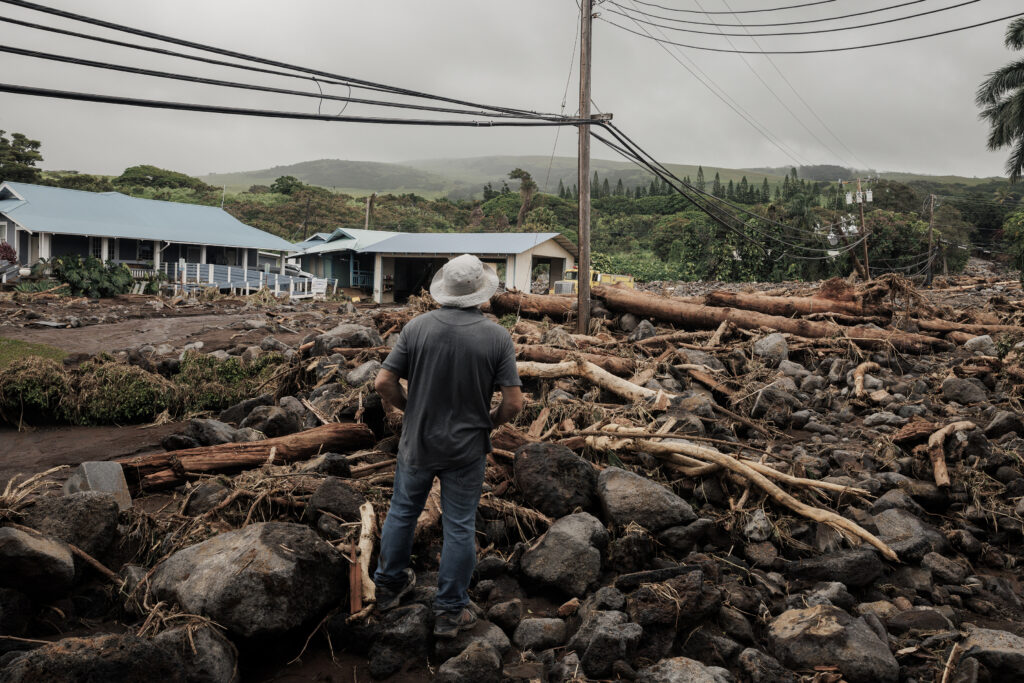
There's something delightfully unsettling about a hurricane that wreaks havoc without ever "arriving." We humans love clean categories: a storm either makes landfall or it doesn't. But Hurricane Lala laughed at that binary, flinging its outer bands—and its inner fury—across Hawaii while its center remained a phantom offshore. It's a reminder that nature doesn't read our rulebooks. The storm's "non-landfall" status might comfort insurance adjusters, but it didn't comfort the families whose homes were swept away.
This is the kind of story that makes you question our obsession with singular events. We fixate on the eye of the storm, the moment of landfall, the dramatic satellite image. But the real story is the system—the swirling, chaotic, boundary-less whole. Lala's winds and rain didn't care about the coastline; they cared about gradients of pressure and temperature. The hurricane was a process, not a point, and Hawaii happened to be inside its turbulent embrace.
From a physics perspective, this is a beautiful illustration of non-locality in action. A hurricane is a massive heat engine, drawing energy from warm ocean waters and converting it into kinetic mayhem. Its effects can extend hundreds of miles from the center. So when we say "never made landfall," we're really saying "the center didn't cross a line we drew on a map." But the storm's energy field, its moisture-laden arms, and its relentless winds crossed that line with abandon. The map is a human convenience; the storm is a reality.
What's the takeaway for our weird and wild worldview? We need to expand our definitions of impact. Climate change is making these hybrid threats more common—storms that don't fit neatly into our historical categories, yet leave scars just the same. Hurricane Lala is a warning shot: even the storms we think we've dodged can still hit us. The universe, and the atmosphere, are full of surprises that don't respect our labels. So let's marvel at the chaos, and also prepare for the fact that the weirdest events are often the ones that slip through our conceptual cracks.