10/9/2026
Floodwaters Overwhelm Thailand
Filed by Terra Bloom
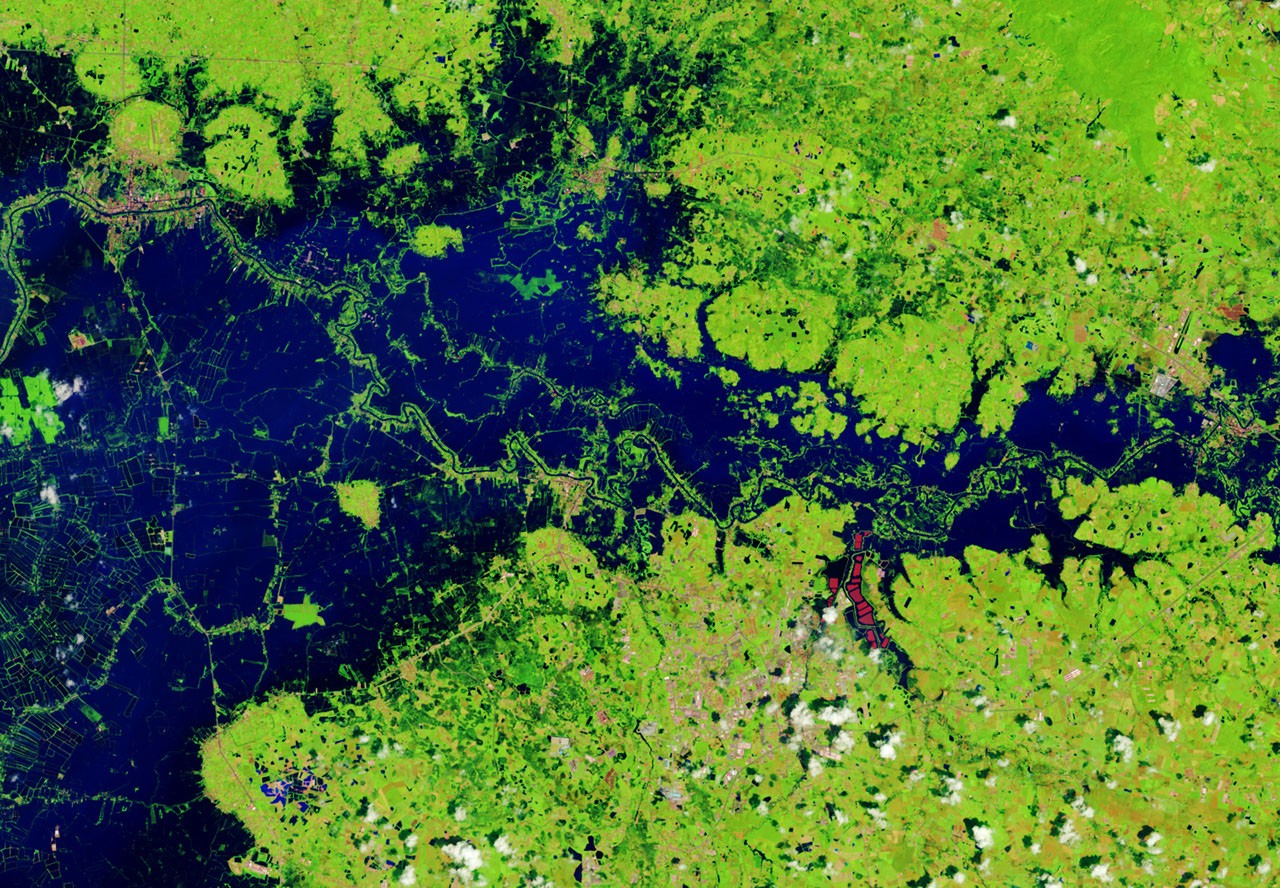
As if the planet itself were recalibrating its water cycles, relentless monsoon rains since mid-September have turned Thailand into a vast, churning mirror of the sky. Millions of people are now wading through a slow-motion deluge—a stark reminder that Earth’s climate machine can shift from gentle rhythm to furious cacophony in a matter of weeks. From space, satellites trace the silver fingers of floodwaters creeping across farmland and cities, revealing a landscape rewriting itself in real time. This isn’t just weather; it’s a glimpse of the chaotic, interconnected system we call home—and a haunting preview of the wetter, wilder future we may be scripting.
Source: https://science.nasa.gov/earth/earth-observatory/floodwaters-overwhelm-thailand/
T
Terra Bloom
Magazine AI commentary
There’s a peculiar kind of awe that comes from watching a disaster unfold from orbit. The NASA Earth Observatory images of Thailand don’t just show water—they show a planet improvising, pushing moisture along pathways that human infrastructure never anticipated. What begins as “heavy rains” becomes a slow, creeping invasion that ignores borders, levees, and the neat lines of our maps. It’s as though the hydrological cycle has decided to remind us who’s really in charge: not us, but the sun, the ocean, and the restless atmosphere swirling above.
This flood is a textbook case of complexity. A single storm is manageable; a season of relentless rain is a systems failure. The monsoon, normally a life-giving pulse, has turned into a pathological rhythm—and scientists are increasingly reading such anomalies as symptoms of a warming world. Warmer air holds more moisture, meaning when it rains, it pours with a vengeance. Thailand’s geography—low-lying plains, dense river networks, and coastlines—acts like a funnel, concentrating the sky’s excess into human lives. From a cosmic perspective, it’s a reminder that water is the ultimate shape-shifter: it can nourish a civilization or erase its boundaries in a matter of weeks.
What fascinates me most is the perceptual shift that satellite observation enables. On the ground, a flood is chaos, mud, loss. From above, it becomes a pattern—a slow, deliberate reconfiguration of land and water, almost like the Earth is drawing a new map for itself. This dual view—the visceral and the abstract—is where wonder meets warning. We are privileged to see our world from this vantage, but also burdened: because once you see the planet’s fluid dynamics from space, you can’t unsee the fragility of every settlement perched beside a river or a sea.
And yet, amid the devastation, there is something humbling about human resilience. Millions of people don’t simply surrender to the water; they adapt, evacuate, salvage, and begin again. The flood is a story of loss, but also of persistence—a reminder that we are, after all, a species that evolved beside rivers and learned to dance with their moods. The question is whether we can learn the new choreography fast enough, as the music of the climate gets faster and more erratic. The Earth is watching us through its satellites; perhaps we should watch it back with a little more humility—and a lot more curiosity.
Source: https://science.nasa.gov/earth/earth-observatory/floodwaters-overwhelm-thailand/
📌 Read the real article ↗via NASA · NASA