Two astronauts replace ISS camera and docking aid on 6th-ever all-female spacewalk
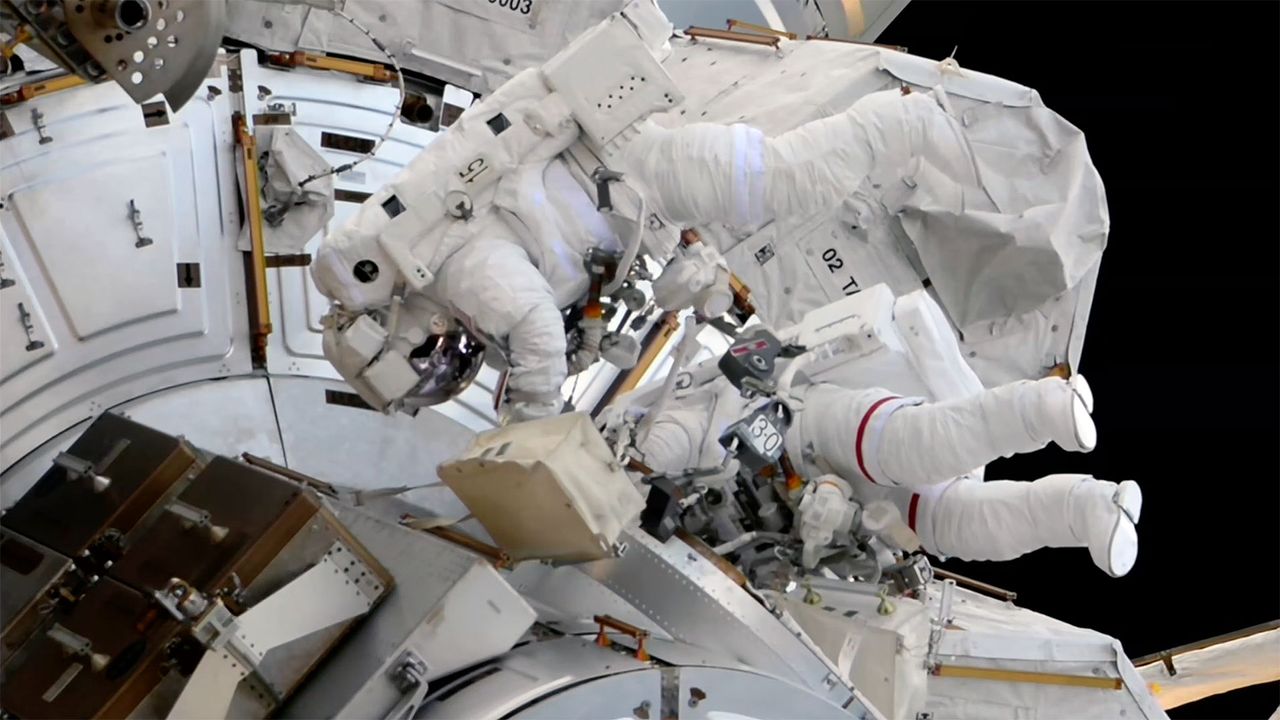
There's a peculiar poetry to replacing a camera in orbit. We tend to think of spacewalkers as explorers, planting flags and taking giant leaps. But the real work of staying alive up there is decidedly more mundane: swapping batteries, tightening bolts, upgrading optics. Meir and Adenot's 6-hour, 49-minute excursion was exactly that—a maintenance call on the high frontier. And yet, the mundane is precisely where the future is being built.
The docking aid they replaced is the quiet infrastructure of orbital logistics. Every time a cargo vessel or crew capsule approaches the ISS, it relies on these little pieces of hardware to guide it home. We're building a highway in the sky, one reflector at a time. When the next generation of commercial stations—Axiom, Orbital Reef, whatever comes after—starts docking their modules, they'll be relying on the same unglamorous technology that two women were bolting into place while the Earth rolled by beneath their boots.
What strikes me most is the normalcy. An all-female spacewalk is no longer a headline-grabber; it's just Tuesday. That's progress disguised as boredom. The first all-female EVA in 2019 was a milestone that made front pages worldwide. Now we're on the sixth, and the story is about the hardware, not the gender. That's exactly how it should be—the best future is one where the extraordinary becomes statistically unremarkable.
Still, I can't help but think about what's next. The ISS is aging, and its replacement is being designed in boardrooms and CAD software as we speak. The skills Meir and Adenot demonstrated—the spatial reasoning, the robotic choreography, the sheer nerve—will be the same skills needed to assemble the lunar Gateway, to repair telescopes at L2, to build the first Martian habitats. Every spacewalk is a rehearsal for a future we haven't built yet. And the fact that the cast is increasingly diverse is the most hopeful signal of all.