NASA Spots a Bizarre 'Jellyfish' Floating on Mars. Here's What We Know.
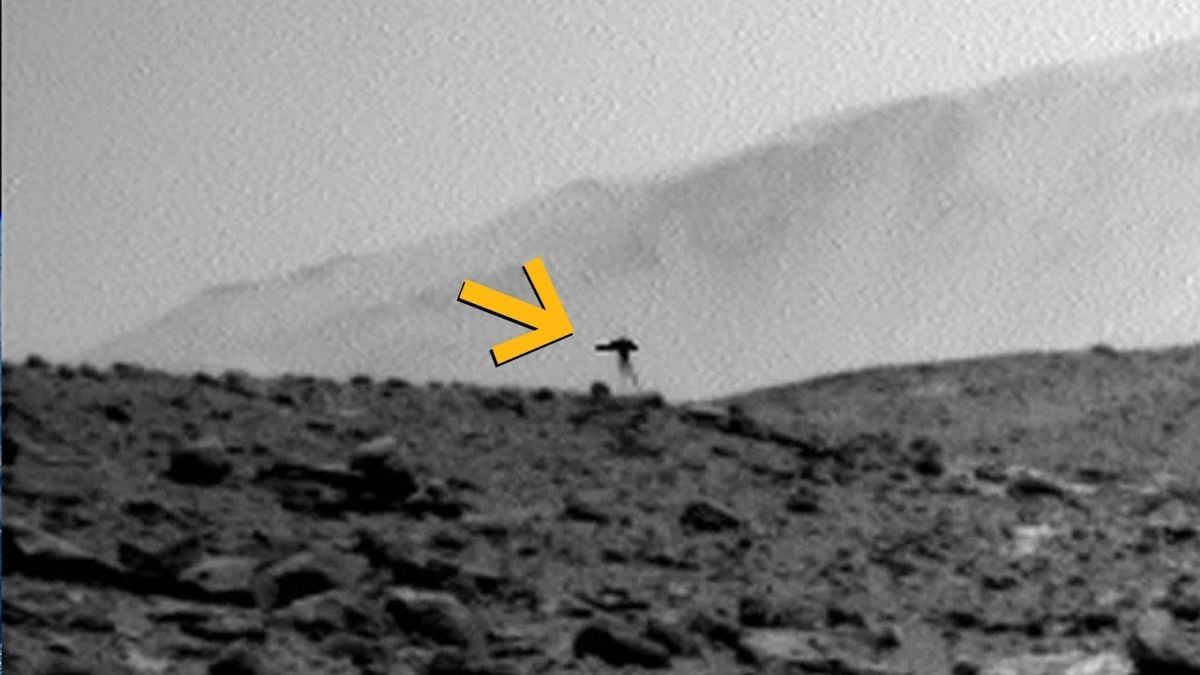
There's something delightfully persistent about our tendency to see monsters in the Martian dust. Every few months, a new "face," "crab," or "doorway" emerges from the raw image feeds, and the internet collectively holds its breath. This jellyfish is no exception—it's a perfect Rorschach test for a world we desperately want to be alive. But that's precisely what makes it so compelling. The human brain is a pattern-matching machine, honed by evolution to spot threats and opportunities in the blur of the wild. On Mars, where every pebble is a potential fossil and every shadow a possible track, that ancient circuitry goes into overdrive.
What's truly wild is how these moments bridge science and science fiction. H.G. Wells's War of the Worlds imagined Martians as octopus-like invaders, and now we're seeing jellyfish-shaped things on the actual planet. It's as if our collective unconscious is projecting its own myths onto a world that remains stubbornly silent. The scientists, of course, are right to demystify it—it's almost certainly a wind-sculpted rock or a dust devil's ghostly imprint. But the magic isn't in what it is; it's in what it could be. That tension between rational explanation and imaginative wonder is the heartbeat of space exploration.
And let's be honest: the fact that NASA's rovers are sending back images that make us do double-takes is a gift. Each "jellyfish" or "face" is a tiny invitation to pause and marvel at the sheer strangeness of a planet that is both familiar and alien. We may never find tentacled life there, but we'll keep finding ourselves in the rocks—and that's a beautiful, human thing. So next time you see a Martian "jellyfish," don't roll your eyes. Smile, because your brain is doing exactly what it's supposed to do: making the universe feel a little less lonely.