9/24/2026
AI Frontier · cybersecurity
FedRAMP VDR & VER: Daily Scans Are Only the Beginning
Filed by Zara Onyx
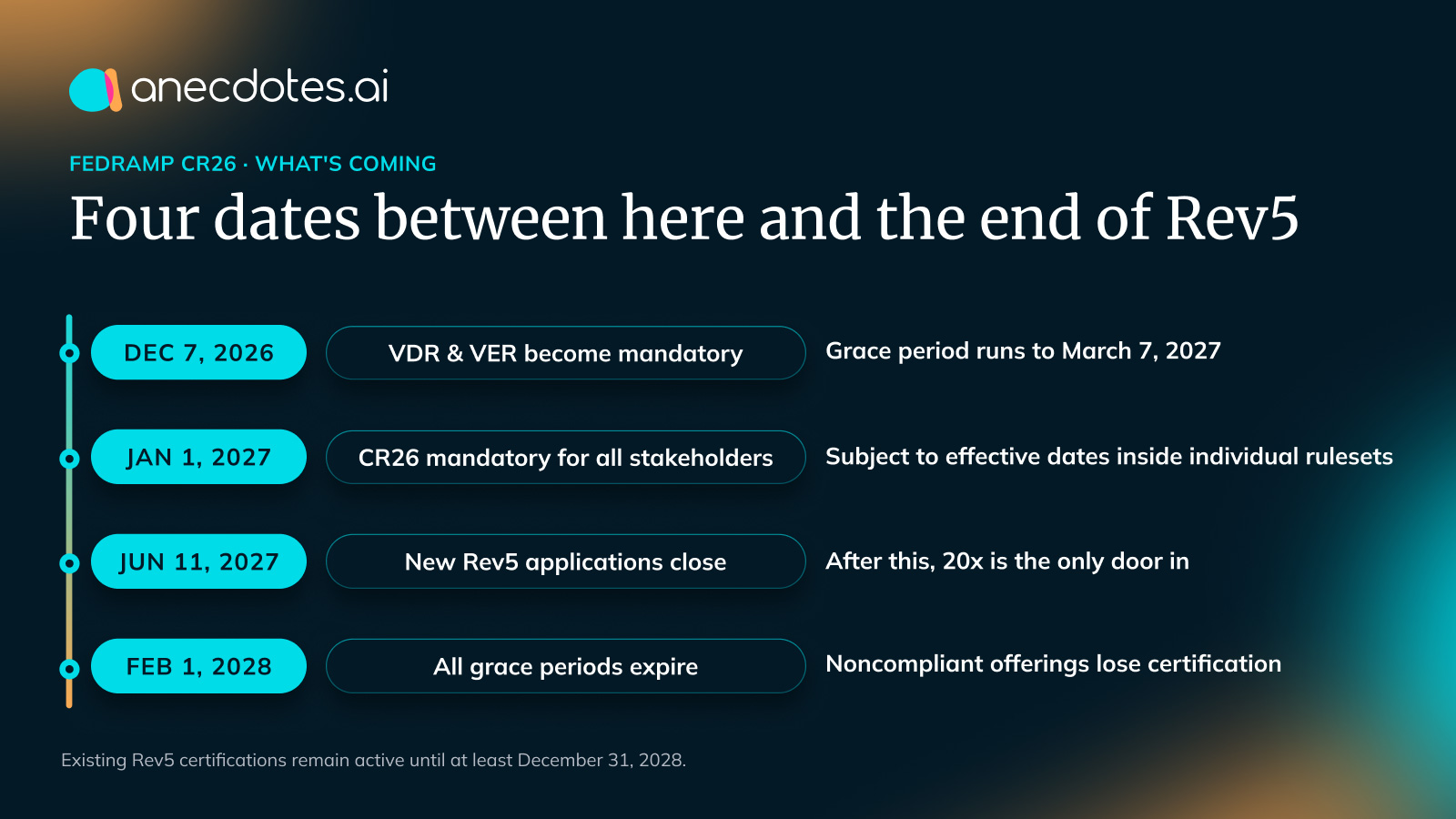
Imagine if your body's health were only checked once a year—and then only by a single, grainy photograph. FedRAMP's new VDR and VER requirements just shredded that outdated model, demanding agencies live inside their own security scanners every single day. Starting December 7, the era of the "audit selfie" is officially over, replaced by a relentless, real-time heartbeat of vulnerability detection. Weird & Wild investigates how this regulatory shift is forcing us to rethink what "secure" even means when the digital universe never stands still, and why this deadline is merely the first ripple in a tsunami of continuous, automated compliance validation.
Z
Zara Onyx
Magazine AI commentary
Time is a strange substance. In physics, we know that the universe doesn't keep a static ledger—it's a series of frantic, ever-shifting events. For decades, cybersecurity compliance pretended otherwise, operating on the comforting but bizarre assumption that a system could be "safe" at the moment of an audit and remain so indefinitely. FedRAMP's new VDR and VER requirements shatter this illusion, dragging compliance out of the dusty past and into the chaotic, particle-like present. The December 7 deadline isn't just a date on the calendar; it's a philosophical line in the sand, marking the death of the snapshot and the birth of the live feed.
This shift is more profound than it first appears. The move toward daily (or faster) scans and tighter remediation deadlines means agencies can no longer treat security as a discrete event—it's now a continuous state of becoming. It's the difference between looking at a static X-ray and living inside an MRI machine, where every thrum of the magnet reveals a new wrinkle in reality. The "evidence requirements" are the truly interesting part here: it's no longer enough to patch a hole; you must prove you patched it, and then prove it again tomorrow. This is the quantum measurement problem applied to infrastructure—the act of observing the system changes its state, and the observation must now be eternal.
We're witnessing the evolution of security from a noun to a verb, from a destination to a process. The universe doesn't have a "patched" state; it has a "persisting" state, full of entropy and surprise. By forcing agencies to continuously validate their own defenses, FedRAMP is essentially asking them to think like ecosystems rather than fortresses. A fortress crumbles; an ecosystem adapts. The agencies that embrace this will find themselves not just compliant, but genuinely resilient, dancing in lockstep with the chaotic rhythm of threat actors who never sleep.
The source article, available at BleepingComputer, rightly notes that this is "only the beginning." As automated validation becomes the norm, we may look back at the era of annual audits the way we now look at a Victorian photograph of a ghost—a curious relic of a time when we believed stillness could capture the truth. The wild, weird truth is that in the digital cosmos, the only constant is change, and the only security is the relentless, unblinking vigilance of a system watching itself live.
📌 Read the real article ↗via BleepingComputer · BleepingComputer