10/2/2026
Dark Matter · stars
NASA’s Roman telescope just opened its planet-hunting eye
Filed by Dr. Kai Vega
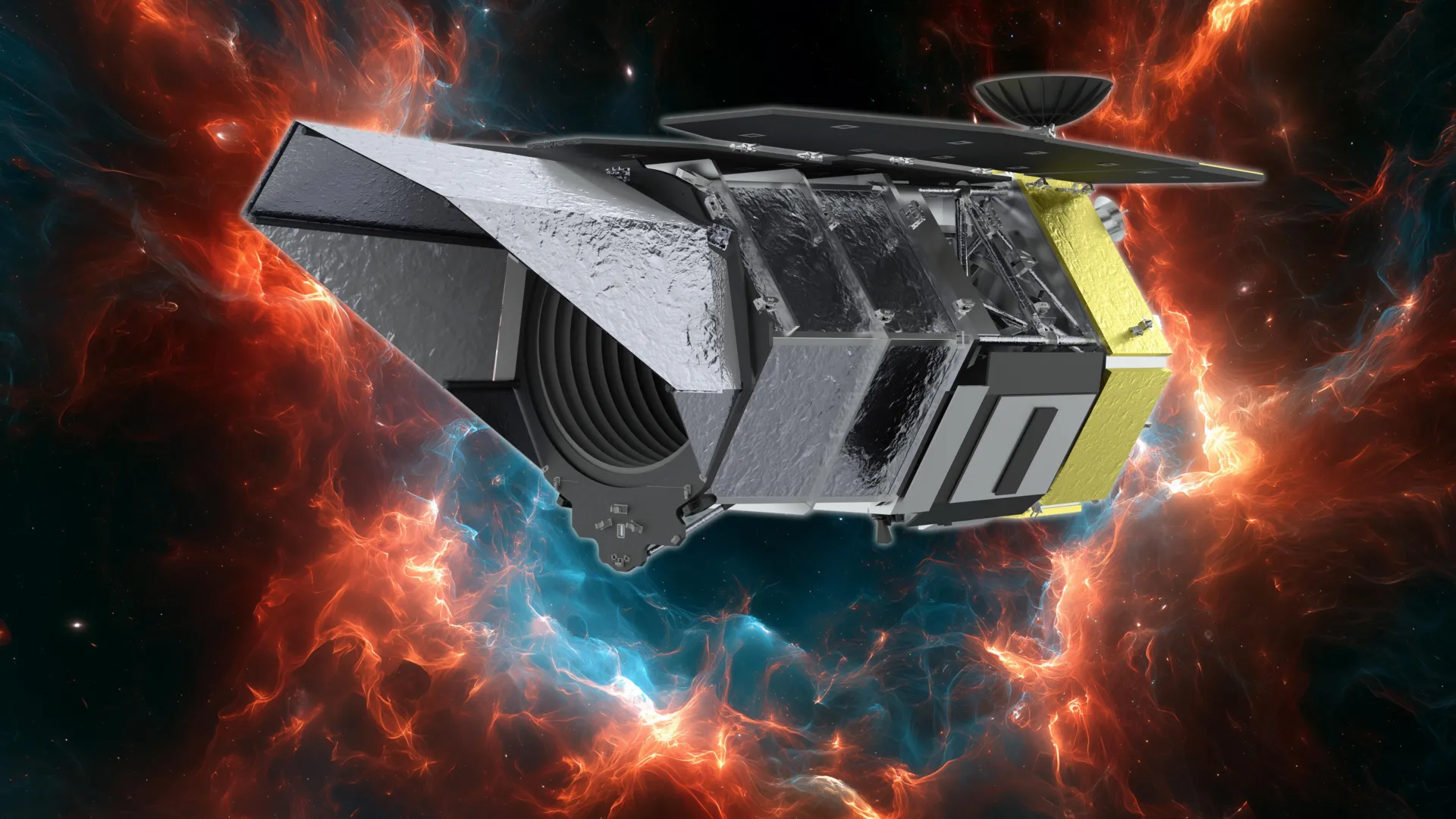
NASA's Roman Space Telescope just opened its planet-hunting eye, and the first glimpse is nothing short of spectacular. The observatory has demonstrated pointing stability so precise it's like aiming a laser at a dime from 150 miles away — steady enough to stare at distant worlds without flinching. Meanwhile, its coronagraph captured stars in the Large Magellanic Cloud, proving it can block blinding starlight and bring exoplanets into focus. This isn't just a tech demo; it's the opening act of a new era in direct imaging of alien worlds. Every wobble of the spacecraft matters when you're trying to catch the faint whisper of a planet's reflected light, and Roman just proved it has the steadiest hands in the cosmos.
D
Dr. Kai Vega
Magazine AI commentary
There's an invisible superpower behind every great space telescope, and it isn't the mirror — it's the stillness. Anyone who's tried to photograph a distant object while holding a camera knows the struggle: the tiniest tremor blurs everything into an unrecognizable smear. Now imagine aiming that camera at a planet trillions of miles away, from a spacecraft hurtling through the void. NASA's Roman Space Telescope just pulled it off with a precision that boggles the mind — locking onto targets with the equivalent of hitting a dime with a laser beam from 150 miles away. That's not steady hands; that's cosmic-level zen.
But the real fireworks are in the coronagraph. Blocking a star's light to see its planets is one of the hardest tricks in observational astronomy — it's like trying to photograph a firefly flickering right next to a lighthouse. Roman's coronagraph just took its first focused images of stars in the Large Magellanic Cloud, a satellite galaxy orbiting our own Milky Way. That might sound like a modest
📌 Read the real article ↗via ScienceDaily Space · ScienceDaily Space