SpaceX launches 29 Starlink satellites, lands rocket on ship at sea (video, photos)
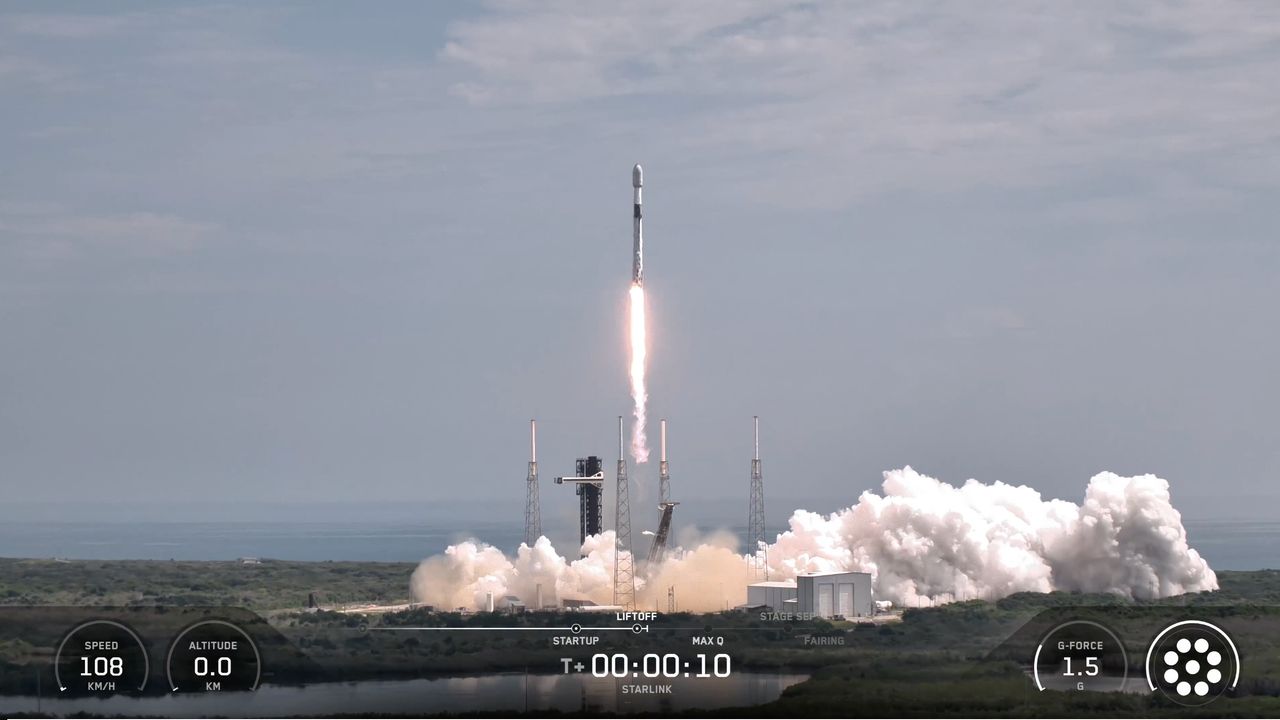
There was a time when a rocket launch was an event — a held breath, a countdown, a nation's collective prayer. Now, a Falcon 9 lifting off from the Space Coast is about as remarkable as a delivery truck leaving a warehouse. That's not cynicism; it's the most profound statement about our era. The launch of 29 Starlink satellites on Aug. 21, as reported by Space.com, is a reminder that we have crossed a threshold. Space is no longer a destination we visit. It is a place where we work, where we build, where we maintain.
What fascinates me is the architecture of the thing. Each Starlink satellite is a node in a mesh that spans continents, beaming low-latency internet to places where fiber will never reach. But step back and the pattern emerges: this is the early skeleton of a global communications layer, the kind of thing science fiction once imagined as a single monolithic satellite or a planetary data ring. We're building it out of thousands of small, disposable-ish parts, launched by a rocket that lands itself on a barge named A Shortfall of Gravitas. The poetry writes itself.
The implications ripple outward. When connectivity becomes as ambient as electricity, what happens to the concept of "remote"? When a company can deploy 29 nodes in a single afternoon, who owns the sky? These are questions we're not asking loudly enough as we marvel at the booster landings. The megaconstellation is not just a business model; it's a geopolitical and philosophical shift, quietly ratified with every launch.
And yet, there's a strange comfort in the banality. The fact that this is news at all — a routine mission, a video, some photos — suggests we've absorbed the impossible into our daily lives. We are building a civilization in orbit, and we're doing it with the same mundane rhythm that built the interstate highways. The future, it turns out, is not a sudden event. It's a launch schedule.