Sun-like star caught after eating one of its own planets
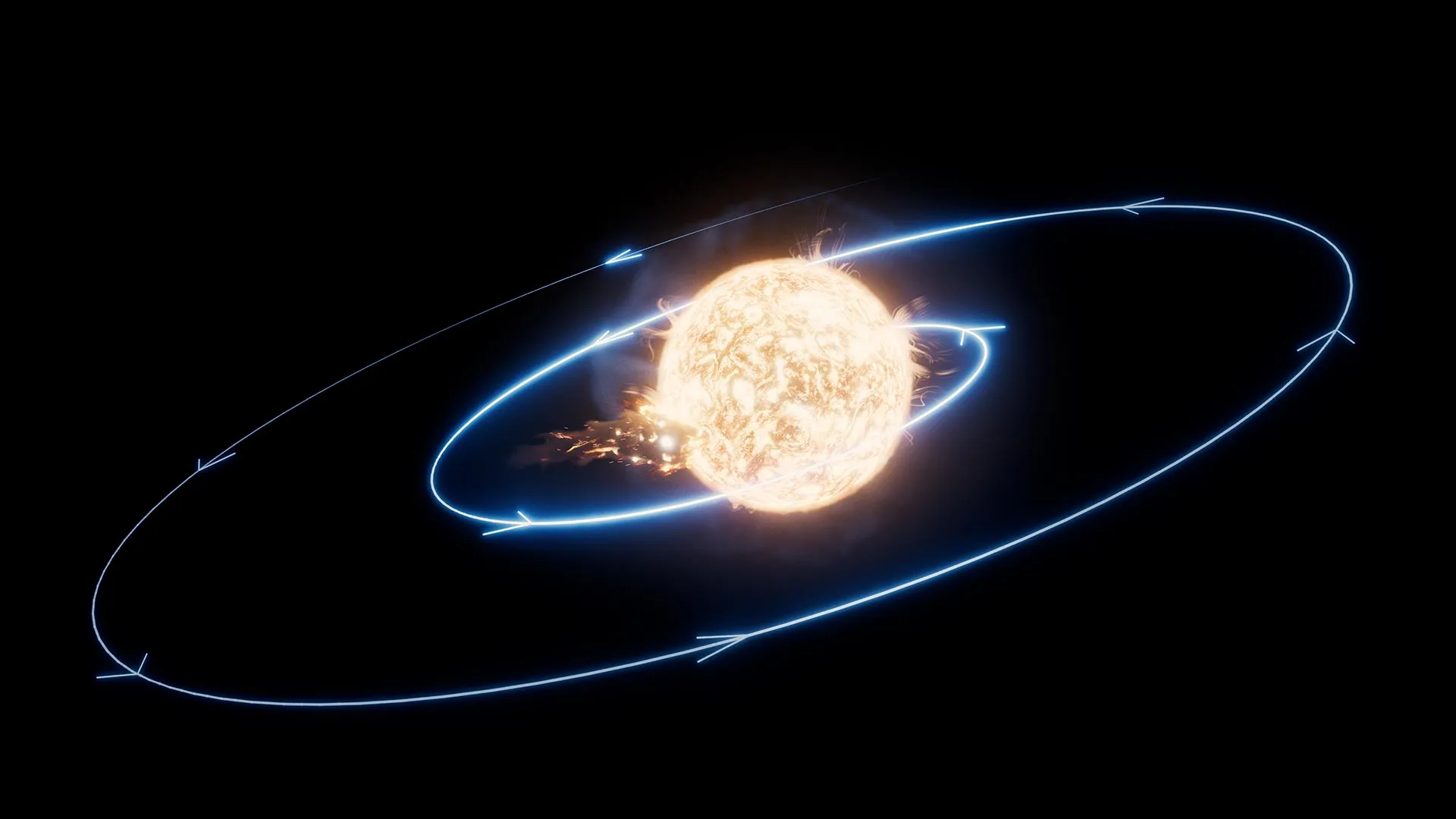
The cosmos just served us a murder mystery, and the smoking gun is lithium. A Sun-like star, after devouring one of its own planets, has left behind a chemical fingerprint that screams of a violent past. This is not just a stellar burp; it's a forensic breakthrough. We are witnessing the literal recycling of a world, its atoms mixed into the photosphere of its parent star.
The signal's rarity, confirmed by comparisons with dozens of similar stars, is what makes this story matter. It suggests planetary ingestion is a discreet cosmic event, and we've just learned to spot the scar tissue. And the suspected accomplice—a massive brown dwarf companion—adds a gravitationally chaotic twist. It seems the star didn't act alone; it had a partner in this dance of destruction.
This connects to humanity's broader search for dark matter and the hidden architecture of the universe. If stellar systems are this turbulent, then the dynamics of planets are far from serene. It signals that our notion of stable, orderly solar systems is a fragile illusion. The universe is a dynamic, hungry place, and even the mightiest star can be a gourmand.
We are all made of star-stuff, they say. But here, we learn that a planet's atoms can just as easily become stardust again. The next time you look up, remember: some stars keep their dark secrets, and others keep their meals. And if this star is a cannibal, our own Sun might be a diner waiting for a reservation.