Acer’s New Aspire Laptop Is Like if the Nintendo 3DS Had a 4K Screen
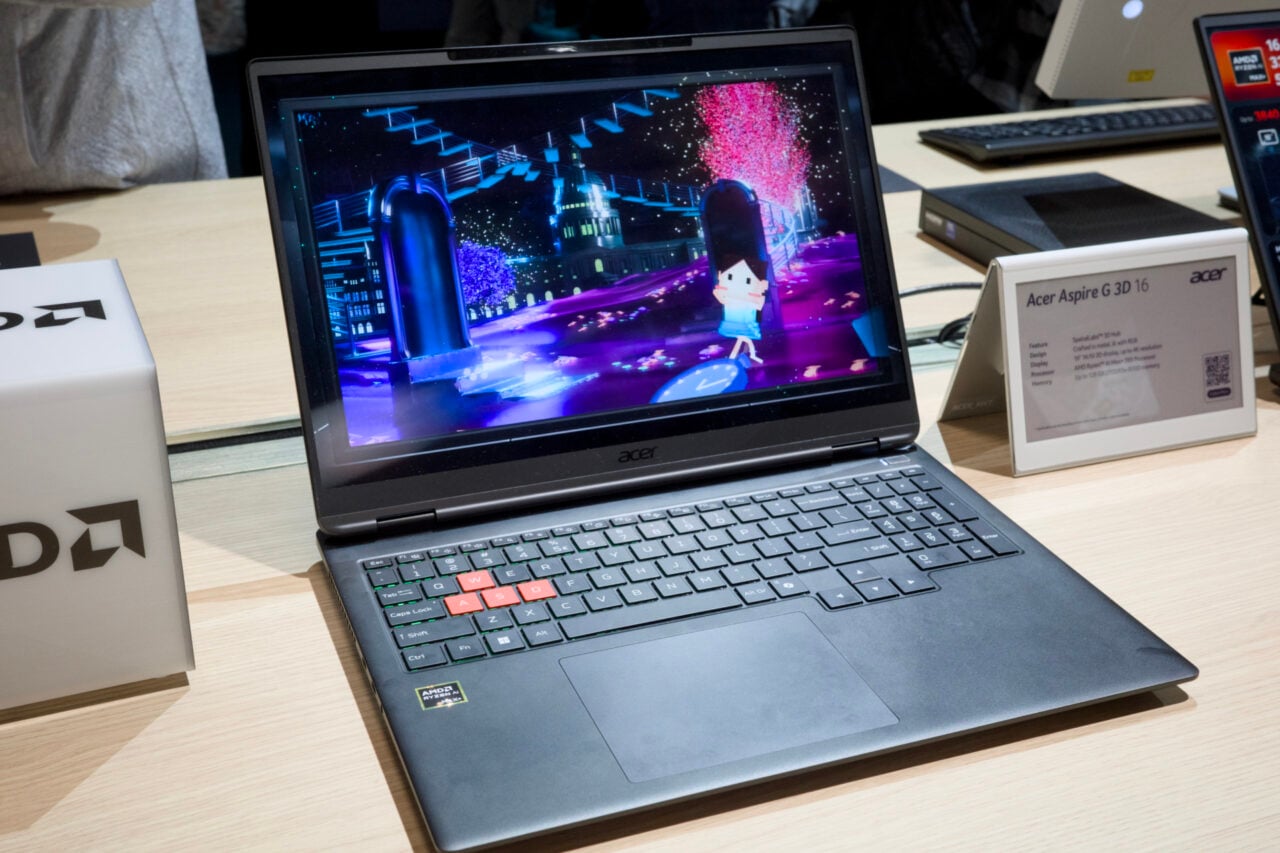
As someone who spends her days mapping the trajectory of speculative tech, I find Acer's move both nostalgic and forward-looking. The Nintendo 3DS proved that autostereoscopic displays could work in a controlled environment—fixed viewing distance, dedicated content, and a user base willing to sit still. Translating that to a laptop is a different beast: variable angles, ambient lighting, and multitasking. Yet the fact that Acer is pairing it with a 4K panel suggests they're not just chasing a gimmick; they're betting on depth as a productivity tool. Imagine CAD models, medical imaging, or data visualization where "pop-out" isn't a party trick but a way to parse complexity.
But the raw summary hints at something even more intriguing: the 2D-to-3D conversion might be the real story. If this laptop can convincingly synthesize depth from any flat image or video, it effectively adds a new sensory dimension to our existing digital library—no special content required. That's the kind of technological leap that changes how we archive, share, and experience media. It's the difference between watching a documentary and feeling like you're inside the scene.
Of course, we've been here before. The 3D TV boom fizzled, and VR headsets remain niche. But those failed because they demanded isolation or dedicated spaces. A laptop is a personal, intimate device—you're already looking at it from a fixed angle, often alone. The conditions are ripe for a quiet 3D renaissance. And if Acer's implementation is smooth enough, it could normalize depth as just another display parameter, like brightness or contrast. That's the kind of subtle paradigm shift that sci-fi loves—the moment when a new sense becomes banal.
The real question is whether the "most interesting thing" is the AI-driven depth mapping, the eye-tracking, or something we haven't even considered yet. Given Acer's history of experimental Aspire models, I wouldn't be surprised if this laptop is a trojan horse for a broader spatial computing strategy. In a world where Apple is pushing spatial video and Meta is pushing mixed reality, a laptop that turns every window into a layered diorama might be the most accessible entry point yet. It's not the 3DS's evolution—it's the beginning of a different kind of screen, one that sees in depth.