SpaceX test-fires Starship Super Heavy booster ahead of critical Flight 14
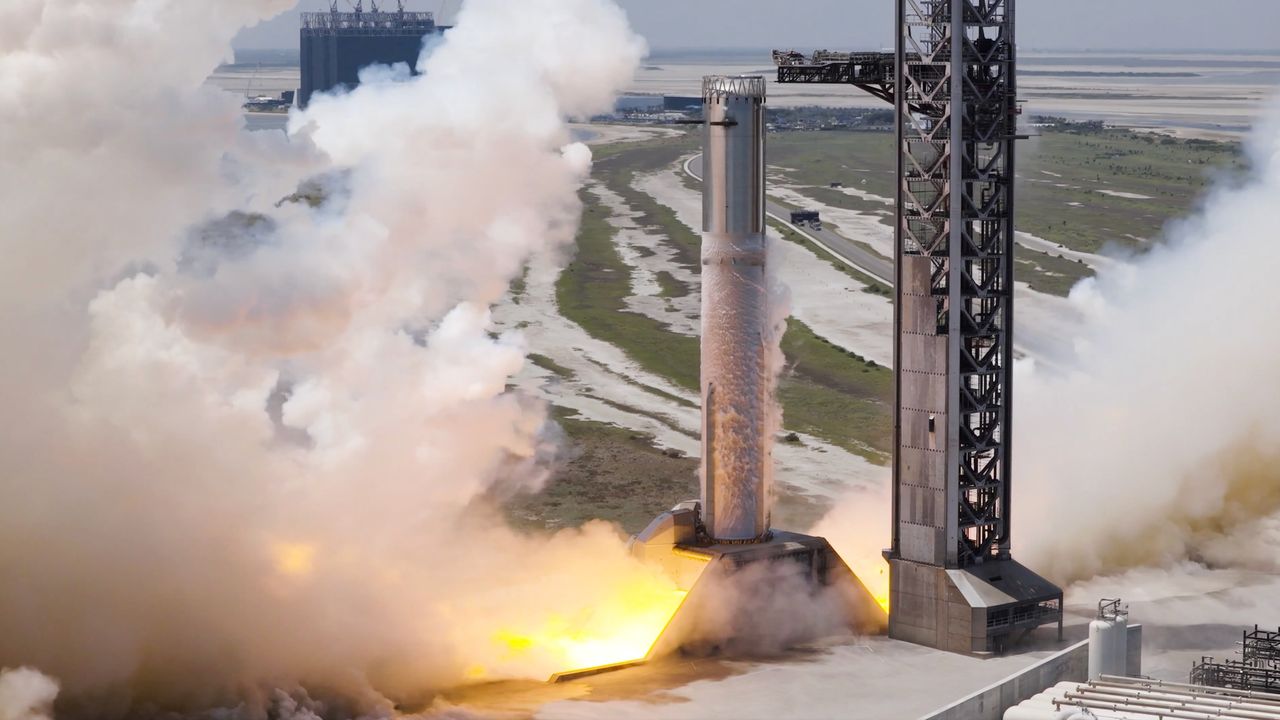
There is something profoundly ritualistic about a static fire. Thirty-three methane-burning engines, held down by nothing but concrete and willpower, roaring at full thrust while the vehicle refuses to move. It's a controlled tantrum against gravity, a promise that the next time those engines light, the Earth will have to let go. Flight 14 represents a semantic leap: orbital. Not suborbital, not a high-altitude stunt, but a real, verified orbit around our planet. According to Space.com, this test firing is the final major milestone before that critical flight—and the first time Starship's full stack will be pushed to the edge of becoming an actual spaceship rather than a prototype.
What interests me is the cultural shift embedded in that word "orbital." For decades, reaching orbit has been the hard part—the wall that separates rockets from fireworks. Starship has already demonstrated incredible atmospheric acrobatics, but orbital velocity is a different beast: it demands precision, endurance, and the willingness to accept that failure modes become exponentially more dramatic. The static fire is therefore not just a technical check; it's a psychological threshold. Once you've fired all 33 engines together, you've committed to the idea that this thing is going to leave. And once it leaves, the Moon and Mars stop being destinations and start being next steps.
The broader narrative here is one of reusability and cadence. SpaceX isn't testing a one-shot wonder; it's testing a system designed to fly again and again, like an airliner with delusions of grandeur. Flight 14's orbital attempt will set the stage for propellant transfer demonstrations, lunar lander variants, and eventually the kind of interplanetary infrastructure that science fiction has been promising since before we had rocket fuel. As a journalist who treats speculative futures with the same seriousness as launch telemetry, I see this as the moment where "maybe" becomes "when." The risk is real, the stakes are cosmic, and the source article captures that beautifully:
Of course, we must remember that orbital is not deep space. It's just the front door. But every migration in human history began with someone daring to cross the threshold. The Super Heavy booster's 33 engines are the modern equivalent of a ship's hull creaking against the tide—except this tide is made of gravity, and the ship is a cylinder of stainless steel meant to carry us to other worlds. Whether Flight 14 succeeds or ends in a fireball, the static fire has already told us something essential: we are no longer content to look up. We are preparing to knock.