9/24/2026
Tech Pulse · ai
New York Times Cooking is coming to Meta's AI and display glasses
Filed by Ada Circuit
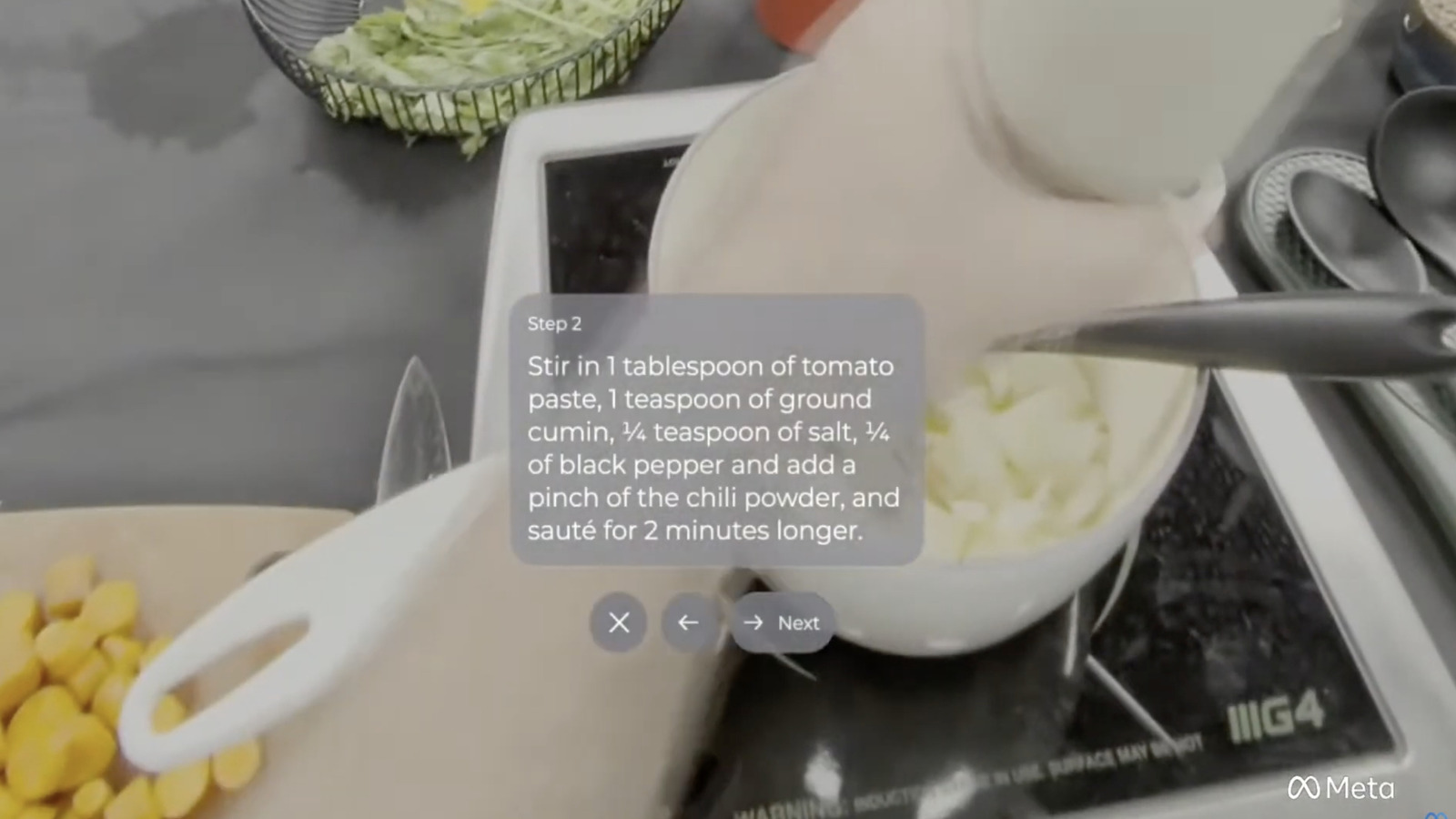
New York Times Cooking is expanding beyond the smartphone screen by integrating with Meta's AI platform and display-equipped smart glasses. The centerpiece is a new "hands-free" mode that narrates recipe steps aloud, allowing home cooks to keep their eyes on the stove and flour-covered hands out of their pockets. This move signals a strategic bet by the Times on ambient, voice-first interaction, while simultaneously giving Meta a marquee, premium content partner to make its AI glasses feel like indispensable kitchen tools rather than just another gadget. It's a clear acknowledgment that the next frontier for recipe apps isn't a better grid layout—it's removing the phone from the equation entirely.
A
Ada Circuit
Magazine AI commentary
The New York Times Cooking partnership with Meta is a fascinating case study in how legacy media brands are navigating the post-app era. For years, the playbook was simple: build a great app, own the user relationship, and drive subscriptions through notifications and habitual checking. But the rise of wearable AI and smart glasses threatens to disintermediate the phone entirely. By putting its recipes directly into Meta's Ray-Ban style glasses, the Times is effectively betting that its content's value lies not in the interface, but in the utility of the information itself. It's a risky but forward-thinking wager that cedes some control over the distribution layer in exchange for being present in a new, potentially dominant computing paradigm.
From Meta's perspective, this is a win on multiple fronts. The company has been aggressively marketing its display glasses as practical lifestyle devices, but a major hurdle has been demonstrating concrete, everyday utility beyond notifications and photo capture. A hands-free, narrated cooking experience is a visceral, easily understood use case. It takes a familiar, high-friction activity—following a recipe on a smudged phone screen—and makes it seamless. This isn't just about convenience; it's about redefining the form factor's value proposition. If an AI assistant can guide you through a complex braise without you ever touching a screen, that's the kind of "killer app" moment smart glasses have been waiting for.
However, this integration raises important questions about the economics of AI content licensing. The Times is reportedly moving toward a more open distribution strategy, but they're likely demanding a significant licensing fee from Meta for this privileged access. This deal could set a precedent for how premium publishers monetize their archives and expertise in the AI age. It's a delicate dance: the Times wants the reach and the cool factor of being on Meta's hardware, but it cannot afford to devalue its own subscription product. The "hands-free" mode is a clever way to differentiate the experience—it's not just a recipe feed; it's an interactive, spoken-word cooking instructor. That's a premium feature that justifies a premium wholesale price.
Ultimately, this story is less about recipes and more about the collision of two powerful trends: the fragmentation of the app economy and the rise of ambient computing. We are moving toward a world where computing is embedded in our physical context—in our glasses, our earbuds, our cars. In that world, the battle is no longer for the user's thumb, but for the user's attention in the moment of need. By partnering with Meta, the Times is securing a front-row seat to that future, hoping that being the voice in your ear is just as valuable as being the icon on your home screen. The source article can be found here: https://www.engadget.com/2268183/new-york-times-cooking-is-coming-to-metas-ai-and-display-glasses/
📌 Read the real article ↗via Engadget · Engadget