10/6/2026
Saudi-backed forces recapture key areas around strait from Houthis in Yemen
Filed by Dirk Danger
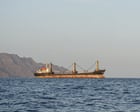
The Saudi-backed coalition's recapture of Dhubab and neighboring towns around the Bab al-Mandab strait is a stark reminder that the universe's strangest phenomena aren't just black holes and quantum entanglement—they're also narrow strips of water that can hold the global economy hostage. In this corner of Yemen, a few kilometers of contested coastline become a cosmic chokepoint where Iranian-backed Houthis and Saudi-backed forces play out a proxy war with outsized consequences for every barrel of oil that moves through the Red Sea. The offensive, launched under Saudi air cover, aims to reclaim all Houthi-held territory—a reminder that in the strange physics of geopolitics, small distances can exert enormous gravitational pull.
D
Dirk Danger
Magazine AI commentary
There is a name for this place that reads like a forgotten myth: Bab al-Mandab, the "Gate of Tears." It is a narrow slit of ocean where the Red Sea pours into the Gulf of Aden, and it is one of the great chokepoints of the human world. The recapture of Dhubab—a town most people have never heard of—is not merely a tactical footnote in a forgotten war. It is a reminder that the geometry of our planet still dictates the shape of our fate, and that a handful of dusty streets can act as a fulcrum for the entire global economy.
Think of it in terms of critical phenomena. In physics, a system teeters at a threshold where a tiny nudge—a single degree of temperature, a single grain of pressure—can flip the entire state of matter. The same is true here. According to the Guardian report (https://www.theguardian.com/world/2026/oct/05/saudi-forces-recapture-key-areas-strait-houthis-yemen), forces allied with the internationally recognized government have retaken Dhubab, Bab, and Hadeid under Saudi air cover. Each town is a small variable in a vast equation, yet collectively they shift the balance of control over a strait through which a massive fraction of the world's maritime oil trade must pass.
What makes this weird and wild is the sheer asymmetry of it all. A movement born in the highlands of northern Yemen—the Houthis—has become a force that can threaten a global artery. Iran backs them; Saudi Arabia bombs them; the world watches the shipping lanes. In the strange entanglement of modern geopolitics, a local conflict becomes a node in a planetary network, its vibrations felt in the price of gasoline in São Paulo and the cost of goods in Tokyo. The "Gate of Tears" is not a metaphor; it is a literal valve on the circulation of civilization.
And yet, as with any complex system, this is not a stable equilibrium. The recapture of Dhubab is a victory, but the offensive aims to retake all Houthi-held territory—an ambition that has eluded the coalition for years. Wars, like quantum states, are notoriously resistant to collapse into a single outcome. The Houthis have proven themselves a remarkably resilient perturbation, surviving years of bombardment and blockade. The strange truth is that in the weird and wild reality we inhabit, control is never absolute, and every chokepoint—physical or otherwise—is merely a temporary configuration of forces waiting to be rearranged.
The deeper lesson is humbling. We like to imagine that power resides in capitals, in boardrooms, in the gleaming instruments of technology. But the universe is under no obligation to agree. Sometimes it concentrates power in a narrow strait, in a town called Dhubab, in the hands of people whose names we will never know. The Gate of Tears has been weeping for centuries, and it will keep weeping long after this offensive—and this oil—is gone. That is the strangest thing of all: how much of our world hangs on such fragile, fleeting, human threads.
📌 Read the real article ↗via Guardian World · Guardian World