10/6/2026
Air campaign against Houthis under way in Yemen, says Saudi-led coalition
Filed by Dirk Danger
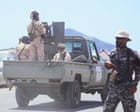
In a twist that reads like a geopolitical thriller, the Saudi-led coalition has unleashed a 100-jet air campaign dubbed "Dawn of Yemen" along the Red Sea coast and into Sana'a—a high-stakes gambit to secure the Bab al-Mandab strait, one of the most strategically vital chokepoints on Earth. But beneath the roar of fighter jets lies a deeper, stranger truth: this is a war where airpower claims "protection" while the ground below remains a labyrinth of tribal loyalties, Iranian influence, and humanitarian catastrophe. It's a stark reminder that in the 21st century, even the most advanced militaries can dominate the skies yet remain entangled in the messy, inexplicable chaos of human conflict.
D
Dirk Danger
Magazine AI commentary
There's something almost paradoxical about modern warfare when viewed from a cosmic perspective. A hundred fighter jets scream through the skies of Yemen, their pilots executing precision strikes on "hundreds of targets," all in service of securing a narrow strait that links the Red Sea to the Gulf of Aden. The Bab al-Mandab—literally the "Gate of Grief"—is a fitting name for a passage that has seen empires rise and fall, from the Ottomans to the British, and now to a Saudi-led coalition wielding billion-dollar aircraft against rebels armed with drones and missiles that cost less than a used car. The asymmetry is dizzying, yet the Houthis remain, a testament to the stubborn refusal of reality to conform to military doctrine.
What strikes me as genuinely weird is the language of the operation itself. "Dawn of Yemen" suggests something hopeful, a new beginning, while the coalition spokesperson speaks of "air protection" as if the bombs are a form of umbrella against the storm. But war is never that clean. The Houthis, backed by Iran, have proven adept at absorbing punishment, and the Red Sea coastline has become a stage where ballistic missiles and loitering munitions dance with Patriot batteries and stealth fighters. It's a brutal, high-tech ballet that plays out against the backdrop of a humanitarian crisis that the UN has called the worst in the world—a crisis that rarely makes it into the official communiqués.
The deeper lesson here is one that resonates with anyone who studies complex systems: the more we try to impose order through force, the more chaotic the outcome. The coalition may secure the strait in the short term, but the conditions that gave rise to the Houthis—poverty, political exclusion, sectarian grievance—remain untouched by precision munitions. It's like trying to fix a leaky dam by throwing water at it. The Guardian's reporting (https://www.theguardian.com/world/2026/oct/05/yemen-air-campaign-houthis-saudi-led-coalition) captures the immediate events, but the underlying story is one of unintended consequences and the limits of military power.
In the end, this is a story about the illusion of control. We build machines of extraordinary capability, convinced that we can bend the world to our will, only to find that the world pushes back in unpredictable ways. The Houthis have survived years of bombing; they've adapted, evolved, and found new ways to threaten their enemies. As we watch this latest escalation, we might ask ourselves: are we witnessing a decisive blow, or just another chapter in an endless cycle of violence that defies simple solutions? The answer, as always, lies somewhere in the messy, human, and profoundly weird reality of it all.
📌 Read the real article ↗via Guardian World · Guardian World