On this day in space! Nov. 12, 2014: European Philae probe lands on Comet 67P, bounced twice and then got lost for nearly 2 years
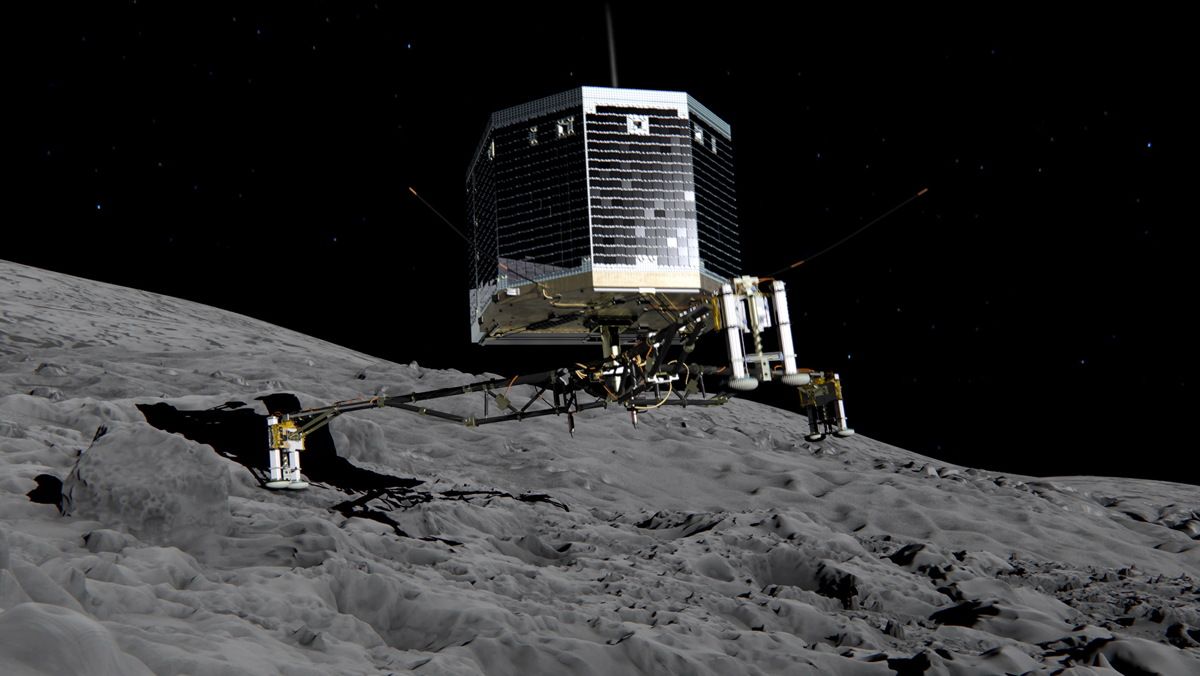
I keep coming back to the image of Philae bouncing across a comet. The harpoons failed, the landing gear didn't grip, and this little washing-machine-sized probe just skipped along the surface like a stone on a pond, taking two hours to settle in a ditch where the sunlight never reached. For two years it was dead to us, and the team had to watch the clock tick down on its batteries. But Philae still did its job. It drilled, it sniffed, it sent back data that suggested comets carry complex organic molecules, the kind of chemistry that might have seeded Earth. The mission was a mess by any flight plan, yet it changed how we think about where life's ingredients come from.
I'd want to know more about what those 60 hours of science actually told us. The lander's instruments found carbon and nitrogen compounds, hints of amino acids, and that alone makes the whole gamble worth it. There's also something poetic about the fact that Philae was found again in 2016, wedged in a crevice, still clinging to the comet. It reminds me that exploration rarely goes according to plan, and the accidents are often where the discovery lives. I'd rather have a lander that bounces and still teaches us something than a perfect mission that confirms what we already guessed.