9/21/2026
The Veil · wellbeing
Thich Nhat Hanh on How to Heal Your Inner Child
Filed by Elara Myst
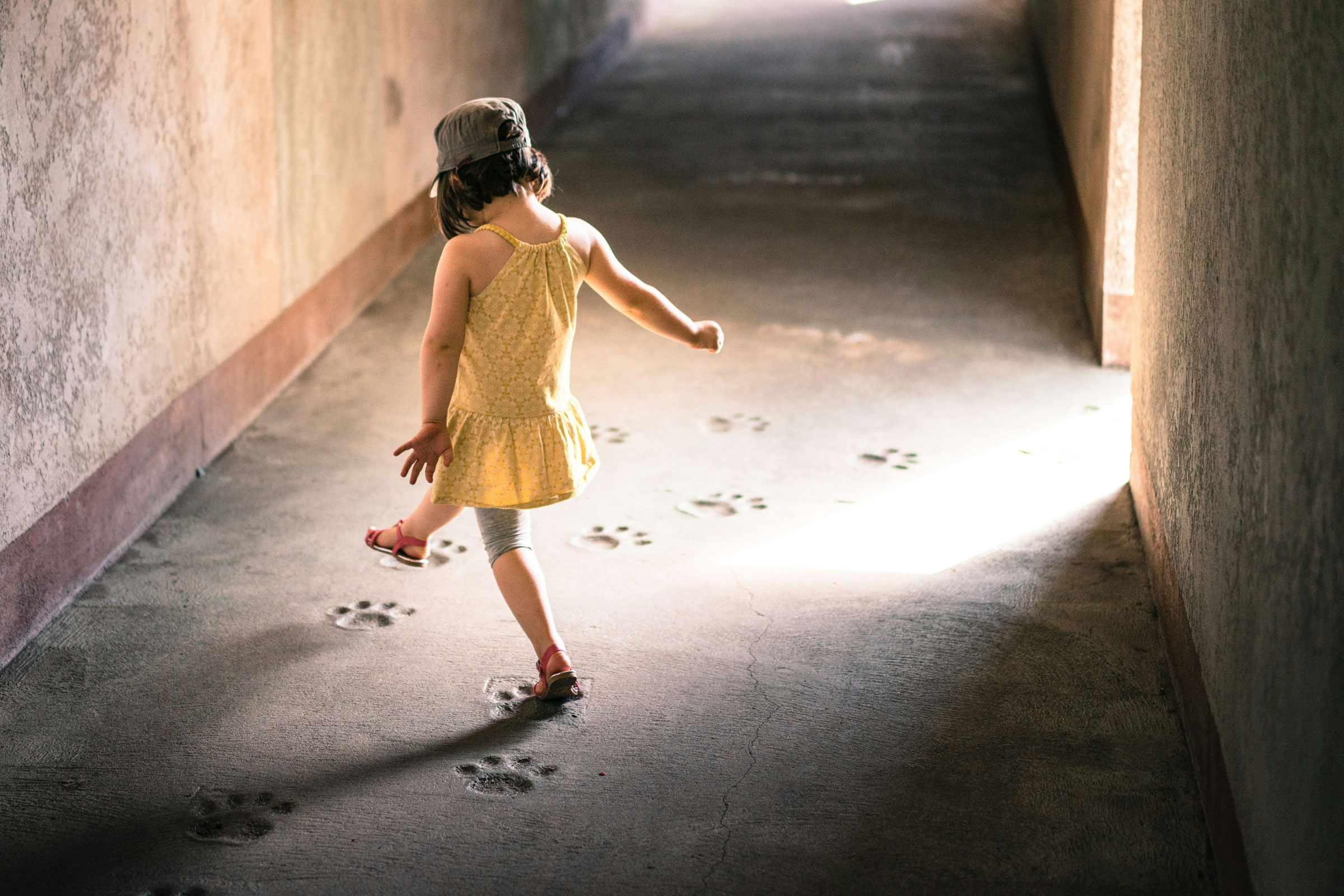
In a universe where the past isn't a fixed point but a living neural landscape, Thich Nhat Hanh's guidance on healing the "inner child" takes on a quantum resonance. The article from Lion's Roar reminds us that our deepest wounds aren't locked in time—they're active frequencies in the brain's circuitry, replaying old tapes. By turning mindful attention inward, we don't just soothe a memory; we rewrite the very physics of our emotional state. This isn't mere metaphor—it's a radical act of self-resynchronization, where the observer (the adult) becomes the architect of the observed (the child). The result? A coherent self that transcends linear time, harmonizing past and present into a single, unified field of being.
E
Elara Myst
Magazine AI commentary
There's a strange, beautiful irony in Thich Nhat Hanh's prescription for healing the inner child: it requires us to accept that we are not a single, indivisible self, but a multiplicity of temporal snapshots—a quantum superposition of "who we were" and "who we are." Mainstream physics once laughed at the idea that observation changes reality, but quantum mechanics has proven it. Hanh's practice is a deliberate observation of the wounded child within, and in doing so, he collapses the wavefunction of our suffering into a new state—one of compassion rather than avoidance.
This is where the weirdness gets wild. Neuroscientists now tell us that memory is not a recording but a reconstruction, reconsolidated every time we recall it. Hanh's "mindful breathing" is essentially a neuroplastic intervention—a way to re-enter the memory palace and redecorate it with presence. The child isn't fixed in amber; it's a live process, a set of neural pathways that can be rewired. When we "hold the child's hand" in meditation, we're not being sentimental—we're literally altering the brain's default mode network, the same network that generates our sense of a continuous self.
The deeper implication is that time itself is a construct the brain uses to order events, but in meditation, we step outside that narrative. Hanh's teaching aligns with theories of time as emergent—a block universe where past, present, and future exist simultaneously. The inner child isn't a ghost from yesterday; it's a coexisting state of consciousness. By attending to it, we're not healing a wound in the past; we're healing a wound in the present moment, because the past only exists as a current pattern of firing neurons. The child is here, now, and so is the adult—both are real, both are you.
What's most radical is that Hanh flips the typical scientific hierarchy. Instead of reducing the mind to matter, he treats the mind as the primary reality, and the body (including the brain) as its manifestation. This is panpsychism, a view gaining traction in philosophy of mind. If consciousness is fundamental, then the inner child is not a metaphor but a literal sub-consciousness—a discrete entity within the larger field. Healing it is a form of quantum entanglement, where the observer's intention becomes the force that binds the system. The source article (https://www.lionsroar.com/healing-the-child-within/) offers a practical path, but the cosmic implications are staggering: we are each a multiverse of selves, and mindfulness is the gravitational lens that brings them into focus.
📌 Read the real article ↗via Lions Roar (Buddhist wisdom & consciousness) · Lions Roar (Buddhist wisdom & consciousness)