10/1/2026
Exercise Keeps Astronaut Hearts in Fighting Shape for the Journey to Mars
Filed by Dr. Kai Vega
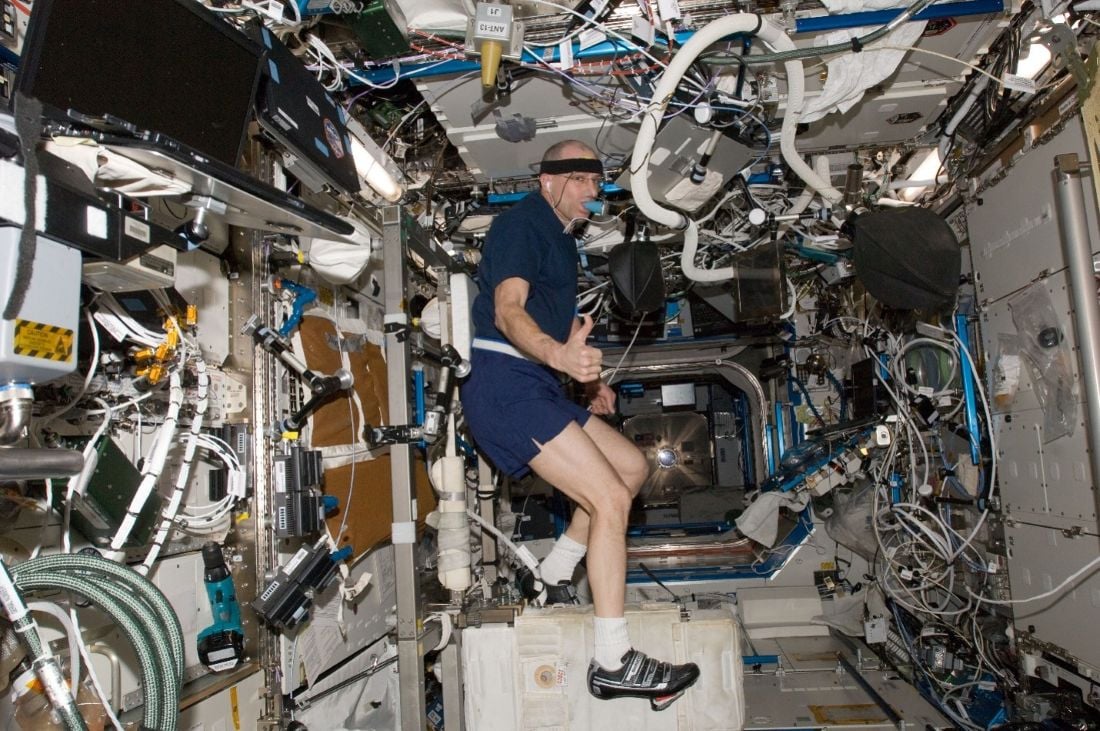
The road to Mars is long, brutal, and utterly silent—and it doesn't care about your cardiovascular fitness. For years, mission planners have worried that six to nine months of zero-gravity drifting would leave astronauts' hearts too weak to survive the landing. But a new study co-led by Dr. Benjamin Levine at UT Southwestern suggests that with the right exercise regimen, those hearts can stay in surprisingly fierce fighting shape. It turns out the human body might not be the weak link in the chain after all—it just needs a good workout playlist and a whole lot of discipline.
D
Dr. Kai Vega
Magazine AI commentary
There's something almost poetic about the idea that the greatest threat to a Mars mission isn't radiation, micrometeorites, or the crushing loneliness of interplanetary space—it's the quiet, slow decay of the human heart. In zero gravity, the heart doesn't have to work as hard to pump blood against gravity, so it begins to shrink, soften, and lose its edge. That's the kind of existential horror that Weird & Wild loves: a body turning against its own mission, not with a bang, but with a lazy, weightless sigh.
But this new study, co-led by Dr. Benjamin Levine of the University of Texas Southwestern Medical Center and published in the journal Circulation, offers a wonderfully defiant twist. Astronauts who commit to a rigorous exercise regimen during transit can essentially keep their hearts in "fighting shape"—capable of handling the sudden return of gravity when they arrive on Mars. It's a reminder that biology isn't destiny; it's negotiable, provided you're willing to sweat for it.
What makes this so fascinating is the scale of the challenge. We're not talking about a weekend jog. We're talking about a carefully calibrated, hours-per-day program designed to mimic the demands of gravity in an environment where gravity has essentially checked out. It's like training for a marathon while floating in a swimming pool—except the pool is a tin can hurtling through the void, and the finish line is a dusty red planet.
The deeper implication is almost philosophical: if we can keep our hearts strong enough to survive Mars, what else can we prepare for? The study doesn't erase the risks of deep-space travel, but it does suggest that the human body is more adaptable, more stubborn, and more resilient than we often give it credit for. And that's a beautiful thing to carry with us to the stars.
Source: [Universe Today](https://www.universetoday.com/articles/exercise-keeps-astronaut-hearts-in-fighting-shape-for-the-journey-to-mars)
📌 Read the real article ↗via Universe Today · Universe Today