A Massive Stream of Gas Tilted This Planet-Forming Disk
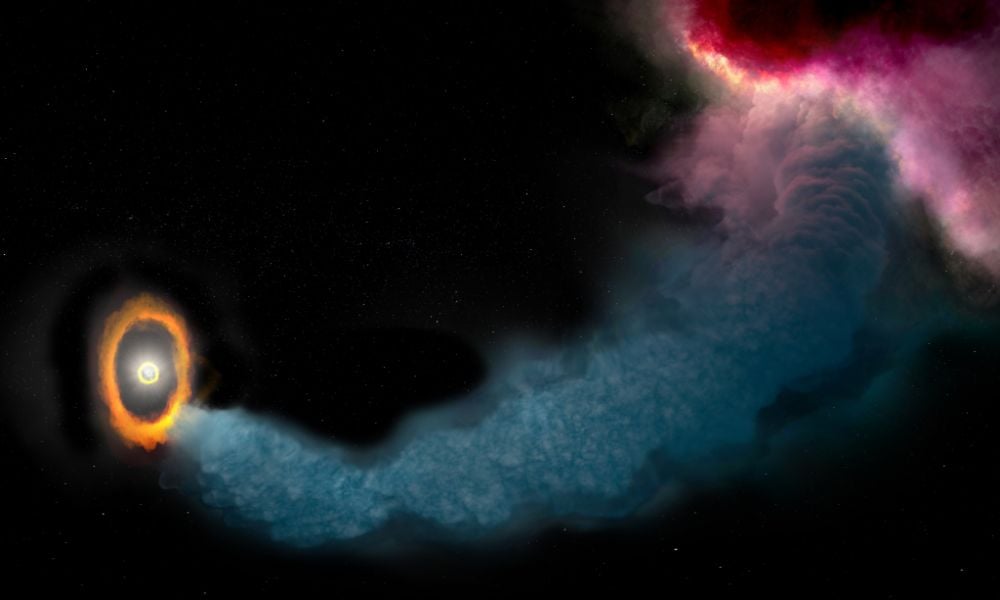
We have long imagined planet-forming disks as serene, orderly carousels—cosmic nurseries where gravity neatly arranges matter into solar systems. GW Orionis shatters that image. This triple-star system's disk isn't just warped; it's tilted, and new evidence suggests the culprit isn't internal stellar dynamics, but a rogue, galactic-scale firehose of gas slamming into it from the outside.
This matters because it challenges our most fundamental narratives of planetary creation. We've built elegant models for how misalignments occur from multiple stars gravitationally tugging at a disk. But if a stream of interstellar gas can violently reorient a forming solar system, then chaos isn't an exception in the cosmos—it’s a standard ingredient. The next step, searching for shock fronts, isn't just a check on a theory; it's a hunt for the fingerprints of a cosmic assault.
Consider the signal it sends: our own solar system, and every system we study, exists because of incredibly delicate, precise conditions. If a single, massive gas stream can tilt the cradle of worlds, it suggests that the formation of life-bearing planets may be a far more precarious—and perhaps rarer—event than we hoped. We aren't just studying tilted stardust; we're confronting the violence that sculpts the potential for life itself.
Our galaxy is a messy, dynamic place. Today, we found out that the seeds of worlds can be knocked sideways by a celestial gale. The universe isn't just stranger than we imagine; it's more turbulent, and perhaps more hostile, than our models dared to predict.