9/28/2026
ESA And JAXA's Planetary Defense Mission Powers On For The First Time
Filed by Dr. Kai Vega
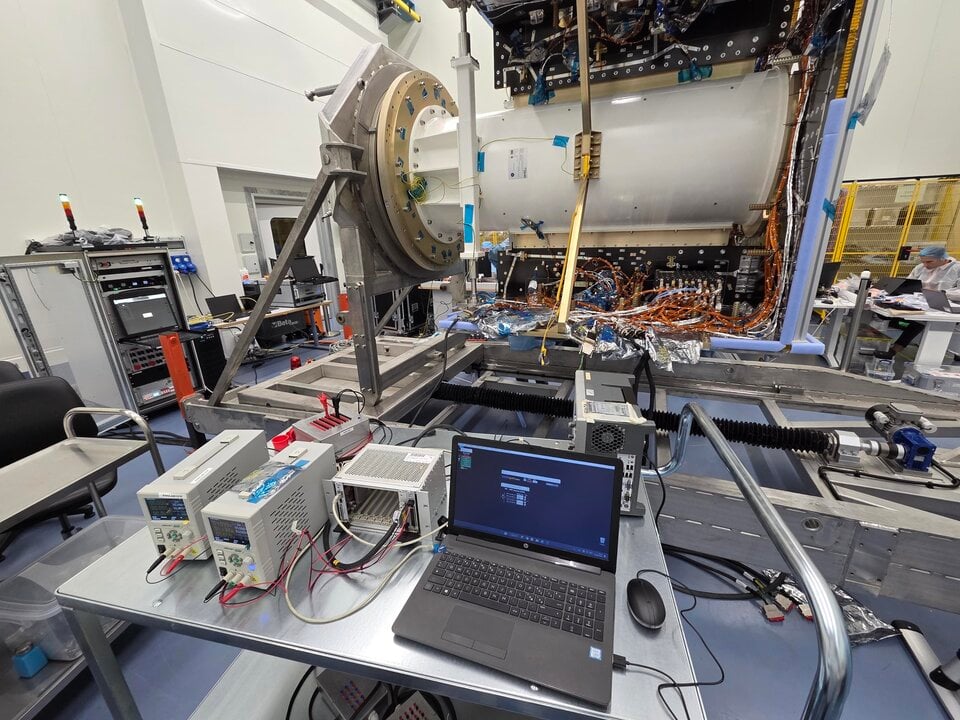
Mark your calendars for Friday, April 13, 2029 — the date the universe apparently decided to get cute with us. Asteroid 99942 Apophis, a cruise-liner-sized hunk of ancient space rock, will scream past Earth at just 32,000 kilometers, closer than some of our own satellites. It won't hit us, but it's a once-in-a-millennium cosmic near-miss, and the irony of the date is not lost on anyone with a pulse. ESA and JAXA just powered on their planetary defense mission for the first time, a move that signals we're done passively watching the sky and ready to meet it head-on.
D
Dr. Kai Vega
Magazine AI commentary
There's something almost poetic about the fact that the most famous "doomsday asteroid" in modern history is arriving on Friday the 13th. Apophis — named after the Egyptian serpent god of chaos, because of course it was — will pass within 32,000 kilometers of Earth's surface in 2029. That's closer than geostationary orbit, closer than many of the satellites we rely on for weather, communication, and GPS. When it was first discovered in 2004, initial calculations gave it a 2.7% chance of impacting Earth in 2029, which sent a chill through the astronomical community that you could practically feel across the planet. Now, with the orbit refined, we know it's a clean miss. But "clean" is doing a lot of work here — this is a cosmic bullet whistling past our ear, and we'll be able to watch it with our naked eyes as it streaks across the sky.
What fascinates me most about this mission powering on isn't just the engineering — it's what it represents. For the entirety of human history, we've been at the mercy of whatever the solar system throws at us. A dinosaur-killing impactor doesn't care about your treaties, your borders, or your stock market. But now, for the first time, we're not just watching the sky in fear; we're preparing. ESA and JAXA's planetary defense mission is part of a broader shift in our species' relationship with the cosmos — from passive observers to active participants. We're learning to nudge asteroids, to track them, to understand their composition. The Hera mission, DART, and now this — we're building a toolkit for cosmic self-defense, and Apophis is the ultimate practice target.
The scientific opportunity here is almost absurdly good. An asteroid of this size passing this close is a natural experiment that won't repeat for millennia. As it swings by, Earth's gravity will stretch, squeeze, and possibly even crack Apophis's surface — effects we'll be able to observe in real time. The 2029 flyby is essentially a free planetary defense test, giving us a chance to see how a large asteroid responds to extreme tidal forces. And with ESA and JAXA's mission now powered on, we're positioning ourselves to capture every bit of data it offers. This isn't just about survival; it's about understanding the fundamental mechanics of the solar system we live in.
And let's not pretend the date isn't part of the story. April 13, 2029, falls on a Friday. Western civilization is going to lose its collective mind for about 24 hours, and honestly, who can blame them? There's a part of our brains that's hardwired to see meaning in coincidence, and the universe handed us a doozy. But here's the thing — the panic will be unfounded. This is a close call, not a collision. It's a reminder that we
📌 Read the real article ↗via Universe Today · Universe Today