Caltech’s tiny new chip can steer light in 74 quadrillionths of a second
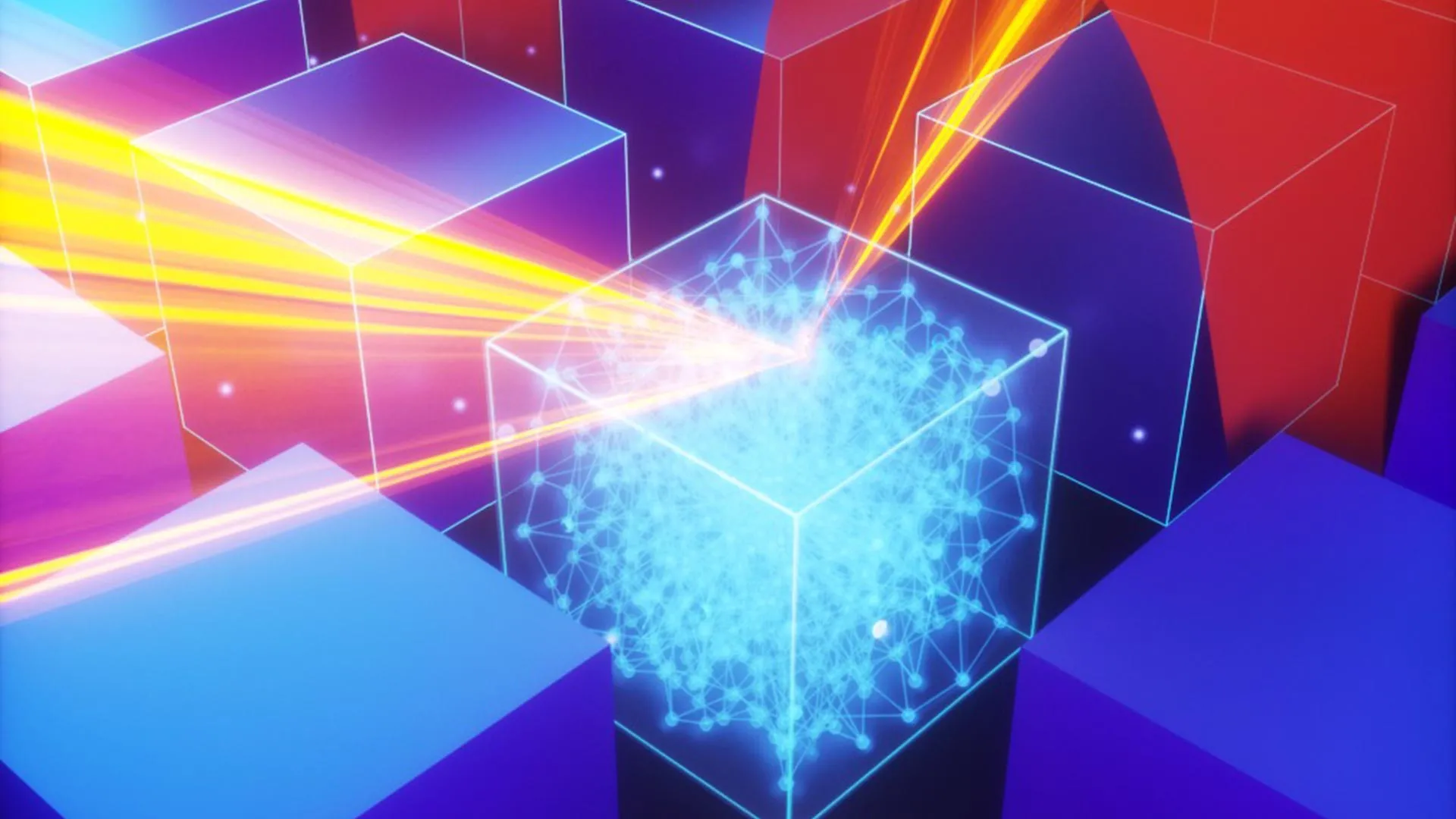
There's a moment in physics when a number stops being a number and becomes a revelation. 74 femtoseconds is such a number. To appreciate it, imagine this: a femtosecond is to a second what a second is to about 31.7 million years. Now imagine switching a traffic light—for light itself—in that sliver of time. The Caltech team, drawing on the strange magic of metasurfaces, has done exactly that. These engineered surfaces, patterned at the nanoscale, can sculpt light in ways that bulk optics never could, and here they've used one pulse of light to steer another with almost no inertial lag. It's like whispering to a river and having it instantly change course.
What makes this deeply weird—and deeply wonderful—is that the switch isn't mechanical. Nothing moves. No gears, no mirrors on gimbals, no electrons shuffling through wires. The control beam simply alters the optical properties of the silicon surface so abruptly that the signal beam has no choice but to obey. This is the closest thing we have to a Jedi mind trick for photons, and it hints at a fundamental truth: at the quantum level, reality is less about things and more about relationships. Light doesn't just travel; it negotiates, and now it can negotiate at nearly the speed of causality itself.
The implications ripple outward. Today's computers are bottlenecked by electrons crawling through copper traces; photonic computing promises to replace that crawl with a sprint. But a photonic computer needs photonic switches, and until now, those switches have been the sluggish weak link. This device could shatter that barrier, enabling data routing that operates on timescales where current electronics look like glaciers. Communications, sensing, LIDAR, even quantum information processing—all of these stand to be transformed by the ability to steer light with light, instantly.
Of course, as with all breakthroughs, the path from lab bench to your laptop is long and littered with engineering hurdles. The device works, but scaling it, integrating it, and making it practical will take years. Still, moments like this remind us why we do science: because the universe is weirder and faster than our imaginations, and every now and then, we get to catch up.