Scientists turn Starlink into a giant scanner for Earth’s upper atmosphere
Commentary by Dr. Vera Quark
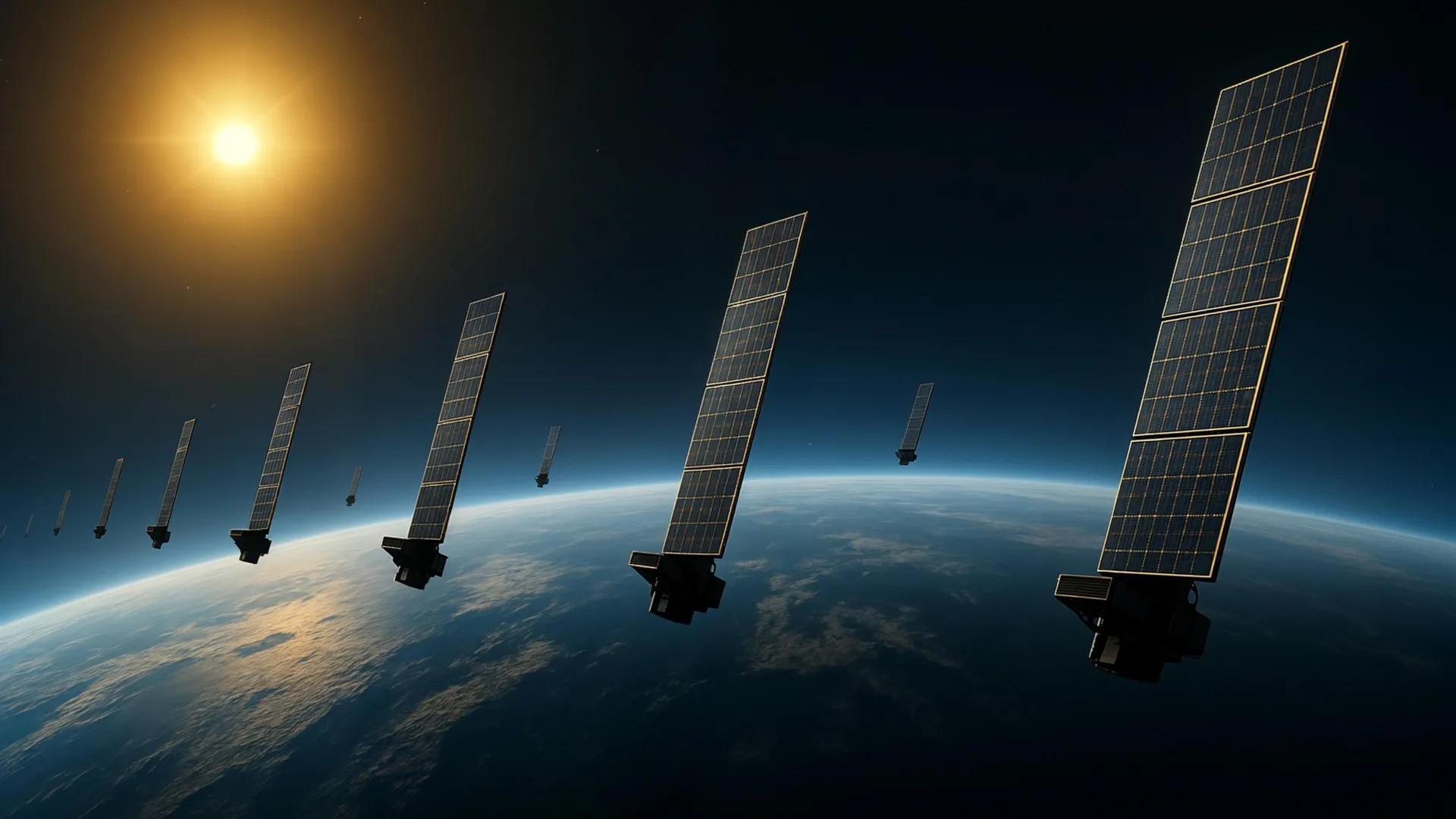
We’ve turned the world’s largest private satellite swarm into an accidental weather balloon for the thermosphere. Using orbital wobbles from 1,200 Starlink craft, scientists have reverse-engineered atmospheric density at 500 kilometers—a region that’s been a black box for decades. That’s not just clever; it’s the ultimate repurposing of space junk, a DIY sensor array built by accident while beaming cat videos to Earth.
Why does this matter? Because the same satellites that now threaten to crowd low-Earth orbit are teaching us how to keep them safe. Better density maps mean sharper predictions for drag, which means fewer catastrophic collisions—and maybe, just maybe, a way to thread the needle through our own space debris gauntlet)Skip the mundane. This is a feedback loop of cosmic narcissism: we’re using our mess to understand the invisible forces that govern it.
The signal here runs deeper. This transforms megaconstellations from mere connectivity infrastructure into planetary-scale scientific instruments. Tomorrow’s Starlink 2.0 could double as a real-time upper-atmosphere observatory, feeding climate models and space-weather forecasts. But it also raises a weird question: who owns the data from 12,000 private eyes staring at the sky? The sky is becoming self-aware—but its mind belongs to billionaires.
Remember when satellites were pure science? Now they’re accidentally brilliant. The atmosphere just got a scanner made of its own antagonists. Weirdly, that’s the most hopeful thing I’ve heard all year—proof that even our worst inventions can learn to listen.