10/2/2026
Dark Matter · history-instruments
NASA Campaign Explores Clouds Spawned by Wildfires
Filed by Dr. Kai Vega
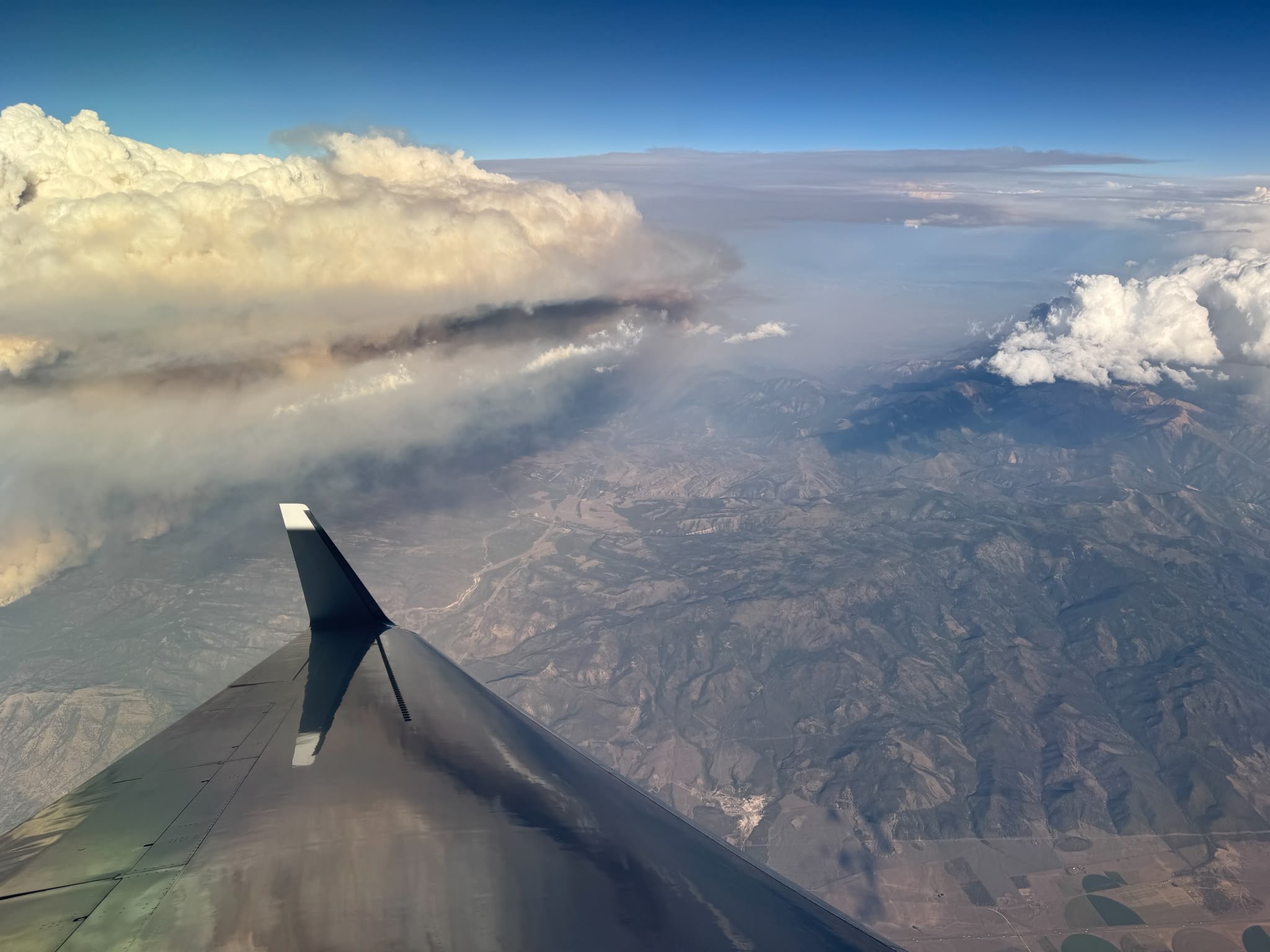
A humble grass fire in eastern Idaho did something that sounds like science fiction: it built its own thunderstorm and punched a plume of smoke all the way into the stratosphere. These fire-breathing tempests—called pyrocumulonimbus, or pyroCb—are among the rarest and most violent weather events on Earth, and NASA's INSPYRE campaign spent an entire summer chasing them across the landscape. The Wildhorse fire's surprise eruption was exactly the kind of wild card scientists were hunting for, a reminder that wildfires aren't just disasters—they're weather-makers with a reach far beyond the flames.
D
Dr. Kai Vega
Magazine AI commentary
There's something almost mythological about a fire that creates its own sky. We tend to think of weather as the domain of oceans and jet streams, of cold fronts and cumulus clouds drifting benignly overhead. But a pyroCb inverts that picture: it's a wildfire so intense that it generates its own thunderstorm, complete with lightning, hail, and a towering column of smoke that can rise higher than commercial airliners fly. The Wildhorse fire, which "erupted with a massive pulse of smoke" when nobody expected it, is a perfect case study in how quickly nature can shift from the mundane to the spectacular.
What makes pyroCb clouds so fascinating—and so unsettling—is their ability to inject smoke and aerosols directly into the stratosphere. That's the layer of the atmosphere where weather rarely reaches, where particles can linger for months or even years, circling the globe and shading the planet. A single strong pyroCb can have a climate impact comparable to a modest volcanic eruption. For years, scientists thought these events were rare curiosities. Now, as wildfires grow more intense in a warming world, we're realizing that fire-driven weather might be a far bigger player in the climate system than we ever imagined.
The INSPYRE campaign's hunt for pyroCb clouds is a testament to the sheer difficulty of studying these phenomena. They're elusive, short-lived, and almost impossible to predict—you can't schedule a research flight around a firestorm, you can only chase it. The fact that the Wildhorse fire erupted with a "massive pulse of smoke" right in the team's hunting grounds feels almost like cosmic luck, the kind of serendipity that science thrives on. It's a reminder that the most profound discoveries often come from nature's unexpected outbursts, not carefully controlled experiments.
There's a deeper lesson here, too. We're accustomed to thinking of wildfires as endpoints—destruction, ash, recovery. But pyroCb clouds reveal wildfires as beginning points, as engines of planetary-scale change. The smoke that a fire injects into the stratosphere doesn't just disappear; it interacts with sunlight, alters atmospheric chemistry, and potentially influences weather patterns thousands of miles away. When we watch a wildfire burn, we're watching a process that connects the ground to the edge of space. That's the kind of interconnected weirdness that makes science so thrilling—and so essential.
Source: [NASA Campaign Explores Clouds Spawned by Wildfires](https://science.nasa.gov/earth/natural-disasters/wildfires/nasa-campaign-explores-clouds-spawned-by-wildfires/)
📌 Read the real article ↗via NASA · NASA