‘The world needs to pay attention’: Nepalis and Tibetans in New York City respond to the Himalayan disaster
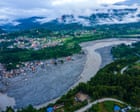
There is a particular anguish in being separated from home when the land itself begins to fall apart. For the Nepali and Tibetan communities of Jackson Heights, the news from the Himalayas is not an abstract headline—it is the sound of a mother's voice breaking over a crackling phone line, the uncertainty of whether an aunt's village still stands, the helplessness of refreshing news feeds from 7,000 miles away. Geeta Tamang's story is one of thousands, but it carries the weight of a community that has long understood what the rest of the world is only beginning to grasp: the mountains are dying, and they are taking entire ways of life with them.
The Himalayan region is warming at roughly twice the global average rate. Glacial lakes, swollen by meltwater, are bursting with increasing frequency; monsoon rains are arriving with unprecedented intensity; and the steep, fragile slopes that have sustained human life for millennia are becoming ever more unstable. The disaster that has struck Nepal and Tibet is not a natural anomaly—it is the predictable outcome of a climate system pushed past its thresholds. And yet, the communities most affected are those least responsible for the emissions driving these changes.
What makes the diaspora response so poignant is the way it collapses distance. In Jackson Heights, small grocery stores become informal donation hubs; temple committees coordinate wire transfers to remote villages; students skip classes to organize fundraisers. This is not charity in the conventional sense—it is the maintenance of kinship across an abyss of geography and indifference. The world needs to pay attention, as the article's title urges, not only because lives are at stake today, but because the pattern is clear: every fraction of a degree of warming translates into measurable human suffering in the world's most vulnerable regions.
There is also a deeper lesson here about climate migration and the inadequacy of our current frameworks. The Nepali and Tibetan diaspora in New York did not flee a climate disaster—most arrived for economic or political reasons. But the disaster now reaching them from home signals what is to come: as the Himalayas become less habitable, displacement will accelerate, and the distinction between voluntary migration and forced climate exile will blur beyond recognition. The communities of Jackson Heights are not just responding to a crisis; they are previewing the future of a planet in motion, where the bonds of home are stretched across continents and tested by forces far beyond human control. We would do well to learn from their resilience—and to match it with the urgency our governments have so far failed to summon. </summary>
<commentary> There is a particular anguish in being separated from home when the land itself begins to fall apart. For the Nepali and Tibetan communities of Jackson Heights, the news from the Himalayas is not an abstract headline—it is the sound of a mother's voice breaking over a crackling phone line, the uncertainty of whether an aunt's village still stands, the helplessness of refreshing news feeds from 7,000 miles away. Geeta Tamang's story is one of thousands, but it carries the weight of a community that has long understood what the rest of the world is only beginning to grasp: the mountains are dying, and they are taking entire ways of life with them.
There is also a deeper lesson here about climate migration and the inadequacy of our current frameworks. The Nepali and Tibetan diaspora in New York did not flee a climate disaster—most arrived for economic or political reasons.