Scientists Thought Ancient Water Carved Martian Gullies. New Analysis Says Otherwise
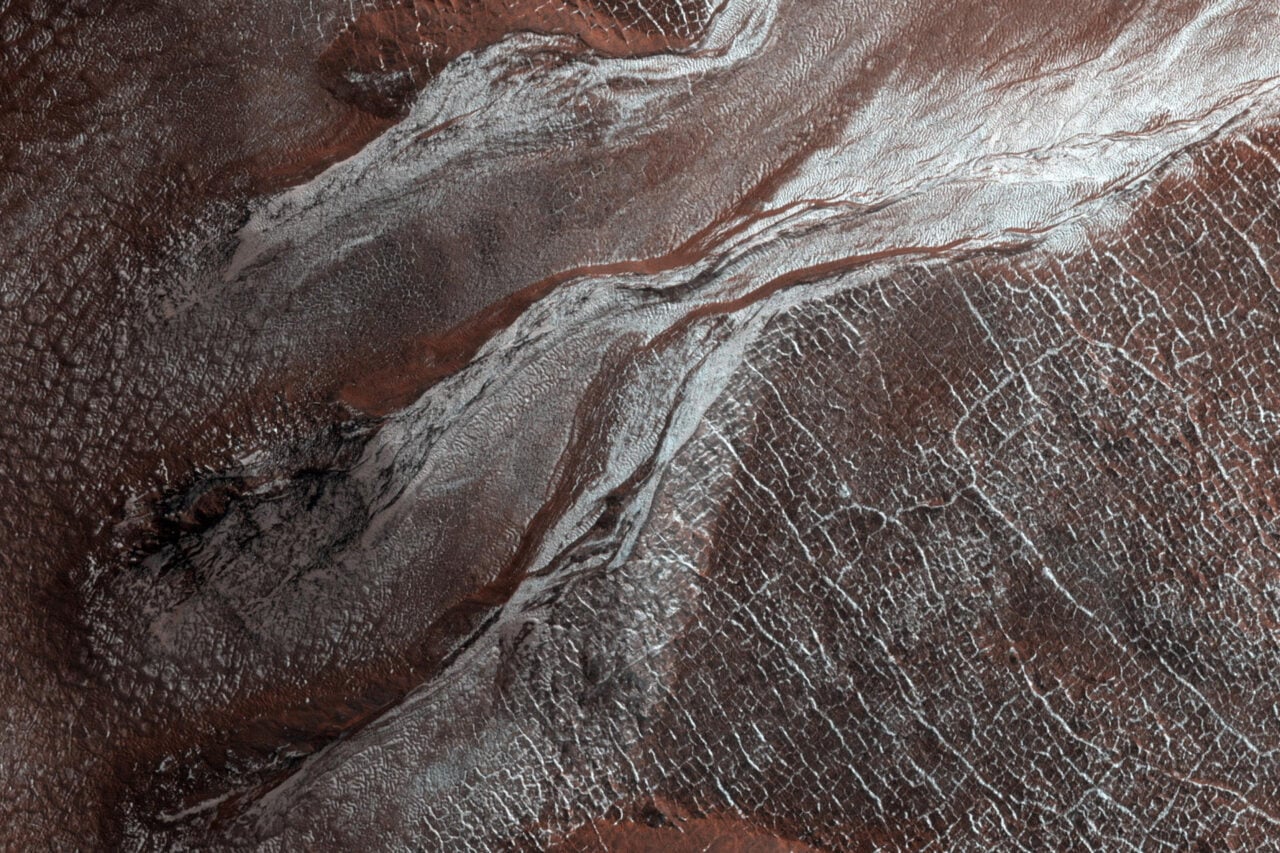
There's a peculiar melancholy that comes when a beloved origin story crumbles. Mars has always been our celestial mirror—a place where we project our hopes of a second chance for life, a wet and warm sibling to our own blue marble. The gullies, with their dendritic fingers reaching down crater slopes, seemed like incontrovertible proof of that wet past. Now, this new analysis suggests those graceful channels may have been scoured by the violent, rapid sublimation of dry ice—a process with no liquid water involved whatsoever. It's a reminder that planetary science is less about certainty and more about perpetually revising our most elegant theories.
What fascinates me isn't just the science, but the narrative whiplash. We've built entire mythologies around Martian water—from the canals of Percival Lowell to the recurring slope lineae that teased us with seasonal flows. Each time we strip away a layer of the water story, we're forced to confront a more alien Mars, one governed by processes that have no direct terrestrial analog. The gullies, it seems, may be the work of CO2 frost behaving in ways we're only beginning to understand—a phenomenon that makes Mars feel less like a dead Earth and more like a truly otherworldly place.
This has immediate consequences for exploration strategy. If water didn't carve those gullies, then the ancient habitable niches we've been hunting for may not be where we thought. The search for biosignatures will need to recalibrate, focusing on different geological formations and mineral deposits. It also changes the engineering calculus: if those slopes are unstable due to dry-ice processes, they're hazardous landing zones for rovers and, eventually, human crews. We're not just rewriting the history books; we're redrawing the hazard maps.
Yet, I can't help but find a strange beauty in this revision. A Mars that's cold, dry, and sculpted by frozen carbon dioxide is a Mars that demands we expand our definition of what a world can be. It's a reminder that the universe isn't obligated to mirror our expectations, and that the most profound discoveries often come when our most cherished assumptions are dismantled. The gullies are still a mystery—just a different, deeper one. And that, dear readers, is precisely where the best stories are born.